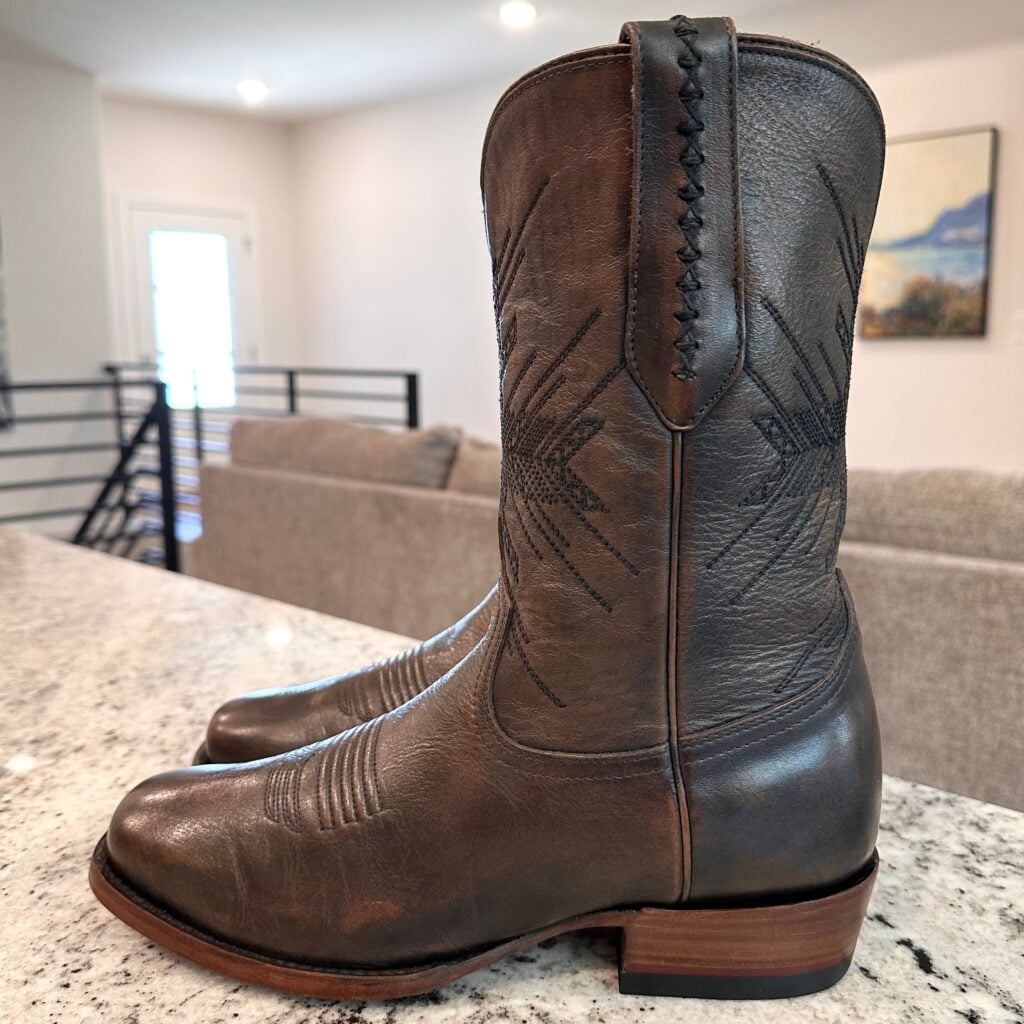
What are Horseman Boots?
Horseman boots are Western-style boots designed for horseback riding and everyday ranch or casual use. You can find horseman style boots for both men and women.
Horseman boots are built with a raised heel that can be used in a stirrup and typically have a relatively smooth sole. Some (but not all) horseman boots will have a spur ledge in the back, which helps keep riding spurs in position.
Horseman boots are built for riding, but don’t think of them as specialized equestrian boots (they aren’t built for professional riding competitions). A horseman boot is built to be a practical, versatile boot that can be used in the saddle, but can also properly function as a barn or chore boot, or even a casual boot.
Leather outsoles were traditionally used for these types of boots, but many brands now incorporate rubber outsoles that make the boot more barn and weather friendly. Although cowhide is a common leather used in horseman boots, many brands do offer horseman boots in exotic leathers.
For example, here is a pair of Lucchese horseman boots that I own that have a full quill ostrich leather foot + spur ledge:

Different Types of Horseman Boots
Horseman Boots With a Spur Ledge
Many horseman boots will be built with a spur ledge. A spur ledge is a small shelf at the back of the heel that helps keep a riding spur from sliding down the boot. A spur ledge is not essential for every rider and some find them unnecessary.
For example, here are a pair of women’s horseman boots that have a spur ledge sticking out the back:
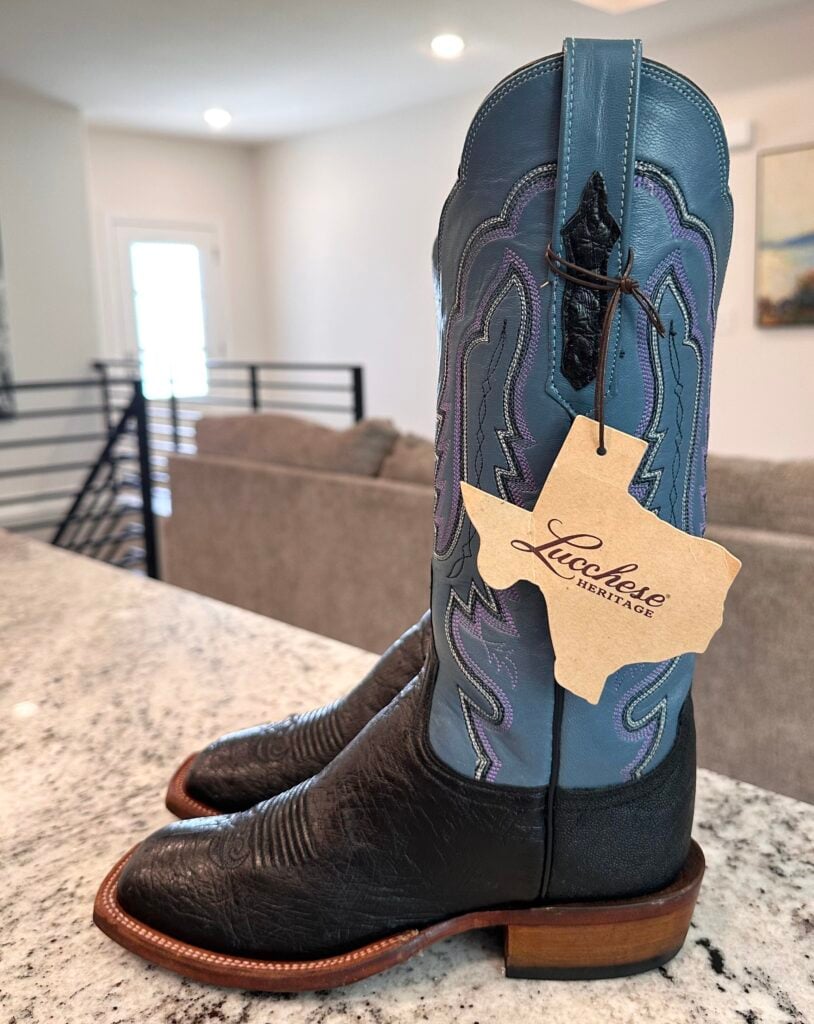
In the boot above, you see how the front vamp area is smooth ostrich leather, but the heel counter is a bullhide leather. Many companies will use a bullhide counter because it is a durable leather that can handle spurs.
But sometimes exotic leathers are used on both the vamp and the heel counter. For example, this Lucchese Harmon boot uses ostrich leather across the entire foot (including the heel area) and also has a spur ledge:
Ultimately, the construction style of horseman spur boots will vary by company and price point.
Horseman Boots Without a Spur Ledge
Many horseman boots have a riding heel but do not have the extra spur ledge in the back. The lack of a ledge does not automatically make a boot unsuitable for horseback riding. The heel and outsole still play a major role in how the boot sits in a stirrup.
For example, here is a pair of Lucchese Cliff horseman style boots that do not have a spur ledge:
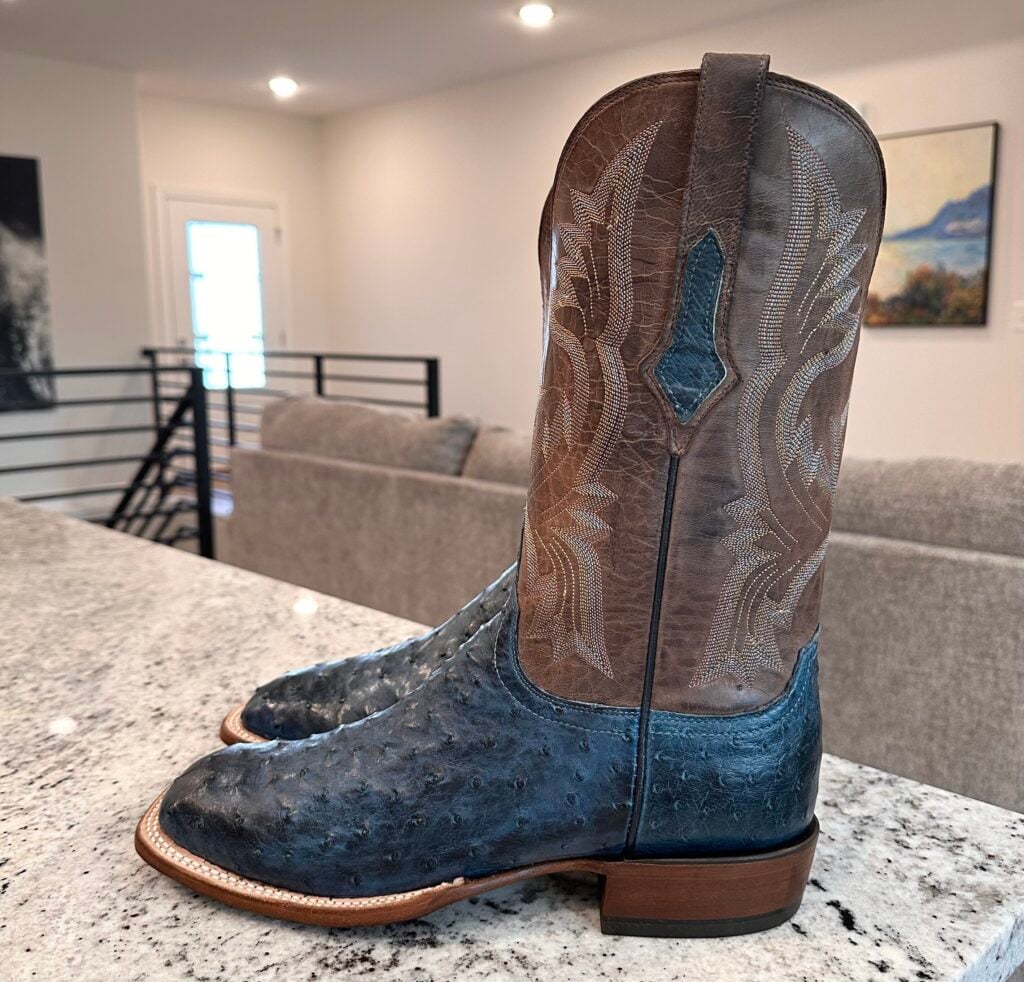
Some riders also prefer these designs because they transition easily from riding to everyday activities and look more natural. The best choice depends on whether the rider regularly uses spurs and how the boots will be worn.
Horseman Boots With Leather Outsoles
Leather outsoles are common on traditional Western riding boots. Their relatively smooth surface allows the boot to move more easily into and out of a stirrup than many heavily treaded work boots.
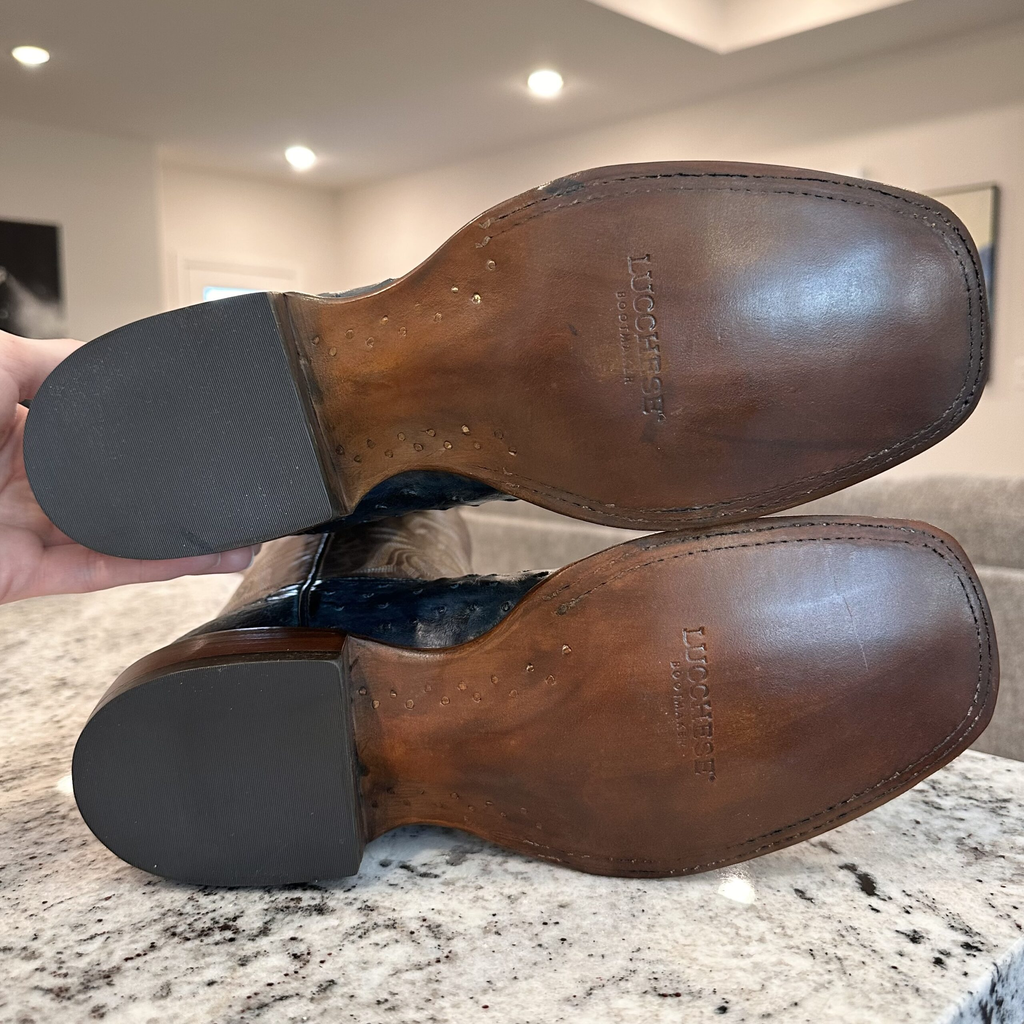
Leather soles also provide the traditional look and feel associated with Western footwear.
The main drawback is leather outsoles do not handle wet conditions well. So if you plan to spend time in a wet barn/barnyard, rubber outsoles might be best.
Horseman Boots With Rubber Outsoles
Rubber outsoles offer more grip than smooth leather soles in many everyday conditions and as I mentioned above, the rubber outsoles are much better for wet conditions that are typical in barnyards. These types of boots are good for those who want a boot that can be a riding boot and/or a chore style boot.

Here is a pair of horseman boots that have rubber outsoles:
However, you should consider how the outsole works with stirrups. A boot that grips the ground well may not be the best choice if its tread catches on riding equipment.
Horseman Boots With Hybrid Outsoles
Hybrid outsoles combine materials to balance the smooth feel of a traditional riding boot with some of the benefits of rubber. Depending on the design, a boot might have a leather arch area with rubber at the forefoot and heel. This allows the part of the foot that impacts wet ground to be rubber.
Here is a look at a pair of hybrid soles that I own:

Hybrid outsoles can vary between manufacturers, so the term does not describe one standard design. Some versions lean more toward traditional riding, while others are better suited to casual wear and light ranch work.
The Horseman Heel in Cowboy Boots
The heel is one of the most important parts of a horseman boot. Western riding boots generally have a raised heel that helps keep the foot positioned in the stirrup, although the height and shape vary by style.

Many horseman boots have a low to medium heel with a relatively broad profile. Some resemble the traditional cowboy heel, while others have a shorter, blockier shape that feels more comfortable during everyday walking (good option for those who want to also wear it as a casual boot).
The heel needs to work with the boot’s overall design. A proper heel can help prevent the foot from sliding too far forward through a stirrup.
The Horseman Toe in Cowboy Boots
Rounded Toe
A rounded toe follows the traditional shape of many Western boots. The front curves gradually rather than ending in a flat edge, giving the boot a classic riding-boot appearance.
This shape suits riders who prefer a traditional profile. The amount of room inside the toe box depends on the boot’s overall construction, so a rounded toe is not necessarily narrower than every square-toe design.
Narrow Square Toe
A narrow square toe has a flatter front than a rounded toe but does not extend as widely across the foot as a broad square toe. The shape has become common in modern Western footwear because it offers a contemporary look without the wide profile of some work-oriented boots.
Horseman boots with narrow square toes can work well for riders who want a balance between traditional styling and everyday comfort. The actual fit depends on the manufacturer and the shape of the boot’s last. This type of toe is also called a cutter toe.
Broad Square Toe
A broad square toe has a wide front with a more pronounced squared-off shape. Many Western work boots use this design because it can provide additional room across the toes.
Some horseman boots also use broad square toes, particularly models intended for everyday ranch use. The wider shape can appeal to people who prefer more space in the forefoot, although the fit still depends on the boot’s construction. Broad square toe can be harder to use in a stirrup.
Snip Toe
A snip toe narrows toward the front and ends in a small, flattened tip. The shape is common on dressier Western boots and some riding styles, though it is less typical of practical, everyday ranch boots.
The narrow profile gives the boot a distinctive appearance, but comfort depends on the space available inside the toe box. Riders should make sure the shape does not pinch their toes during extended wear.
Popular Cowboy Boots
Poblano Sueded Caiman Boots – click here to see brand name and see more photos of this boot

Black Cherry Crocodile Boots – click here to see style name and see more photos of this boot
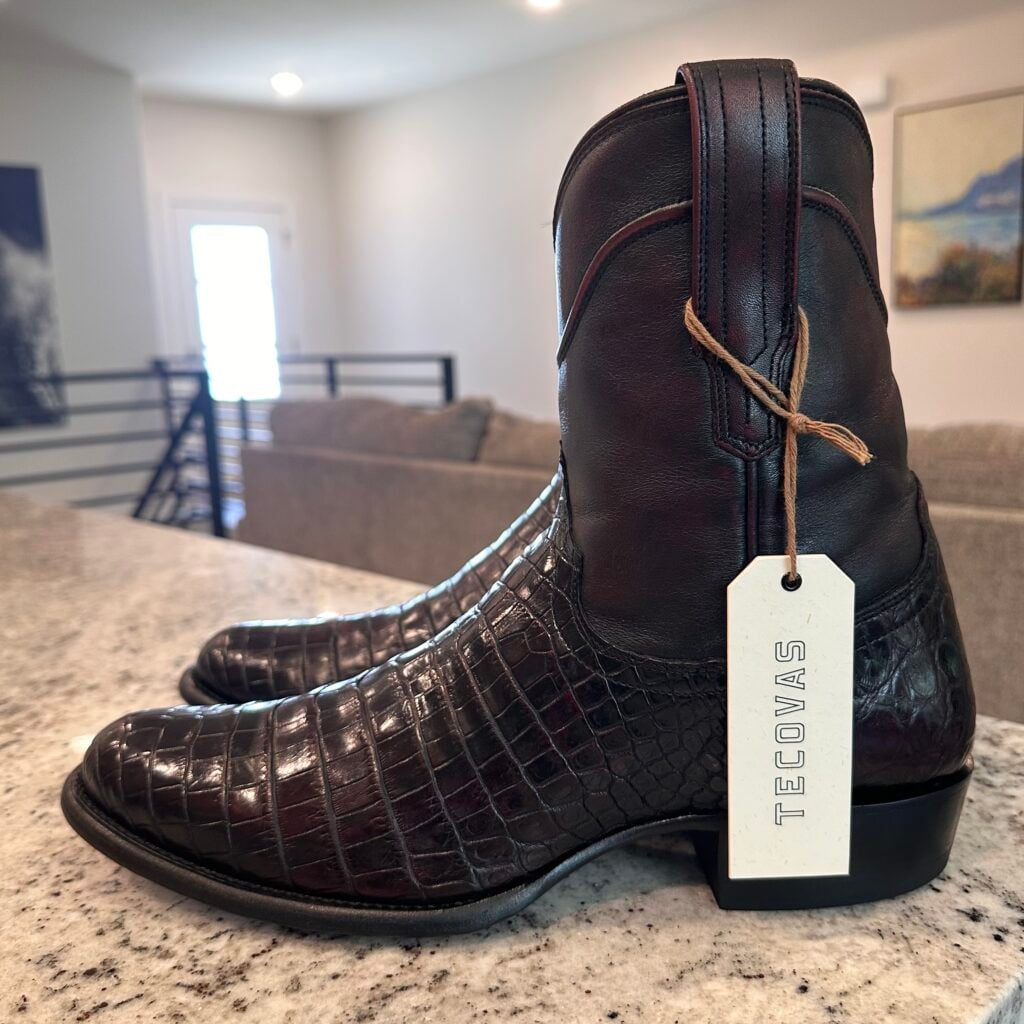
Giant Gator Square Toe Boots – click here to see brand name and see more photos of this boot

Navy Back Cut Python – click here to see brand name and see more photos of this boot

Gunsmoke Sueded Caiman Boots – click here to see brand name and see more photos of this boot
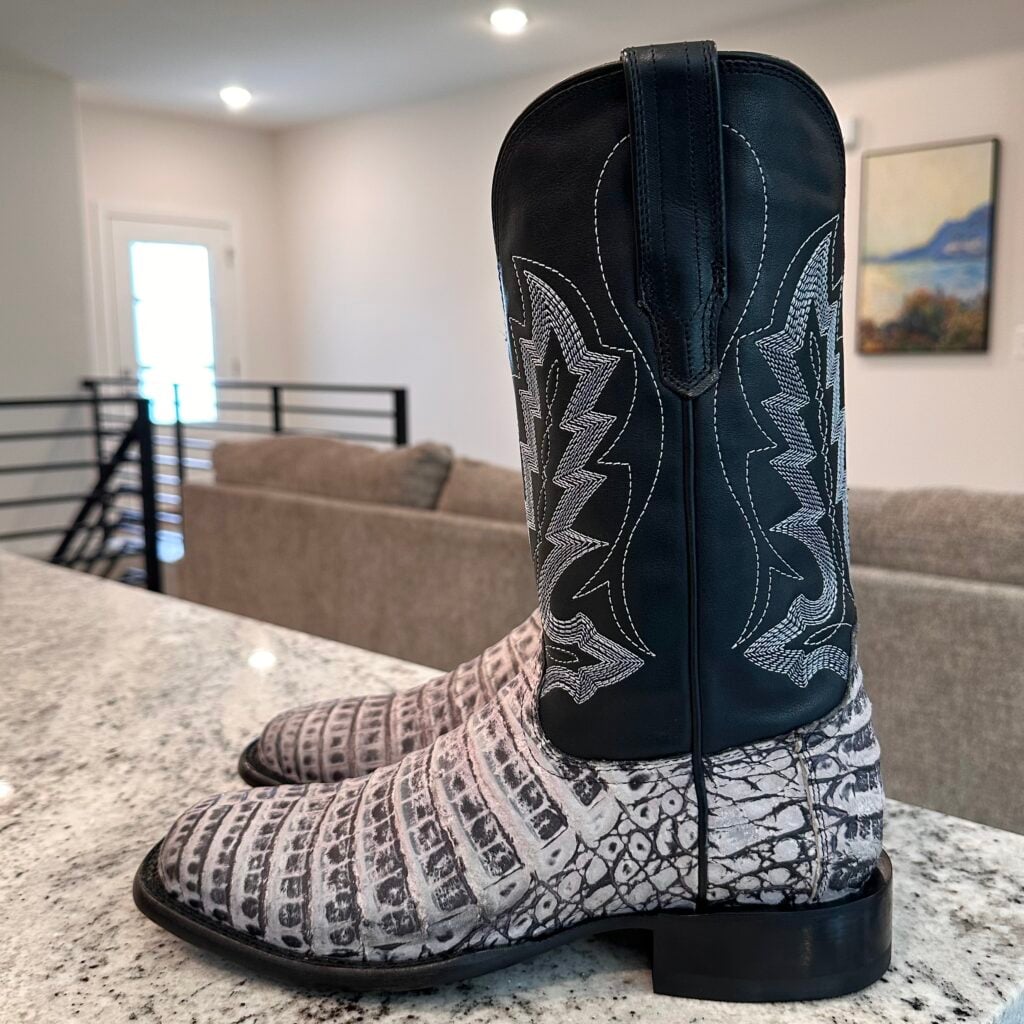
Heritage Brushed Brown Boots – click here to see brand name and see more photos of this boot