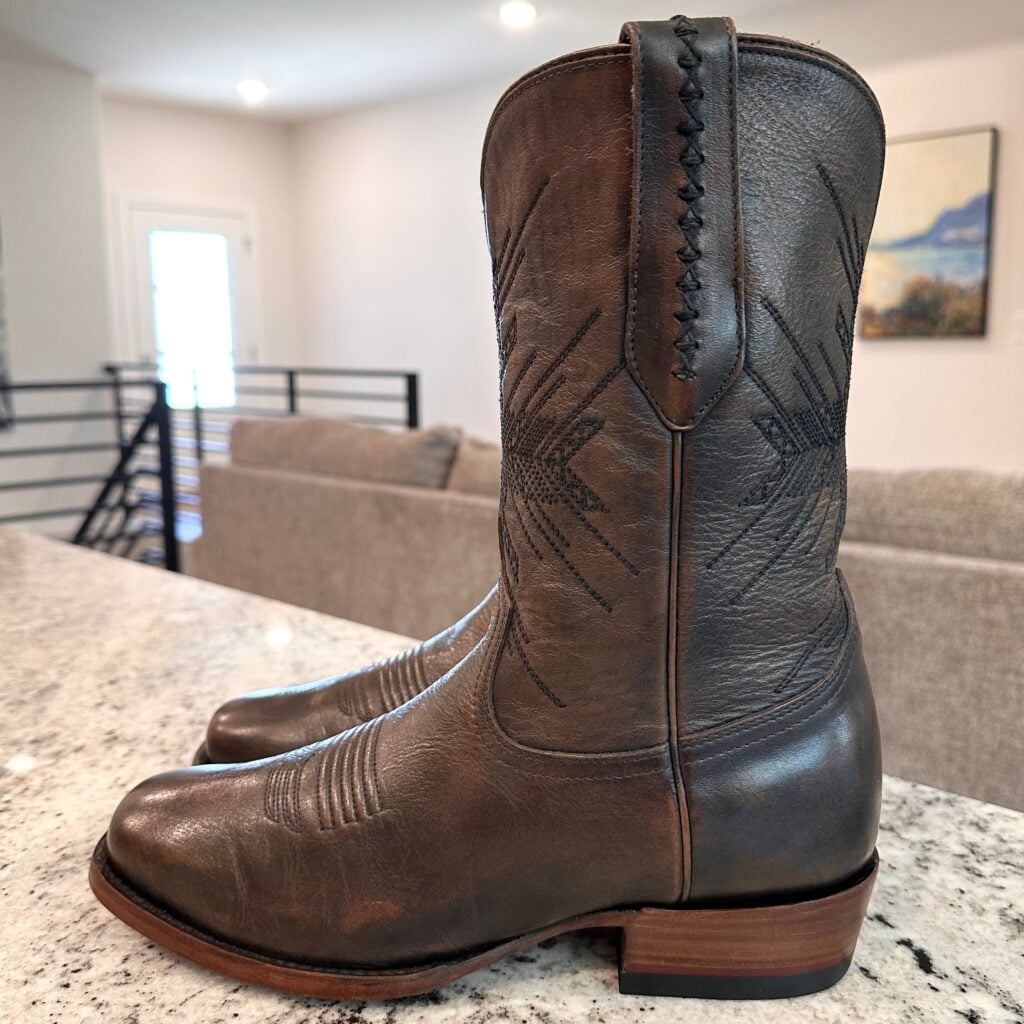
Why do cowboy boots have leather outsoles? Cowboy boots use leather outsoles for four main reasons:
- Riding practicality. Leather provides a smooth surface that allows the foot to slide more easily in and out of a stirrup. The sole creates less friction than many rubber designs, making it a practical choice for horseback riding. The heel helps keep the boot positioned in the stirrup.
- A slimmer profile. Leather outsoles are generally thinner and less bulky than many rubber outsoles. This construction helps preserve the traditional shape of cowboy boots without adding unnecessary thickness beneath the foot.
- A formal appearance. Leather outsoles create a clean, refined look that complements traditional Western footwear. The slimmer sole works particularly well with dress cowboy boots, which are often worn with jeans, dress pants, and formal Western clothing.
- Historical materials and tradition. Leather was a common material for bootmakers when cowboy boots developed, making it a practical choice for constructing outsoles. As rubber manufacturing improved and rubber-soled footwear became more widely available, leather remained closely associated with traditional cowboy boots. Modern bootmakers continue using leather outsoles partly to preserve the established construction and appearance of classic Western footwear.
The riding benefit helps explain the original practical value of leather soles, while their slim profile, formal appearance, and long history help explain why bootmakers continue to use them today. In the article below I want to discuss some of the pros and cons of leather outsoles on cowboy boots, and also discuss alternatives in case you do not like the feel of a leather outsole.
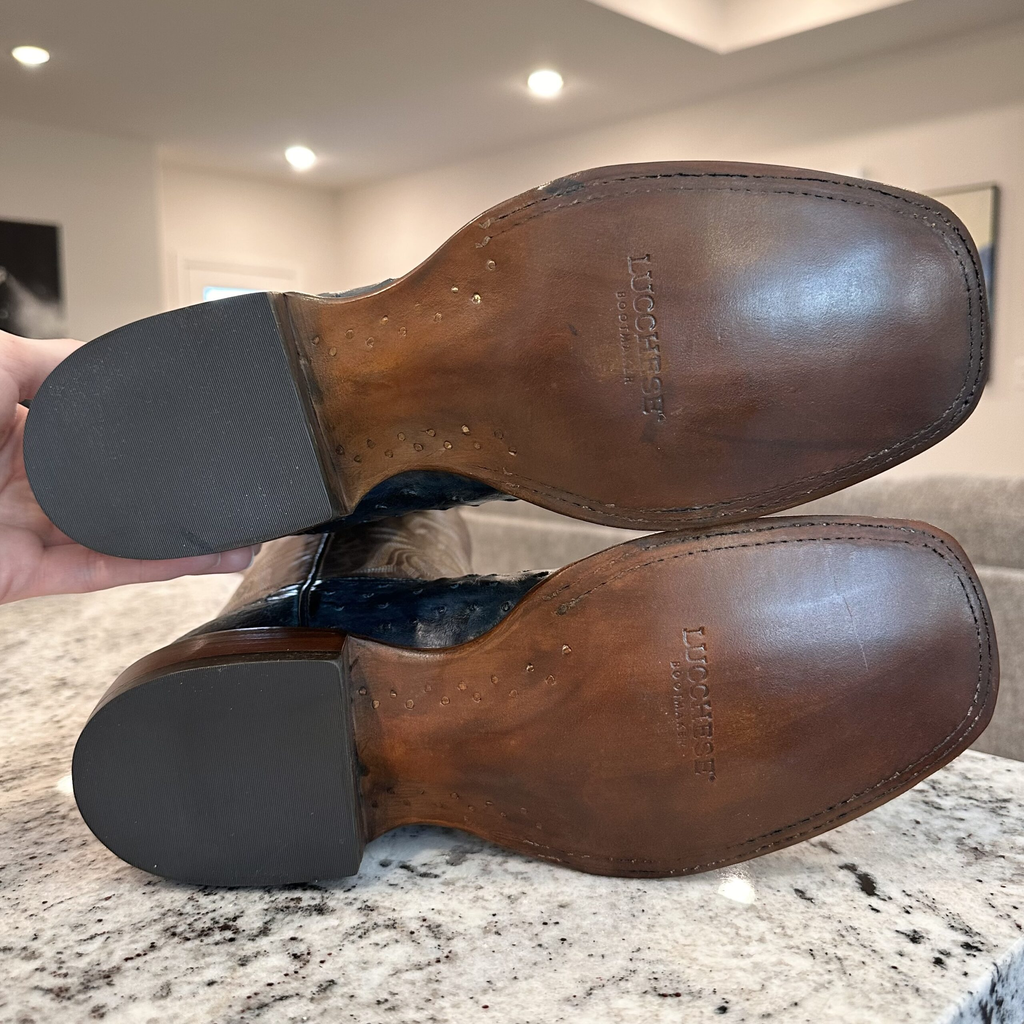
Pros and Cons of Leather Outsoles on Western Boots
Advantages of Leather Outsoles
The smooth surface makes leather outsoles useful for horseback riding. The foot can slide more easily in and out of a stirrup than it might with a thick, heavily treaded rubber sole. The heel helps keep the boot positioned in the stirrup, although proper boot and stirrup fit remain important.
The thinner construction also gives leather-soled cowboy boots a traditional, sleeker profile. Leather creates a clean line beneath the foot without the added bulk of rubber outsoles. This makes leather outsoles a popular choice for dress cowboy boots and even casual Western boots.
Leather soles can also become more flexible with wear. Their feel depends on the thickness of the leather and the boot’s construction, but many people appreciate the way a leather outsole bends during use.
Disadvantages of Leather Outsoles
The limited traction is one of the main drawbacks of leather outsoles. Smooth leather can become slippery on wet pavement, polished floors, and other slick surfaces.
Leather outsoles are also not good in wet conditions. Leather absorbs water, and repeated exposure to wet conditions can ruin a leather outsole. Leather-soled boots can handle occasional moisture, but frequent use in rain, mud, or wet work environments generally requires more care.
Leather soles can also wear down relatively quickly on rough concrete, gravel, and abrasive surfaces. People who spend long hours walking on hard ground may prefer rubber soles for their traction and durability.
Can Cowboy Boots With Leather Outsoles Be Resoled?
Yes, many cowboy boots with leather outsoles can be resoled by a professional cobbler. The cobbler removes the worn outsole and attaches a replacement, provided the boot’s construction and overall condition allow the repair.
The welt, insole, and upper must remain in suitable condition. Traditional construction methods often make resoling practical, although some cemented boots are more difficult or less economical to repair.
Alternatives to Leather Outsoles
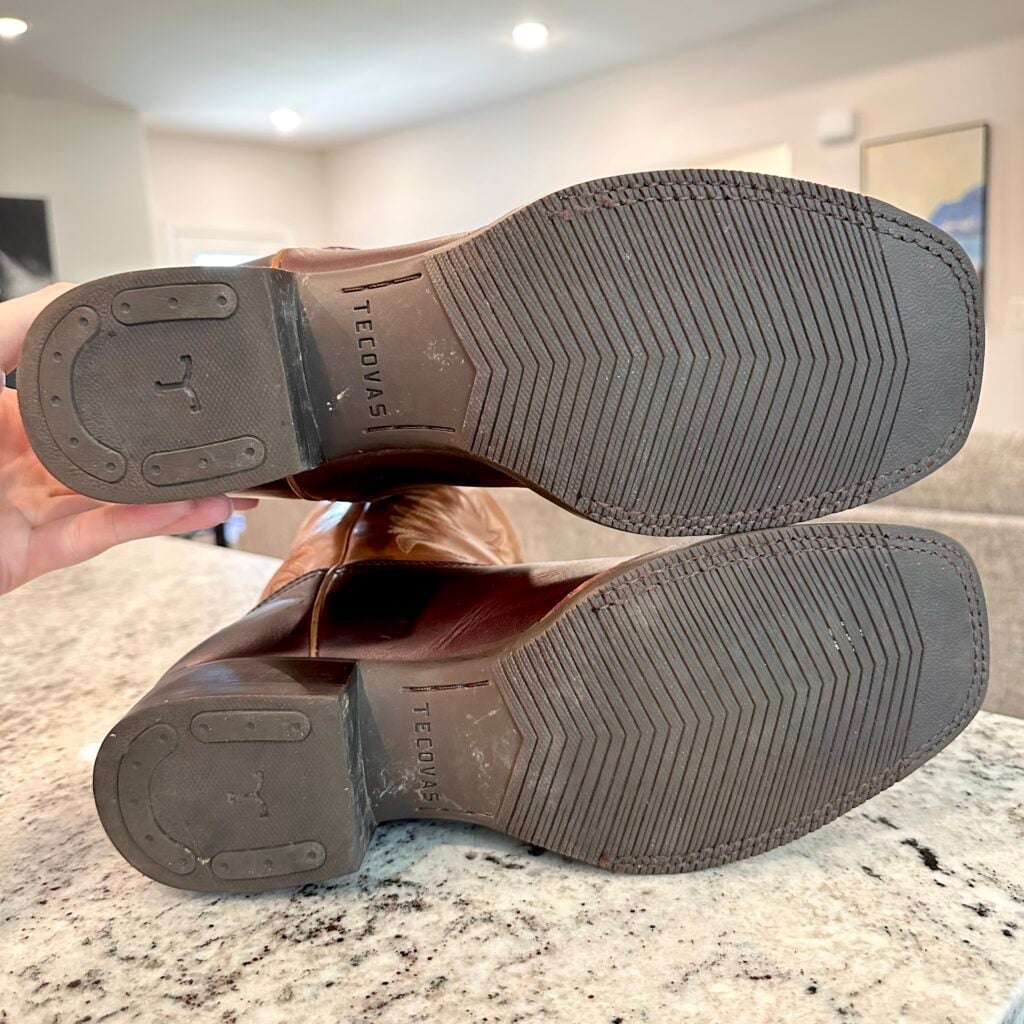
Full Rubber Outsoles
Full rubber outsoles provide more traction on many surfaces than smooth leather soles. Their grip depends on the rubber compound and tread pattern, but many designs work well on wet pavement, uneven ground, and demanding work surfaces.
Rubber also resists water absorption better than leather. This makes rubber-soled cowboy boots a good option for people who frequently work outdoors or spend long periods walking on concrete.
The trade-off is that rubber soles can create a thicker, bulkier appearance. Some designs have substantial tread that gives the boot a more rugged, work-oriented profile rather than the slimmer appearance associated with traditional dress cowboy boots.
Here is the full-length rubber outsoles on a pair of western work boots I own:
Rubber can also create more friction against a stirrup, depending on the sole’s design. Riders should choose boots appropriate for their riding equipment and intended use rather than assuming every rubber outsole is suitable for horseback riding.
Full rubber outsoles are particularly useful for work boots and everyday cowboy boots where traction, moisture resistance, and durability matter more than maintaining a traditional dress-boot profile.
Hybrid Rubber and Leather Outsoles
Hybrid outsoles combine rubber and leather to balance the characteristics of both materials. Typically these types of outsoles use rubber across the toe and forefoot, leather through the arch, and a rubber heel cap. The exact arrangement varies by manufacturer.
Here is a pair of hybrid outsoles that I own:

The rubber forefoot improves grip and is more weather friendly in the part of the outsole that would contact wet ground. The leather section in the arch area preserves some of the traditional construction and slimmer appearance associated with leather-soled cowboy boots.
Hybrid outsoles appeal to people who want a more weather-friendly outsole option but still prefer the slimmer, sleeker profile of a leather outsole.
Crepe Soles
Crepe soles use a soft, rubber-like material that provides cushioning and flexibility. Natural crepe rubber is made from latex, although some products marketed as crepe soles use other rubber compounds.
The softer construction can make walking on hard surfaces more comfortable. Crepe soles appeal to people who spend long periods on their feet and prefer a cushioned feel over the firmer feel of traditional leather soles.

Crepe soles generally have a more casual appearance than leather outsoles. Their thicker profile can change the overall shape of a cowboy boot, making them less common on formal Western styles.
The material also has limitations. Crepe can collect dirt, discolor, and wear down with heavy use. Some compounds can feel sticky in warm conditions, and traction varies depending on the material and walking surface. These types of outsole are used mainly on work boots.
Sole Savers
If you don’t like leather outsoles on cowboy boots, you can always purchase and attach sole savers to help protect the leather and improve grip. A sole saver is a thin rubber layer that you stick to the existing outsole. You can install these yourself with ease, or have a cobbler do it.
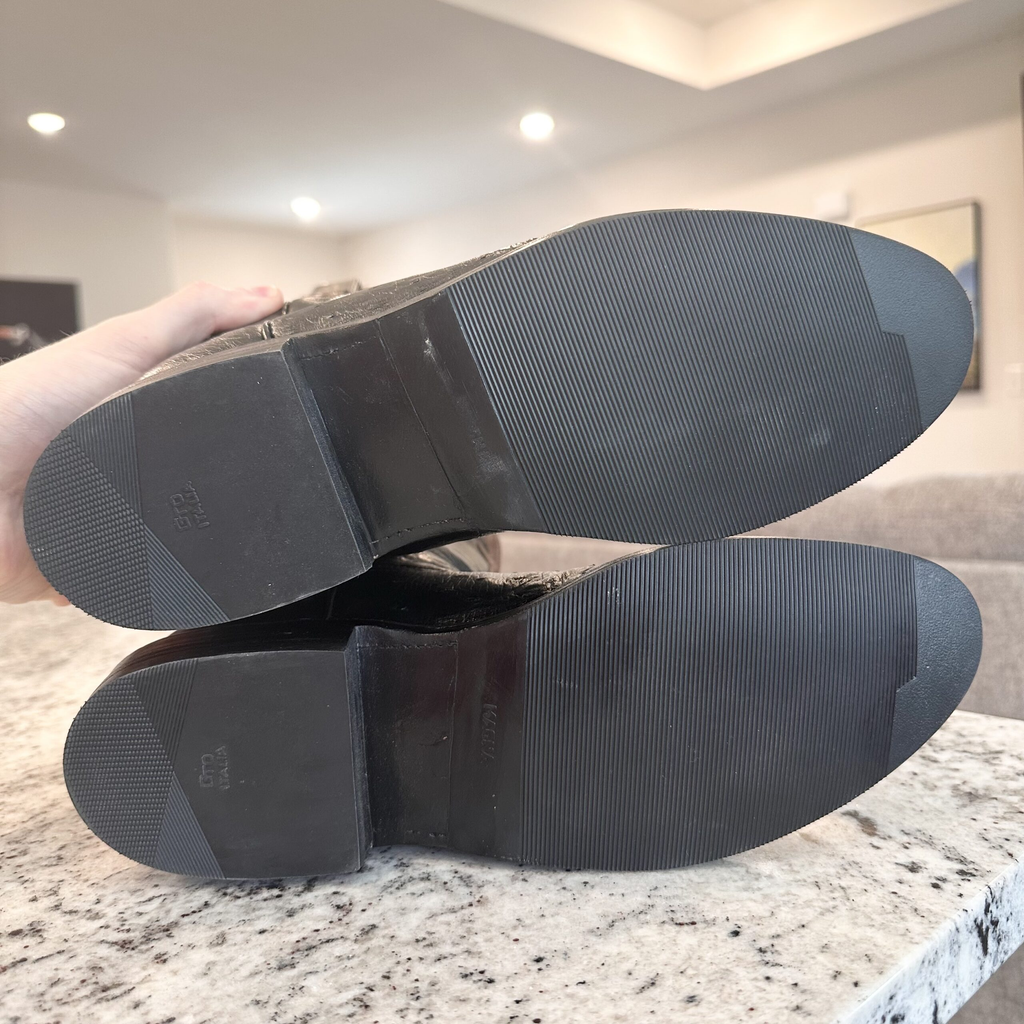
A sole saver can change the appearance of the sole, but a thin sole saver can preserve much of the boot’s original profile. A cobbler can help select the appropriate material and install it properly to ensure the adhesive bonds securely.
Popular Men’s Cowboy Boots
Natural Python Cowboy Boots – click here to see full style name and more photos of this boot

Goat Leather Cowboy Boots – click here to see full style name and more photos of this boot

Brushed Brown Cowhide Boots – click here to see full style name and more photos of this boot

Pecan Ostrich Cowboy Boots – click here to see full style name and more photos of this boot

Barnwood Ostrich Cowboy Boots – click here to see full style name and more photos of this boot

Navy Chocolate Full Quill Ostrich – click here to see brand name and see more photos of this boot

Poblano Sueded Caiman Boots – click here to see brand name and see more photos of this boot

Black Cherry Crocodile Boots – click here to see style name and see more photos of this boot
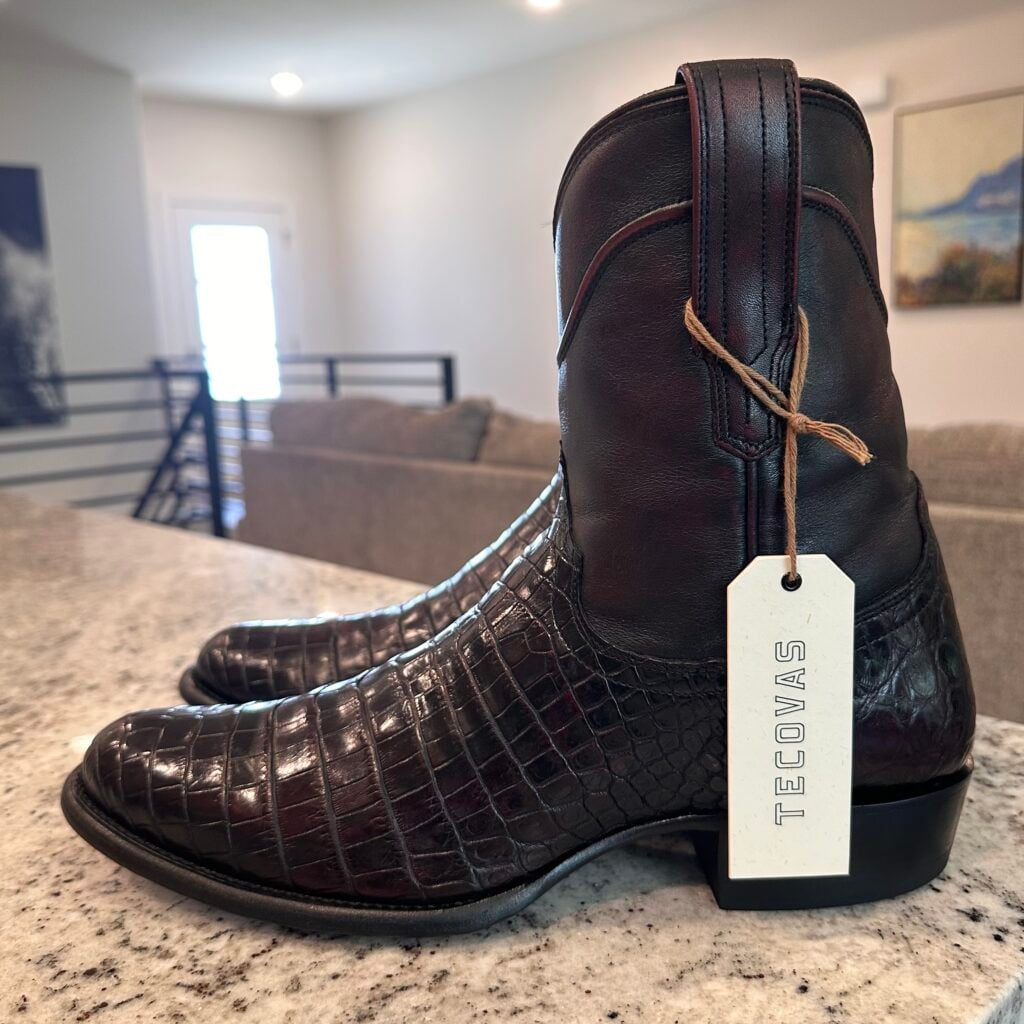
Giant Gator Square Toe Boots – click here to see brand name and see more photos of this boot

Gray Full Quill Ostrich – click here to see brand name and see more photos of this boot

Navy Back Cut Python – click here to see brand name and see more photos of this boot

Gunsmoke Sueded Caiman Boots – click here to see brand name and see more photos of this boot
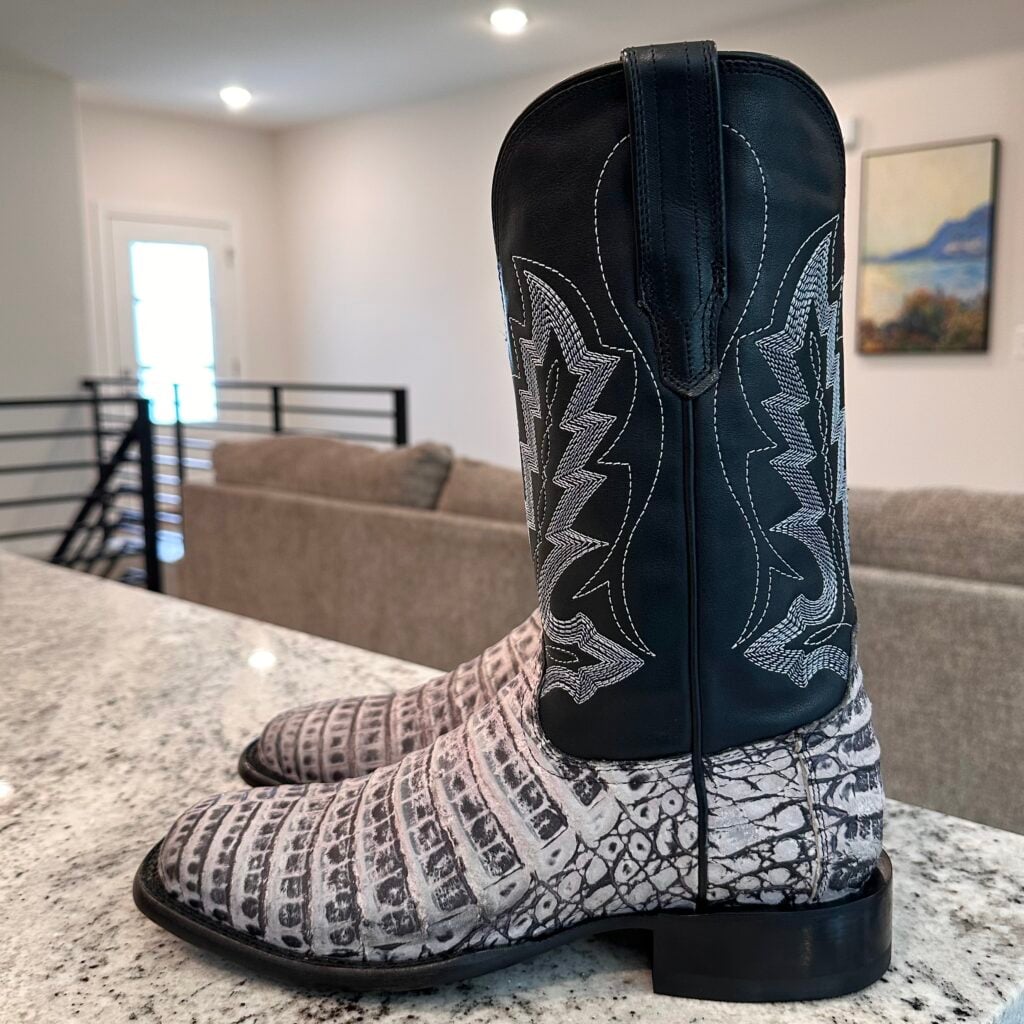
Heritage Brushed Brown Boots – click here to see brand name and see more photos of this boot