
What Are Back Pleats on a Work Shirt?
Back pleats are folds of fabric sewn into the upper back of a shirt to help improve the freedom of movement in a work shirt (which means it is easier to move your arms and shoulders around). Manufacturers use pleats to provide additional space across the shoulders and upper back without having to make the entire shirt larger.
Back pleats are common on traditional work shirts, western shirts, and some casual button-downs. The construction is particularly useful in garments designed for physical work because it provides additional range of motion.
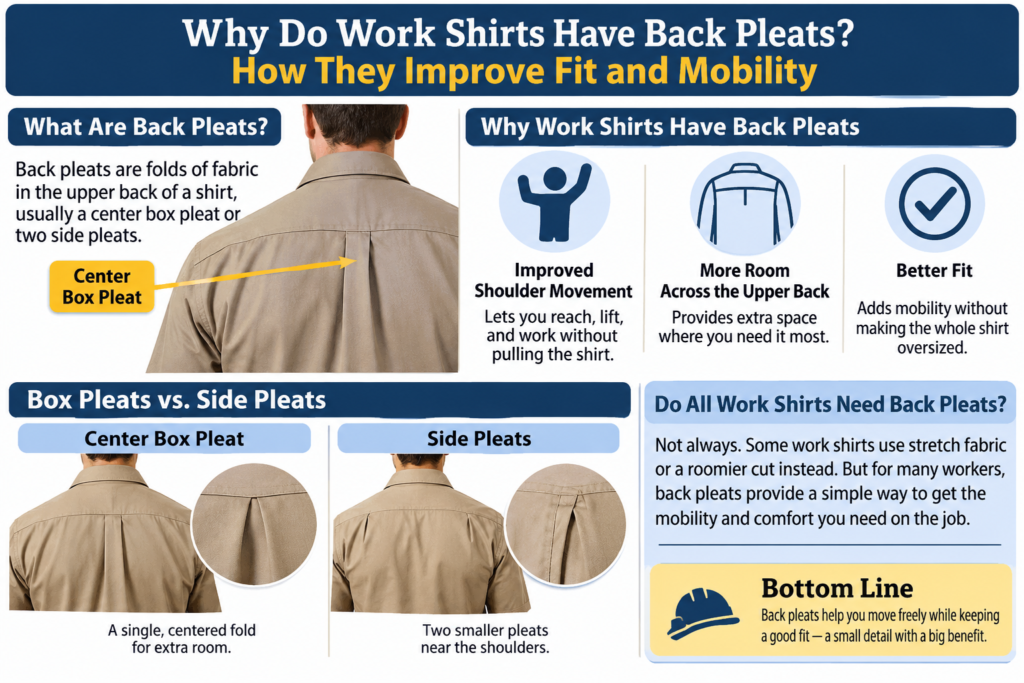
Why Work Shirts Have Back Pleats
Improved Shoulder Movement
Back pleats give the upper back additional room when the arms move forward, outward, or overhead. Without this extra fabric, a fitted shirt can pull tightly across the shoulder blades during physical activity, which restricts your freedom of movement.
Workers who frequently reach, lift, bend, or operate equipment can benefit from a pleated back. Modern day, some workwear companies will use stretch fabrics (which means range of motion through shoulders isn’t as big of a deal), but the difference is particularly noticeable in woven cotton shirts, which generally have less natural stretch than modern performance fabrics.
Better Fit Without an Oversized Shirt
Yes, these work shirts need proper range of motion, but excessively loose clothing can interfere with certain tasks. Back pleats help manufacturers provide additional room through the upper back while maintaining a relatively traditional fit for the rest of the work shirt. This construction is useful for workers who prefer a regular-fit shirt but need more flexibility across the shoulders.
Box Pleats vs. Side Pleats on Work Shirts
Work shirts generally use two common back-pleat arrangements. Both provide additional fabric, but their placement and appearance differ.
Center Box Pleats
A box pleat consists of a folded section of fabric positioned vertically along the center of the back. The fabric folds inward on both sides and creates a rectangular section. Center box pleats are common on traditional work shirts and western shirts.
Side Pleats
Side pleats typically consist of two narrow folds positioned near the shoulder blades. The folds provide additional fabric on either side of the upper back rather than concentrating it in the center. Side pleats can provide a bit more freedom of movement in the shoulder area. However, neither design is automatically better. The amount of available fabric, placement of the folds, and overall shirt pattern determine how much additional movement each design provides.
Do All Work Shirts Need Back Pleats?
Back pleats are useful, but they are not necessary on every work shirt.
As I mentioned earlier, some modern work shirts use stretch fabrics to provide additional mobility. Cotton blends containing elastane or other stretch fibers can accommodate movement without requiring traditional pleats.
Relaxed-fit shirts may also have enough room across the shoulders and upper back that additional fabric is unnecessary.
Lightweight work shirts designed for warm weather may prioritize a simpler construction. These shirts can provide adequate movement through their overall cut rather than relying on back pleats.
The intended use also matters. A work shirt designed for office environments or casual wear may not need the same mobility as one intended for construction, ranch work, or mechanical tasks.
Are Back Pleats Better Than Stretch Fabric?
Back pleats and stretch fabrics solve a similar problem through different construction methods.
Traditional cotton work shirts use pleats to provide additional material when the wearer moves. The fabric itself does not need to stretch significantly because the folds provide additional room.
Stretch work shirts rely on the material’s ability to expand and recover during movement. This can provide a closer fit without restricting the shoulders or upper back.
Neither approach is universally better.
Cotton work shirts with back pleats offer traditional construction and do not depend on stretch fibers. Stretch fabrics can provide greater flexibility throughout the garment, including areas without pleats.
Some manufacturers combine both approaches by using stretch fabrics alongside traditional back pleats.
What to Look for When Buying a Work Shirt
Back pleats are worth considering when comparing work shirts, particularly if the garment will be worn during physical activity.
Check the following details before purchasing:
- Shoulder fit: The shoulder seams should sit near the natural shoulder line without pulling.
- Upper-back room: The shirt should allow forward reaching without creating excessive tension across the shoulder blades.
- Sleeve mobility: Move both arms overhead and forward to check for restrictions.
- Fabric composition: Cotton provides traditional workwear construction, while stretch blends offer additional flexibility.
- Overall fit: Back pleats should provide movement without making the shirt excessively loose around the waist.
A shirt with back pleats is not automatically more comfortable than one without them. The overall pattern, fabric, sizing, and placement of the pleats determine how well the garment fits.