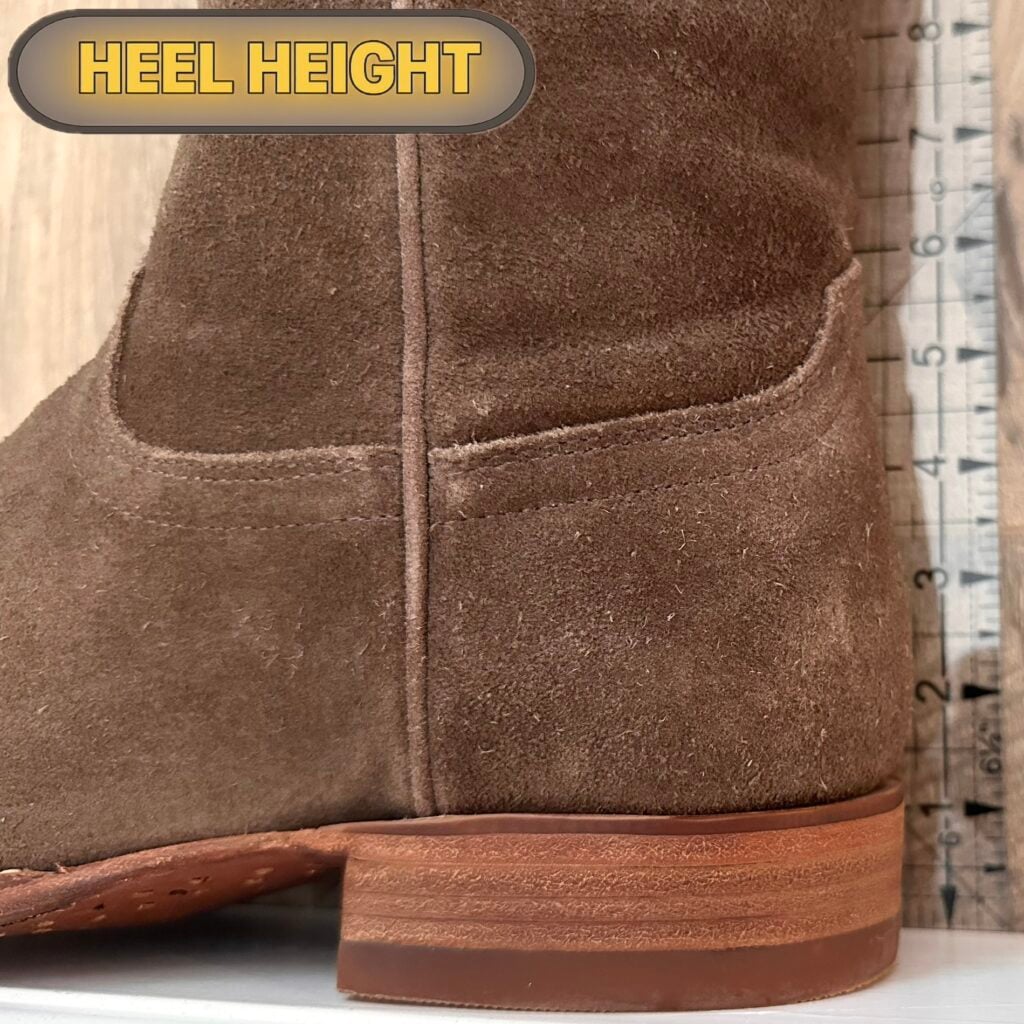
What Is a Pitched Heel in Western Boots?
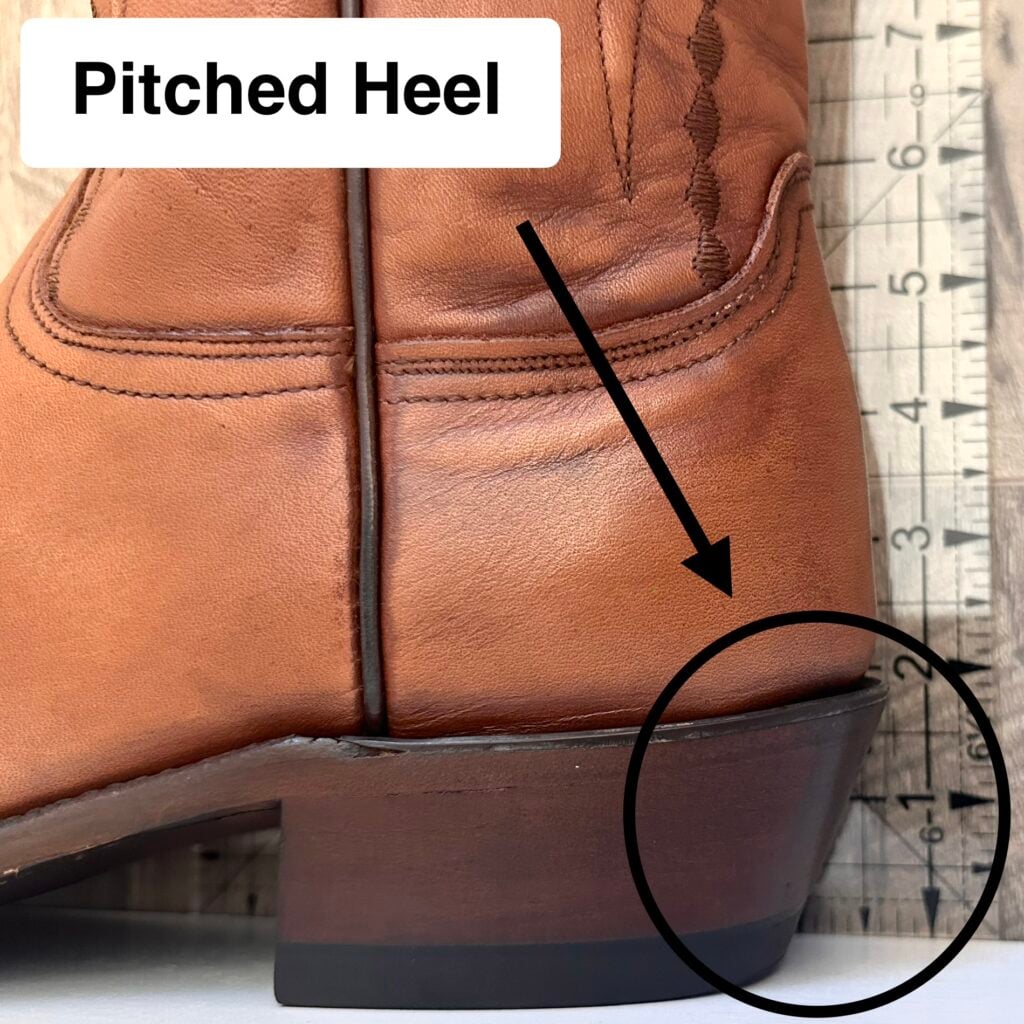
A pitched heel in western boots is a heel that has an angled shape along the backside of the heel. The back of the heel slopes inward as it meets the bottom heel cap, creating an angled profile when viewed from the side. The purpose of a pitched heel, originally, was to make a cowboy boot easier to slip in and out of a stirrup when horseback riding. Today, pitched heels are still common even in casual western boots because many people prefer the appearance and style of a pitched, angled heel.
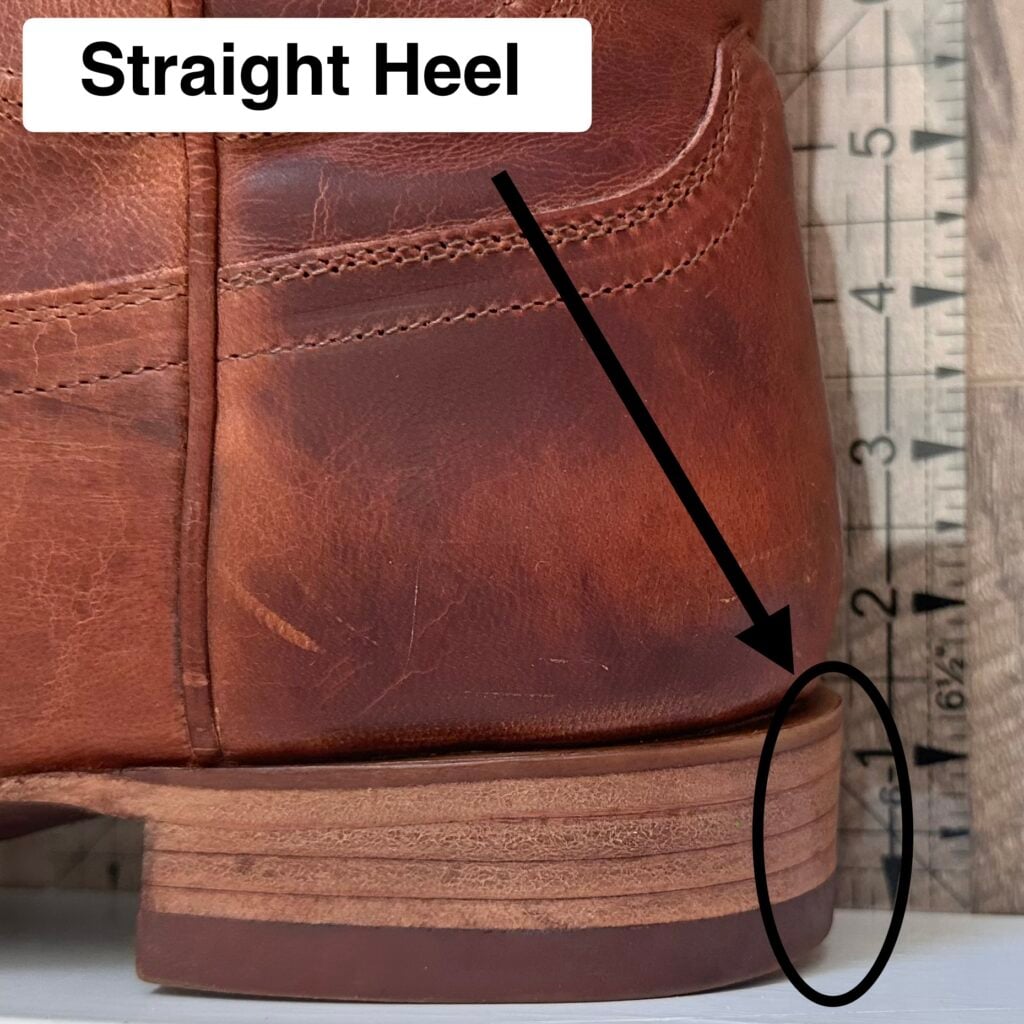
For example, below is a pitched heel that I own in comparison to a straight heel:
The Purpose of Pitched Heel Western Boots
The pitched heel design has strong ties to horseback riding. Traditional cowboy boots were developed with horseback riders in mind, and because of this, bootmakers would angle (or pitch) the heel so that the bottom of the heel had a smaller surface area that could easily slide into a stirrup.
The opposite of a pitched heel is a straight heel (or straight-back heel). As the name would suggest, a straight heel has a straight 90-degree back. This creates a larger surface area on the bottom of the heel in comparison to a pitched heel.
Because a straight-backed heel has a larger contact surface area, it can be more difficult to slip into a stirrup than a pitched heel. However, that broader contact area can provide a more stable feel when walking, which is why some people prefer straight heels for everyday wear over more sharply pitched heels.
It is important to understand that a pitched heel is not a separate type of western boot heel but rather a description of the heel’s shape and angle. Meaning, several types of western boot heels may use a “pitched” design. Western boots come in several heel types, like cowboy heel, walking heel, horseman heel, and roper heel.
Most of these heel types can be made with a pitched design, although the amount of angle varies between styles and manufacturers. Cowboy and horseman heels commonly have a more pronounced pitch, while walking heels may have a more subtle angle. Roper heels are generally the exception, as they typically have a straighter back and little to no pitch. I’ll discuss that more below.
Common Types of Western Boot Heels
Western boots come with several heel styles, and each has a different shape and intended purpose. The pitch can vary within these styles, meaning two boots with the same type of heel may have noticeably different profiles.
Cowboy Heel
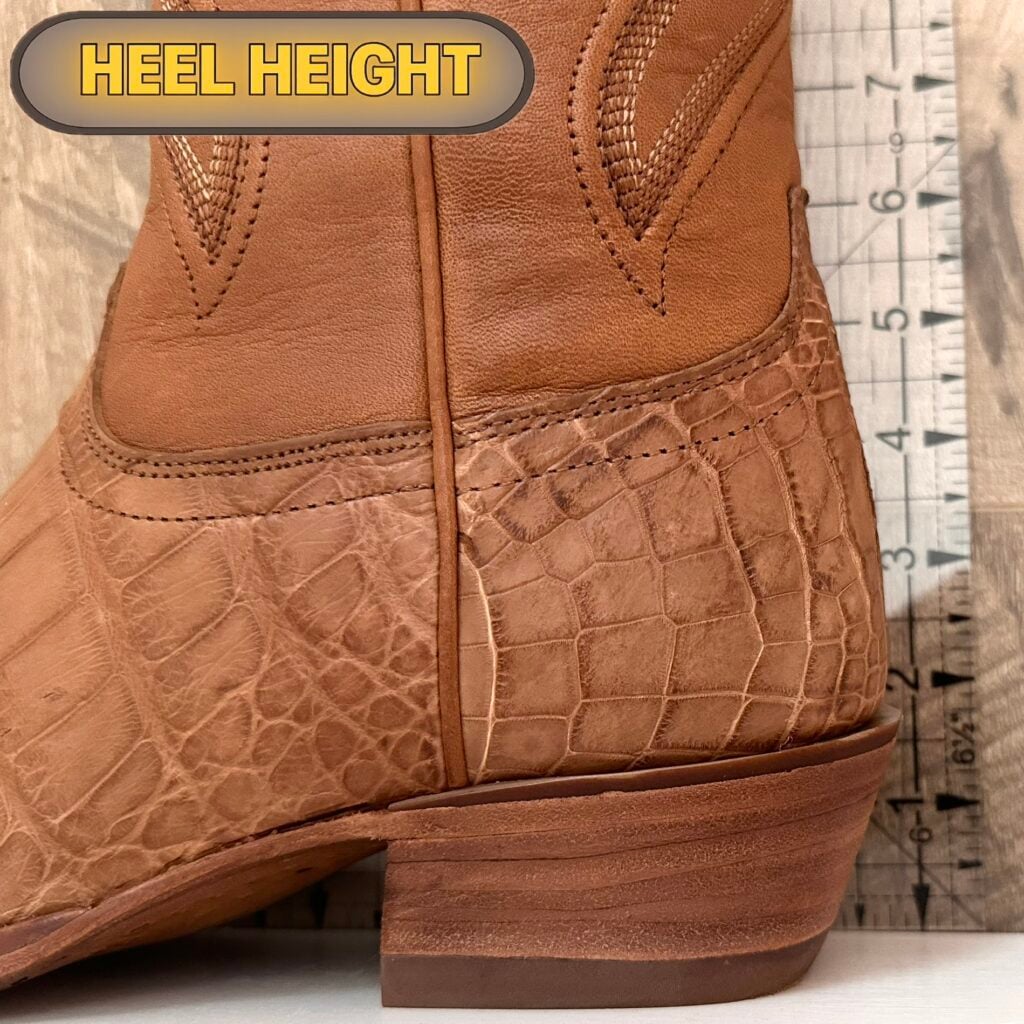
The cowboy heel is one of the most recognizable western boot heel styles. It typically measures around 1.5 to 2 inches tall and has a distinct pitch. The heel provides the elevation and shape traditionally associated with riding boots. The amount of pitch varies between manufacturers. Here is a look at a pitched cowboy heel that I own:
Walking Heel
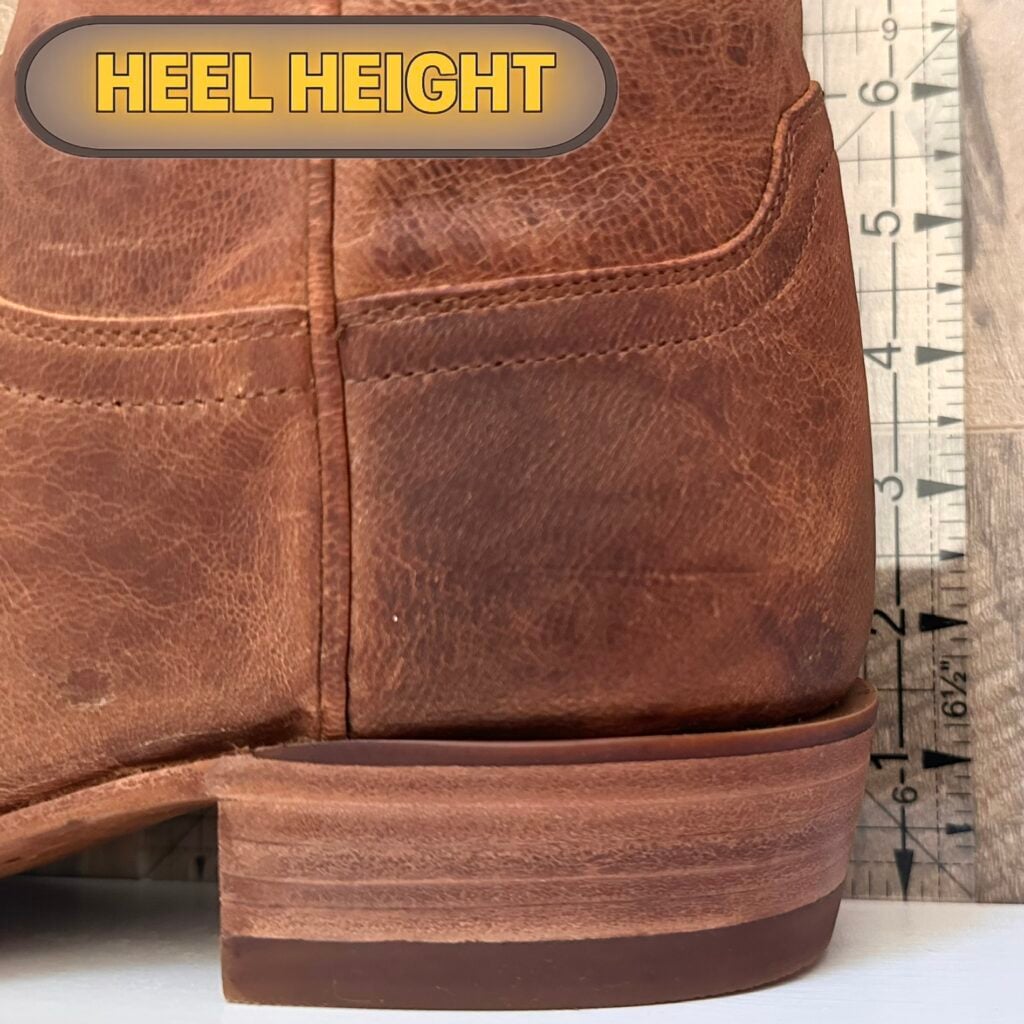
The walking heel is generally shorter than a traditional cowboy heel, often measuring near 1.5 inches in height. Its lower profile makes it a bit easier to wear as an everyday boot and to use for extended walking. Walking heels can have a slight forward pitch, although the angle is usually less pronounced than what is found on traditional riding heels. Here is a walking heel that I own:
Horseman Heel
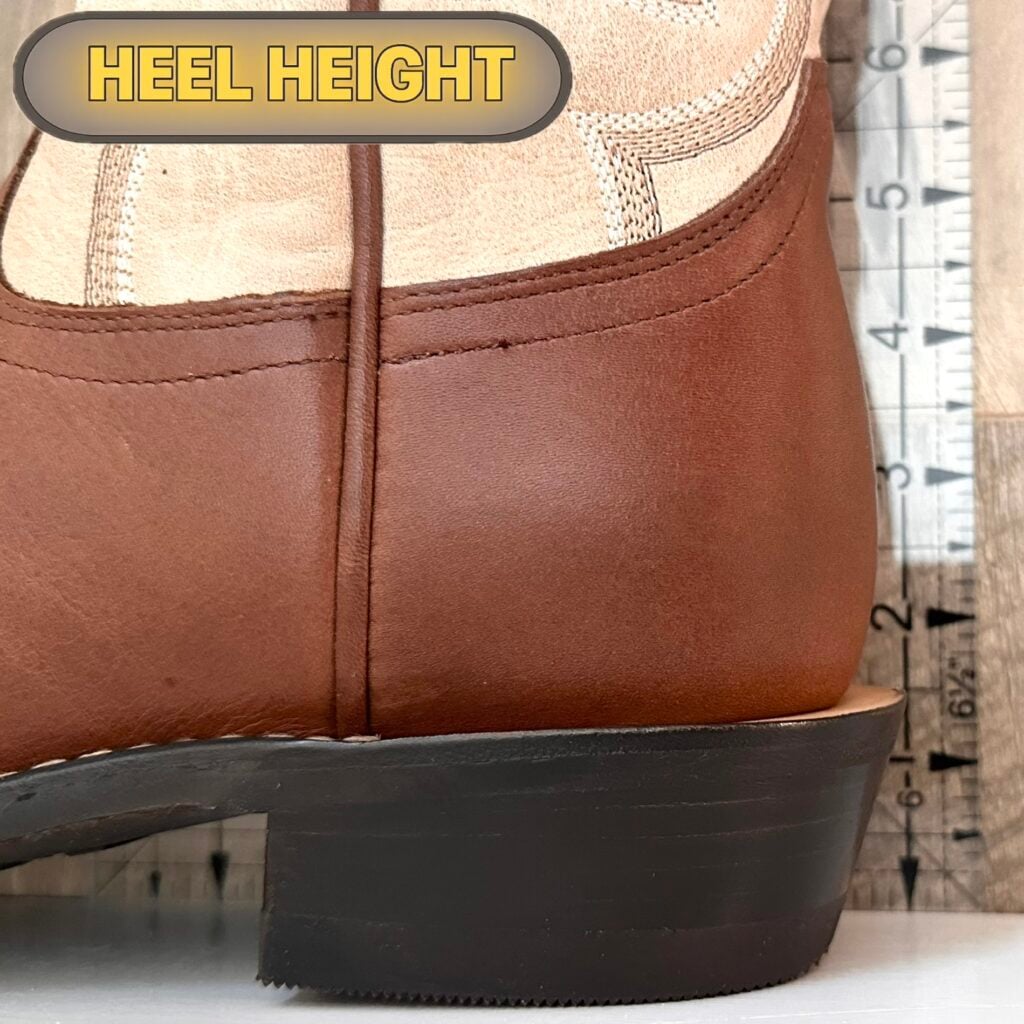
The horseman heel is designed with horseback riding in mind and often has a taller, more pronounced profile. These heels commonly measure around 1.5 to 2 inches in height, although dimensions vary by manufacturer. Horseman heels typically have a noticeable pitch that helps position the foot in the stirrup. Some manufacturers use the horseman heel as a pitched riding heel that sits closer to the ground than a traditional cowboy heel (making it more versatile and easier to walk in). Here is a horseman heel that I own:
Roper Heel
The roper heel is typically near 1 inch tall and usually has a 90-degree angle, making it a straight heel. These types of heels are often preferred for everyday wear. Here is a roper heel that I own: