What Is a Bias Cut in Alligator Boots?
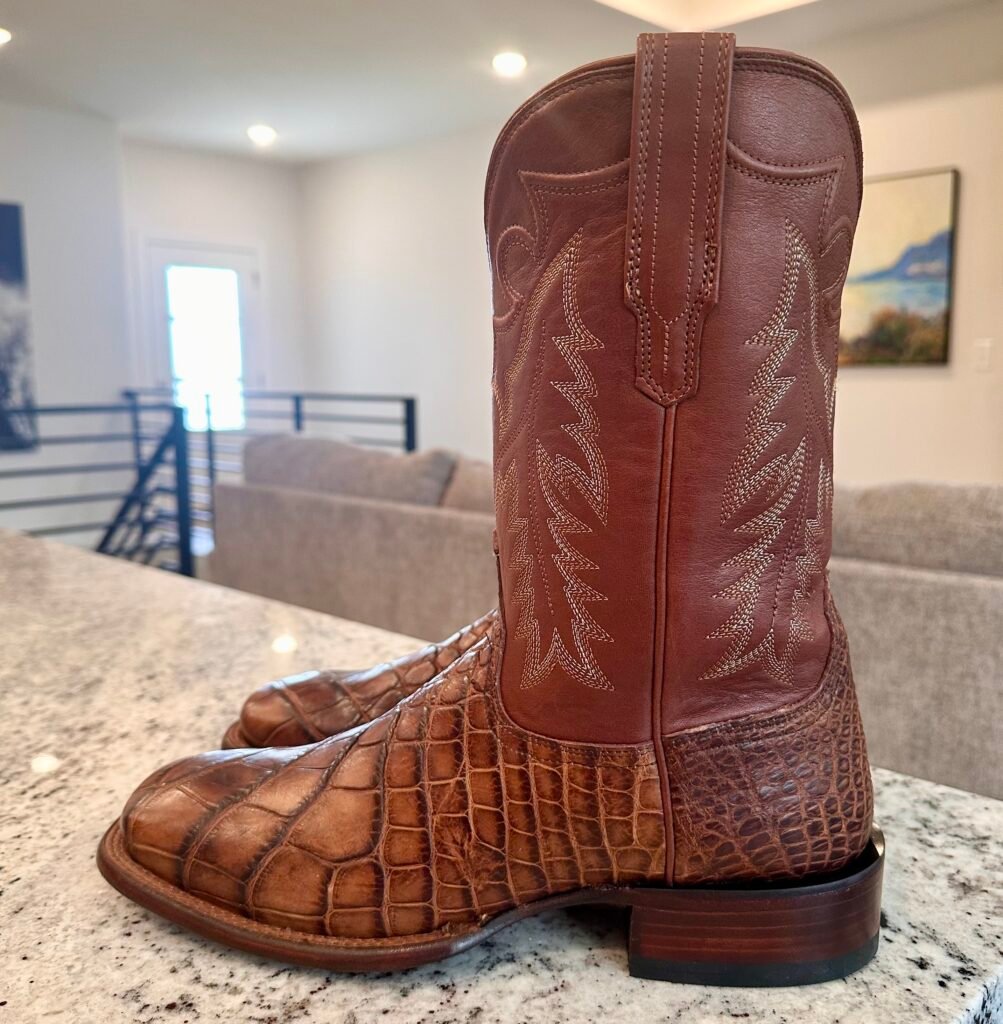
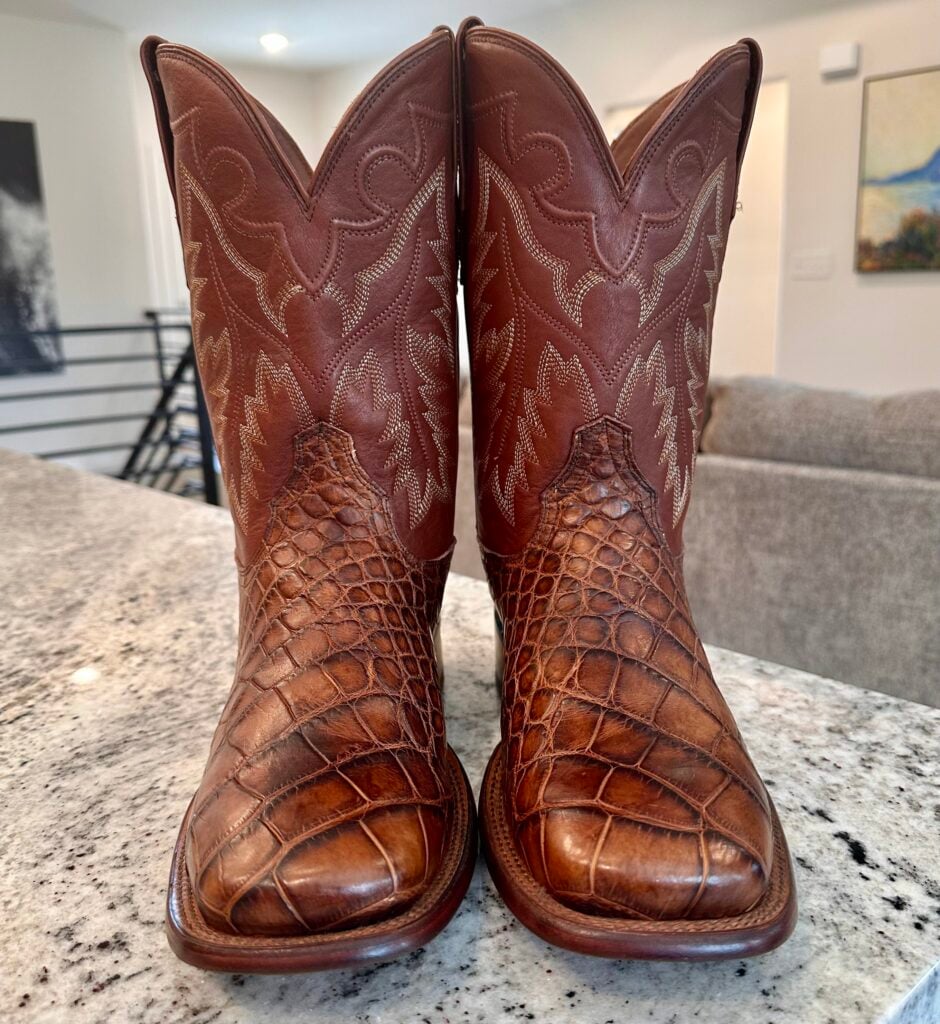
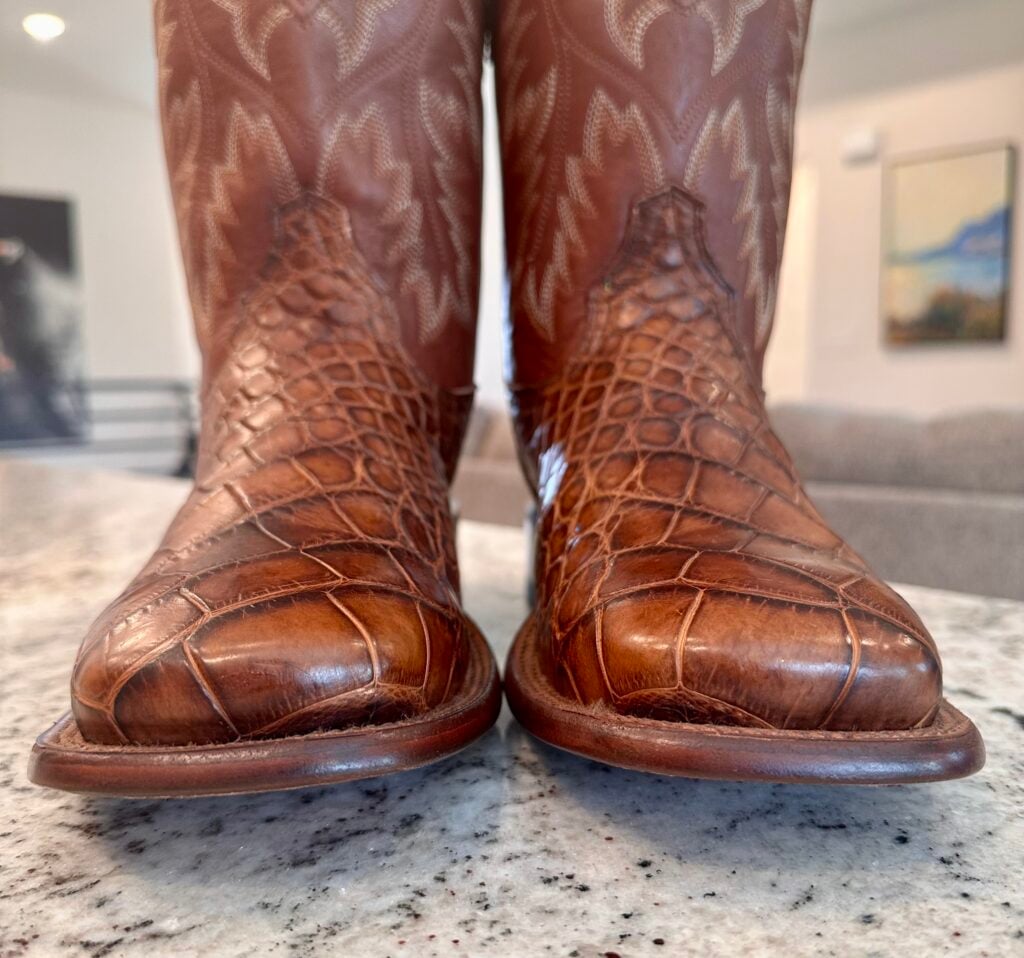
Bias cut alligator boots use leather that has been cut and positioned at an angle to create a diagonal scale pattern across the vamp area of the boot. Rather than arranging the scales in their usual horizontal or vertical orientation, the angled cut gives the scales a tilted appearance that runs across the foot. The purpose is primarily visual, creating a distinctive diagonal pattern that differs from conventional alligator boots. Bias cut is not a separate type of alligator leather but a particular way of cutting and arranging the hide.
For example, here are a pair of bias cut giant alligator boots that I own (see brand name of these boots by clicking here):
What Makes Bias Cut Alligator Leather Special?
The defining characteristic of bias cut alligator is the direction of its scales. Traditional alligator boots generally have rows of rectangular scales arranged in a relatively straight, symmetrical pattern. Bias cut leather changes that arrangement by turning the scales diagonally across the vamp.
Here is a look at bias cut alligator boots (on the left) vs a pair of traditional alligator boots that do not have the diagonal patters:
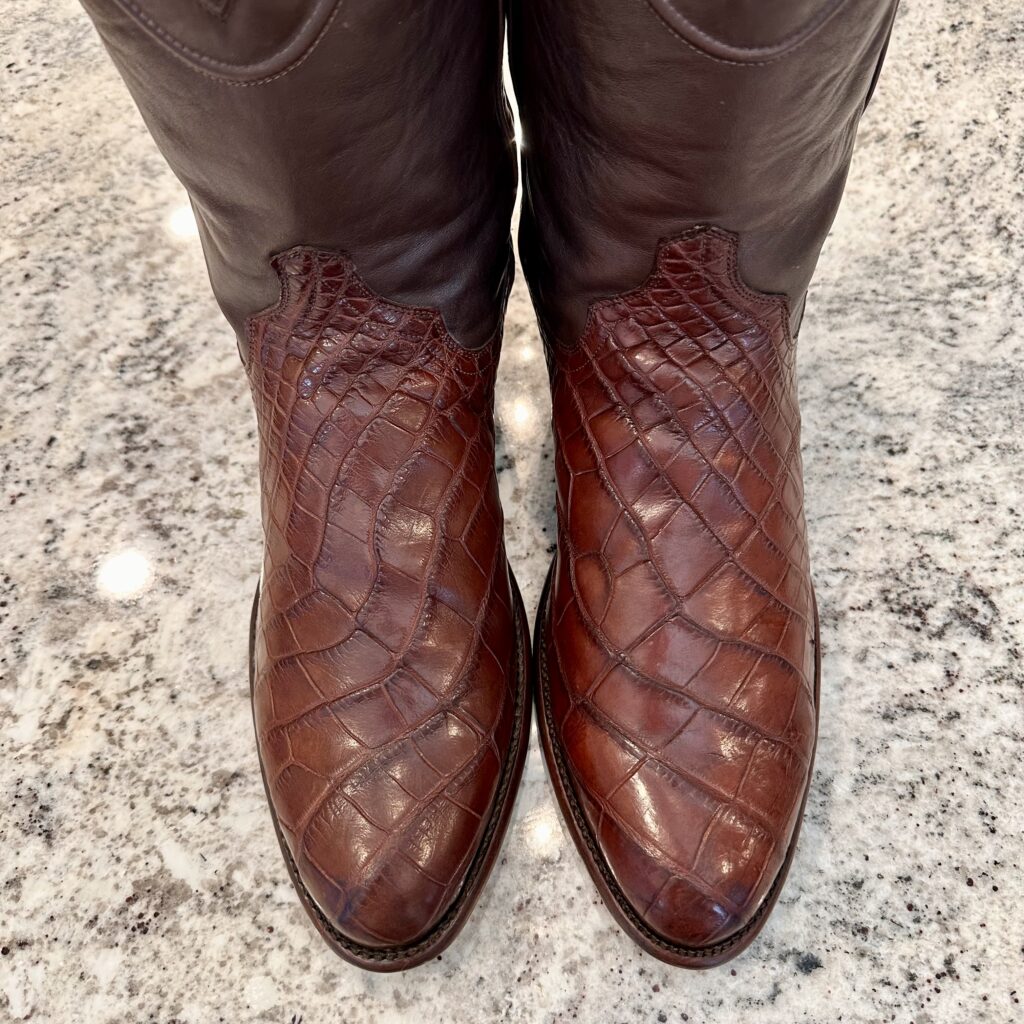
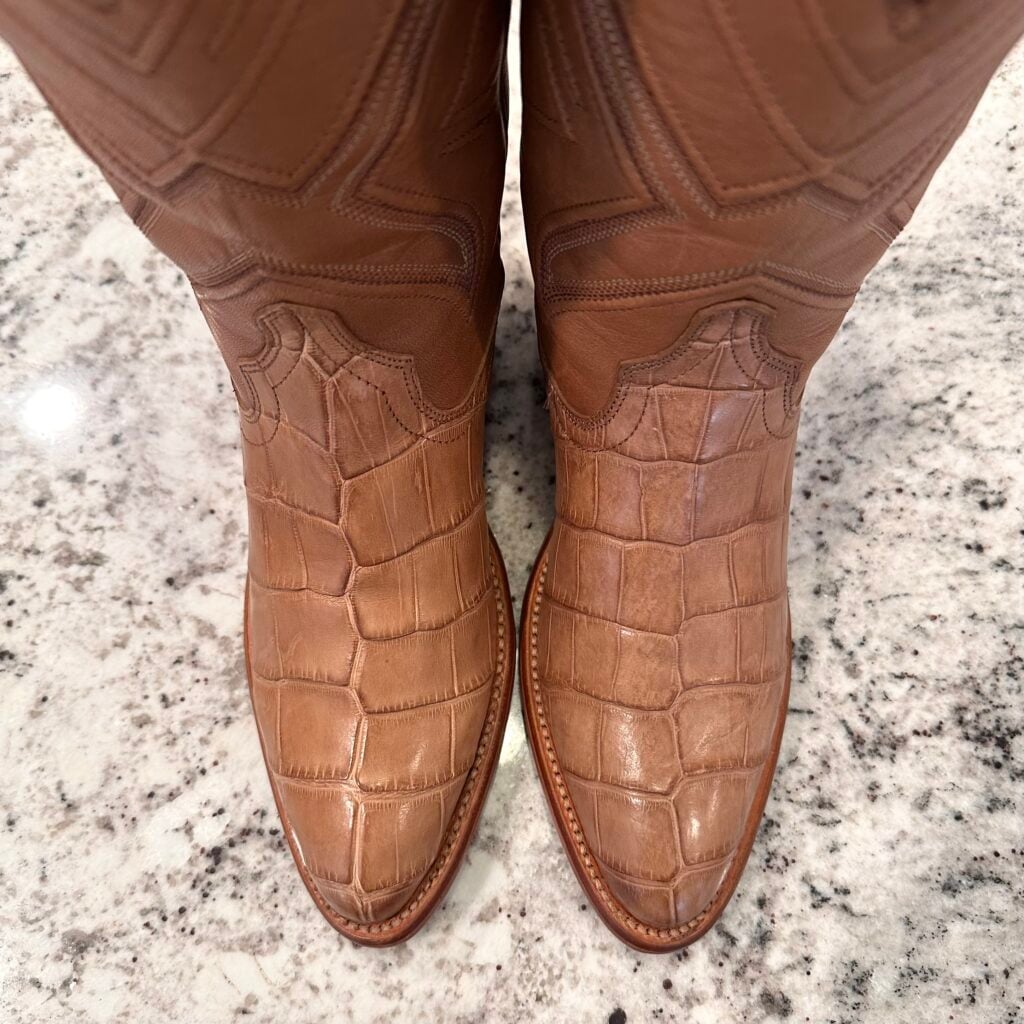
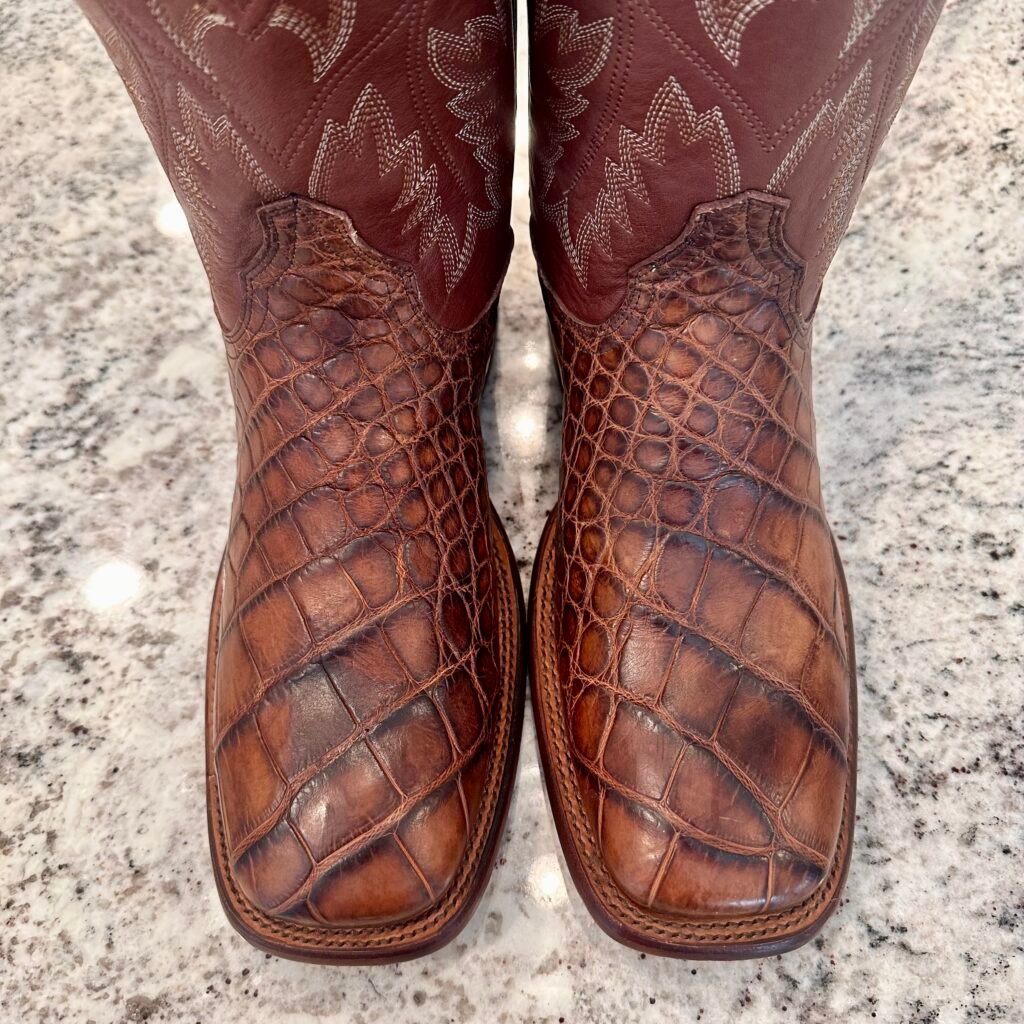
You can see above how the diagonal pattern runs across the entire vamp and toe area of the boots creating a unique appearance.
Here is another pair of bias cut boots that I own:
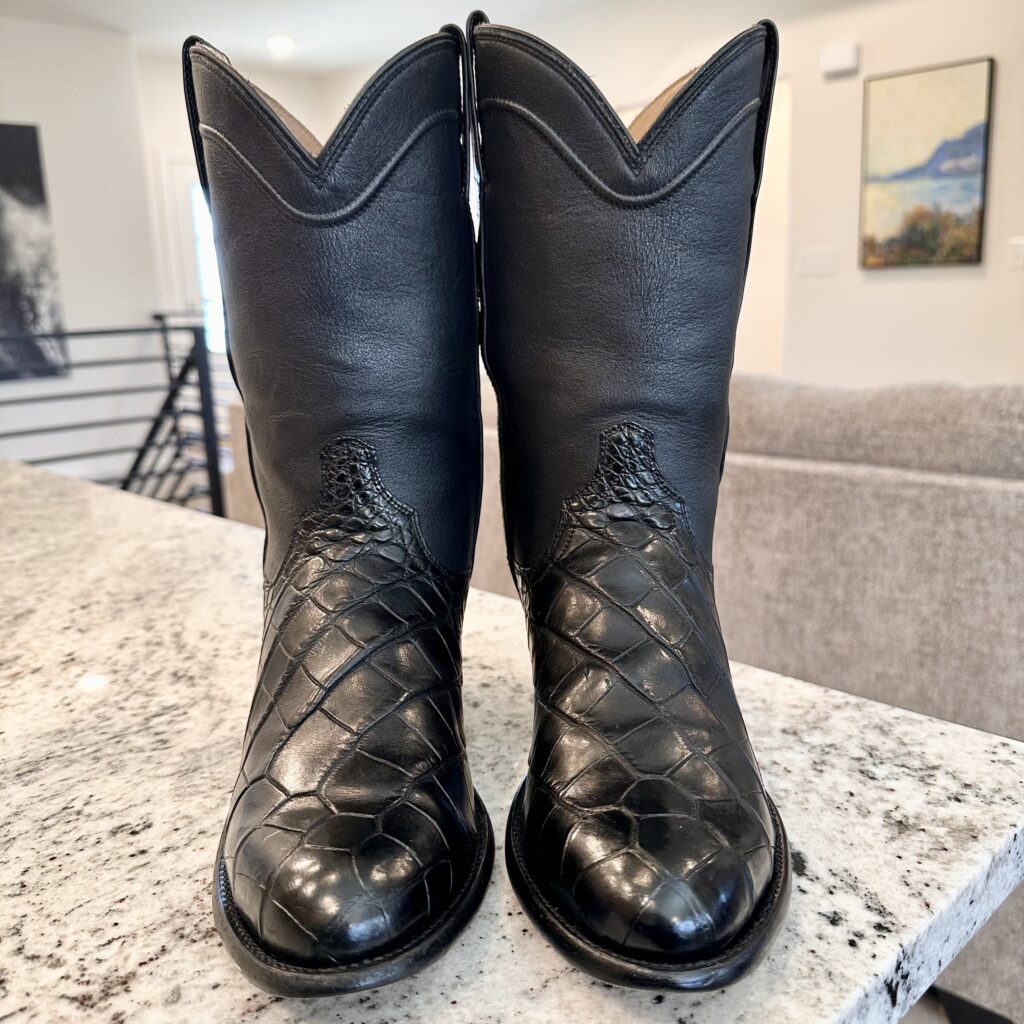
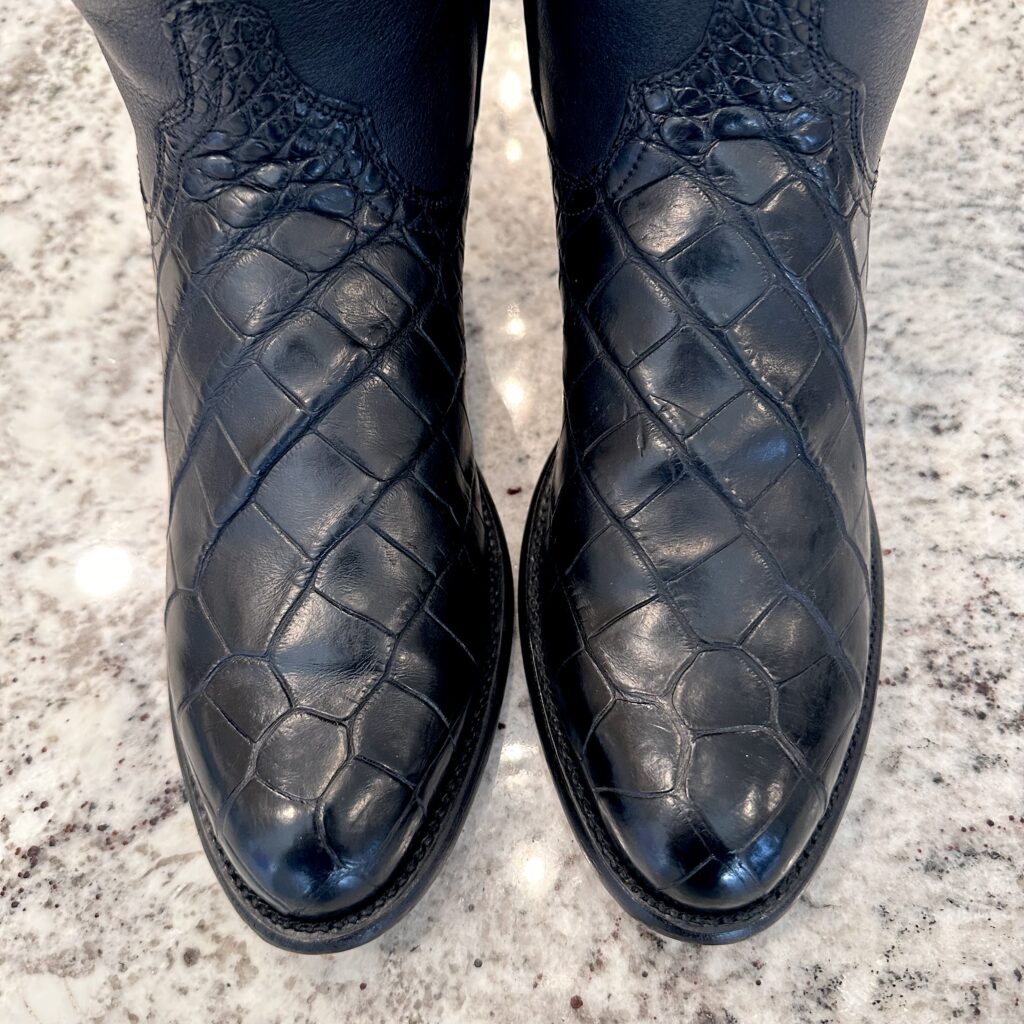
This is mostly for style purposes. It creates a different visual flow and gives the boot a more unusual appearance. The diagonal pattern can also sometimes incorporate different scale sizes, with larger scales toward the center of the vamp area and smaller scales toward the sides.
Bias cut alligator is usually associated with giant alligator hides. Larger hides provide more substantial scale patterns and greater variation in scale size, making them suitable for the diagonal arrangement. Some bootmakers describe large alligator belly leather as bias cut, while others use the term to describe flank leather, which comes from the sides of the animal.
The terminology can vary between manufacturers, so you should look at the actual scale arrangement rather than relying exclusively on the product description. Giant alligator is the most common type of leather to receive a bias cut due to its larger scales and distinctive natural pattern.
Why are bias cut alligator boots popular?
I like bias cut alligator boots simply because the vamp has the unique diagonal layout. Alligator leather has long been used in high-end cowboy boots, but bias cutting offers another way to showcase the hide rather than simply using the conventional pattern.
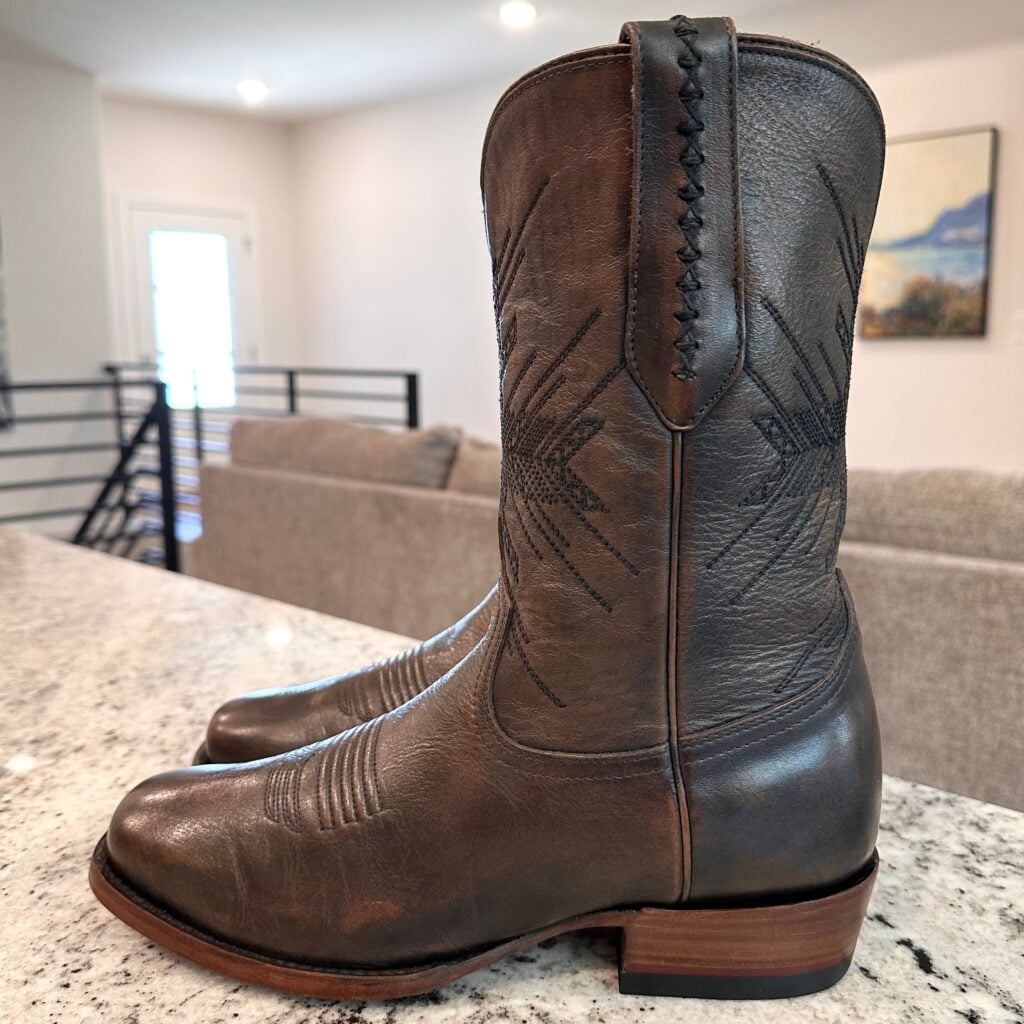
Some more of my boots:
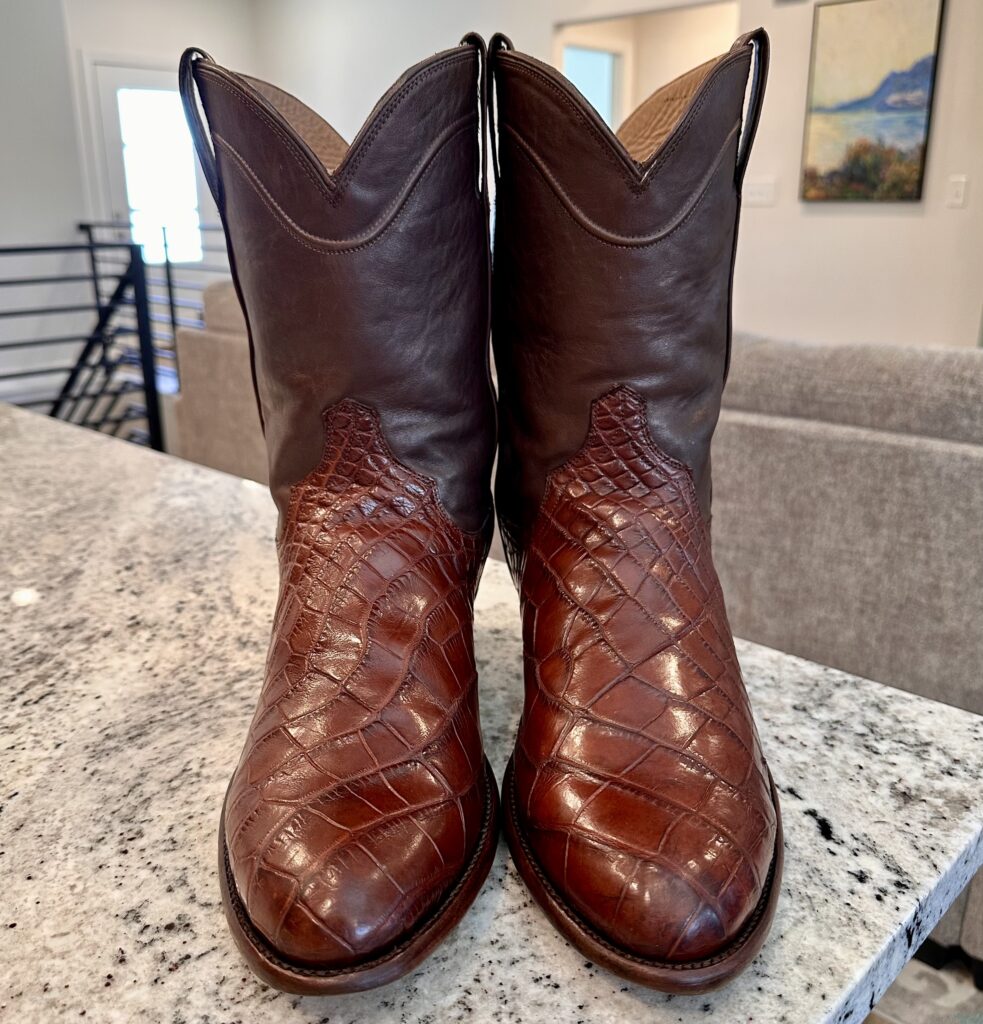
It is relatively uncommon compared to standard belly-cut alligator, making it particularly appealing if you are a collector or looking for something that will stand out. Bias cutting also does not automatically make the leather stronger, more flexible, or more durable. The quality of the hide and the bootmaking process remain important considerations.
Understanding Bias Cut Cowboy Boots
| Issue | Info |
|---|---|
| What is it? | A method of cutting and positioning alligator leather at an angle to create a diagonal scale pattern. |
| Where is it? | Visible across the vamp and toe area of the boot. |
| Appearance | Creates a distinctive diagonal pattern that differs from the straight, symmetrical scale arrangement of traditional alligator boots. |
| Leather Type | Most commonly associated with giant alligator, although the technique is not limited to one type of alligator hide. |
| Scale Pattern | Often combines larger scales toward the center of the vamp with smaller scales toward the sides. |
| Purpose | Primarily decorative. The angled arrangement creates a different visual flow and showcases the natural scale pattern of the hide. |
| Premium Level | Considered a premium treatment of an already expensive exotic leather. Giant alligator and specialized hide selection can add to the price. |
| Popularity | Less common than traditional belly-cut alligator, making it appealing to exotic boot collectors and buyers looking for something different. |
| Durability | Bias cutting does not inherently improve strength, flexibility, or durability. The quality of the hide and boot construction remain the determining factors. |
| Comparison | Traditional alligator boots generally have straighter scale arrangements, while bias cut boots display a diagonal pattern across the vamp. |
Other Popular Cowboy Boots
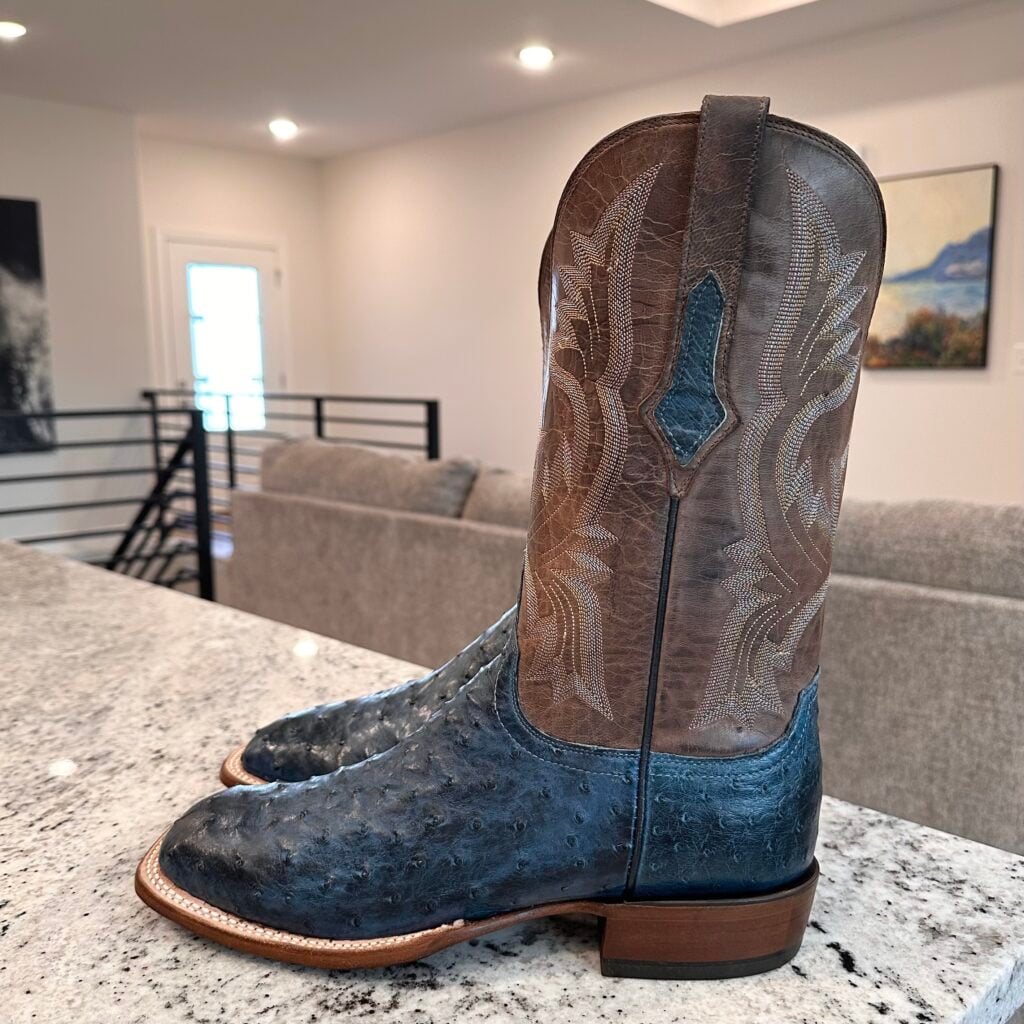
Navy Chocolate Full Quill Ostrich – click here to see brand name and see more photos of this boot
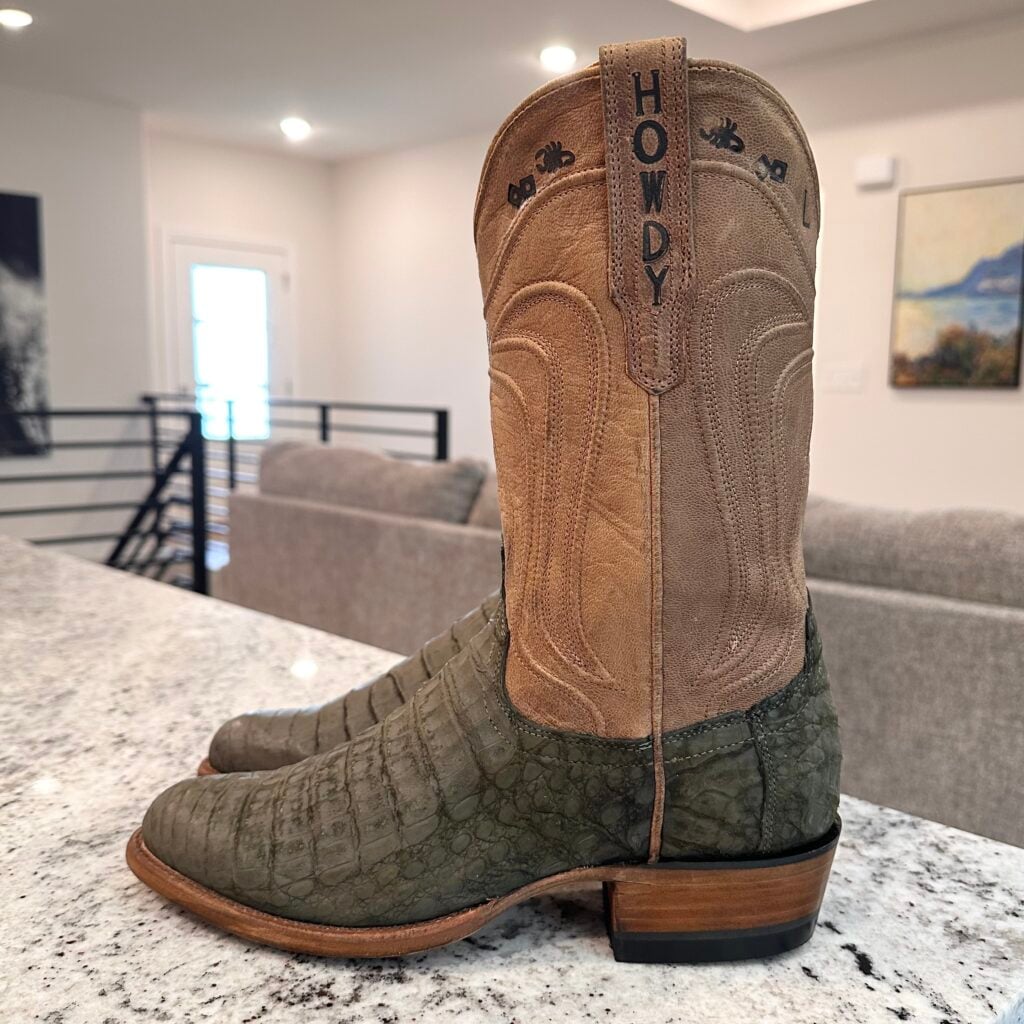
Poblano Sueded Caiman Boots – click here to see brand name and see more photos of this boot
Black Cherry Crocodile Boots – click here to see style name and see more photos of this boot
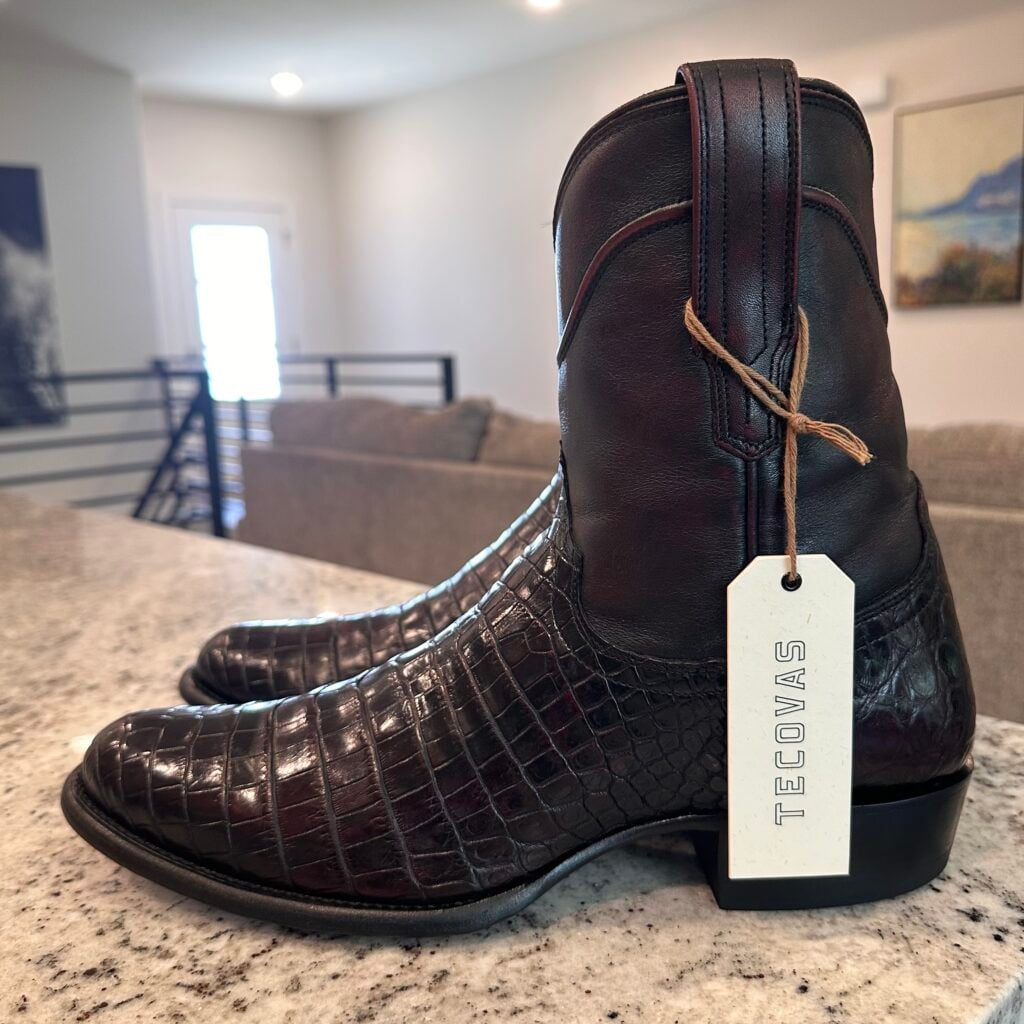
Giant Gator Bias Cut Boots – click here to see brand name and see more photos of this boot
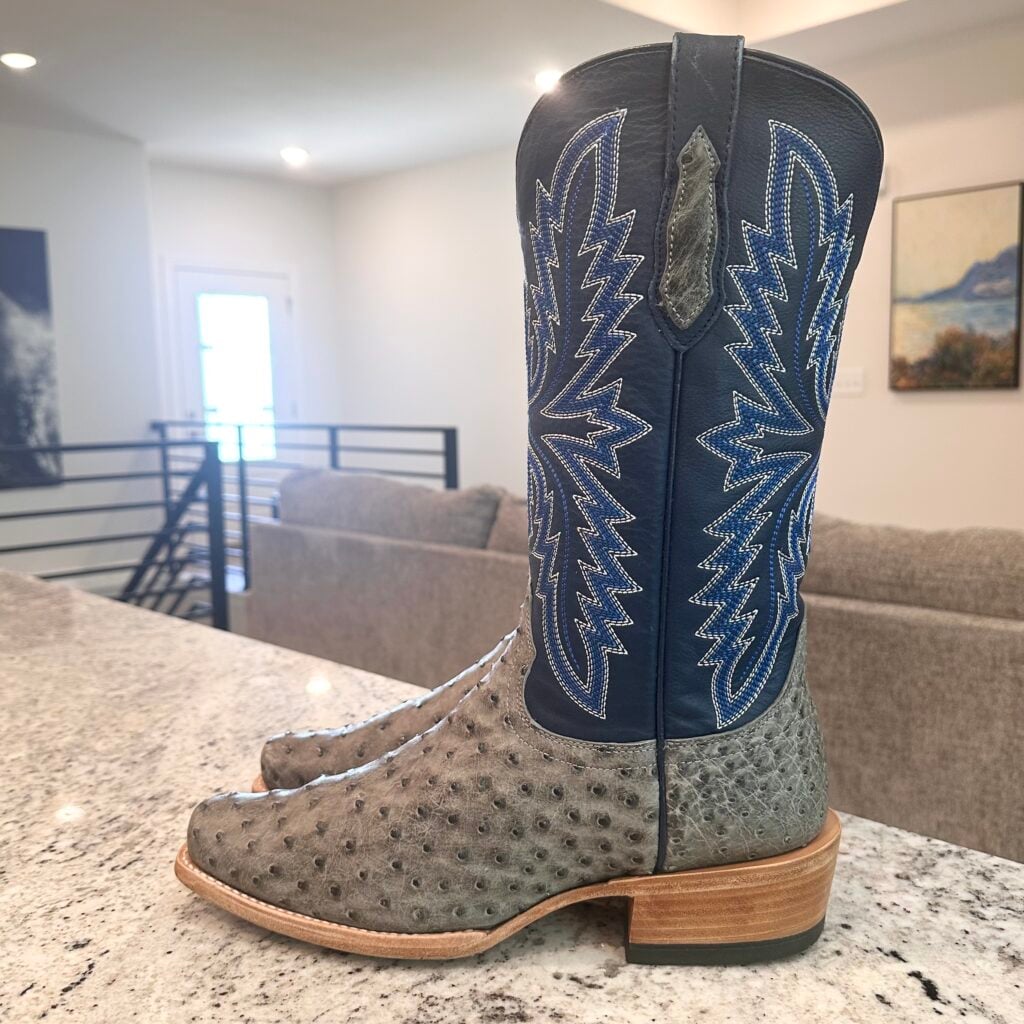
Gray Full Quill Ostrich – click here to see brand name and see more photos of this boot
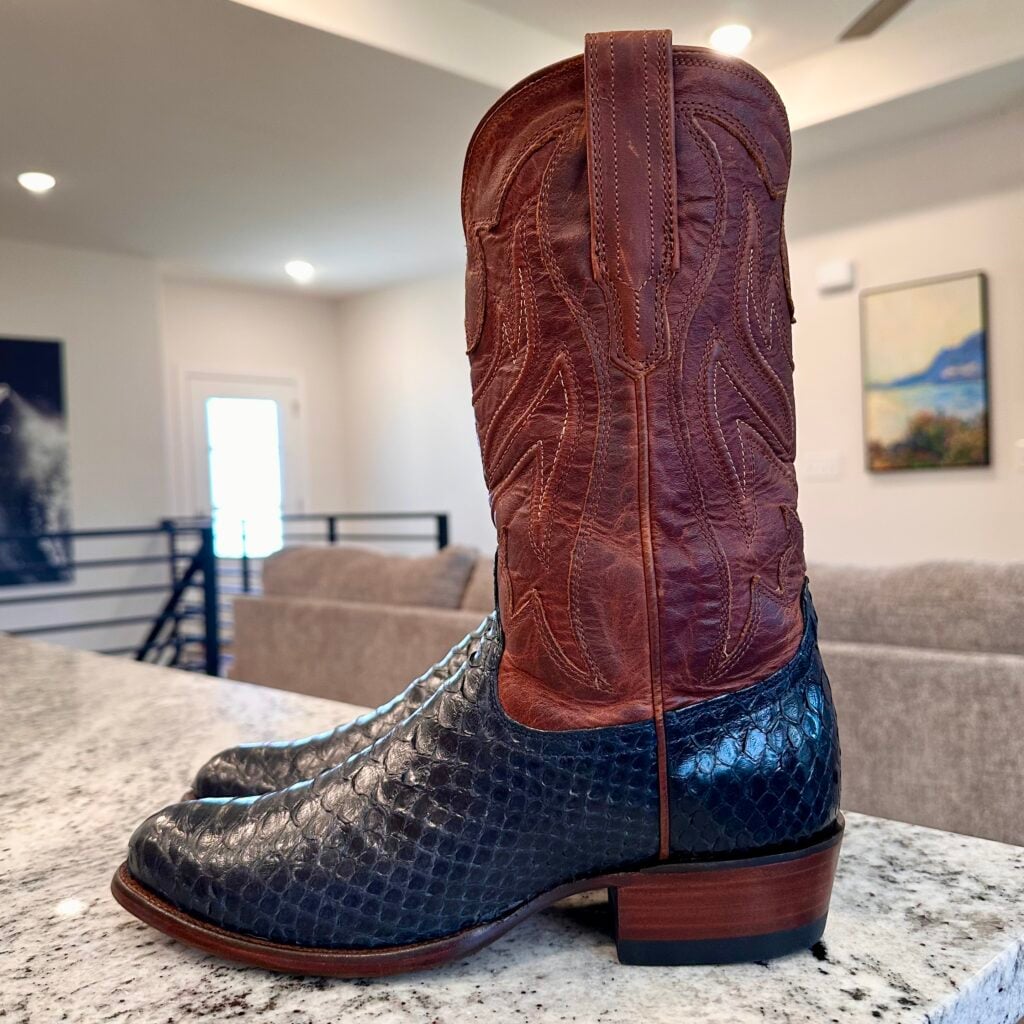
Navy Back Cut Python – click here to see brand name and see more photos of this boot
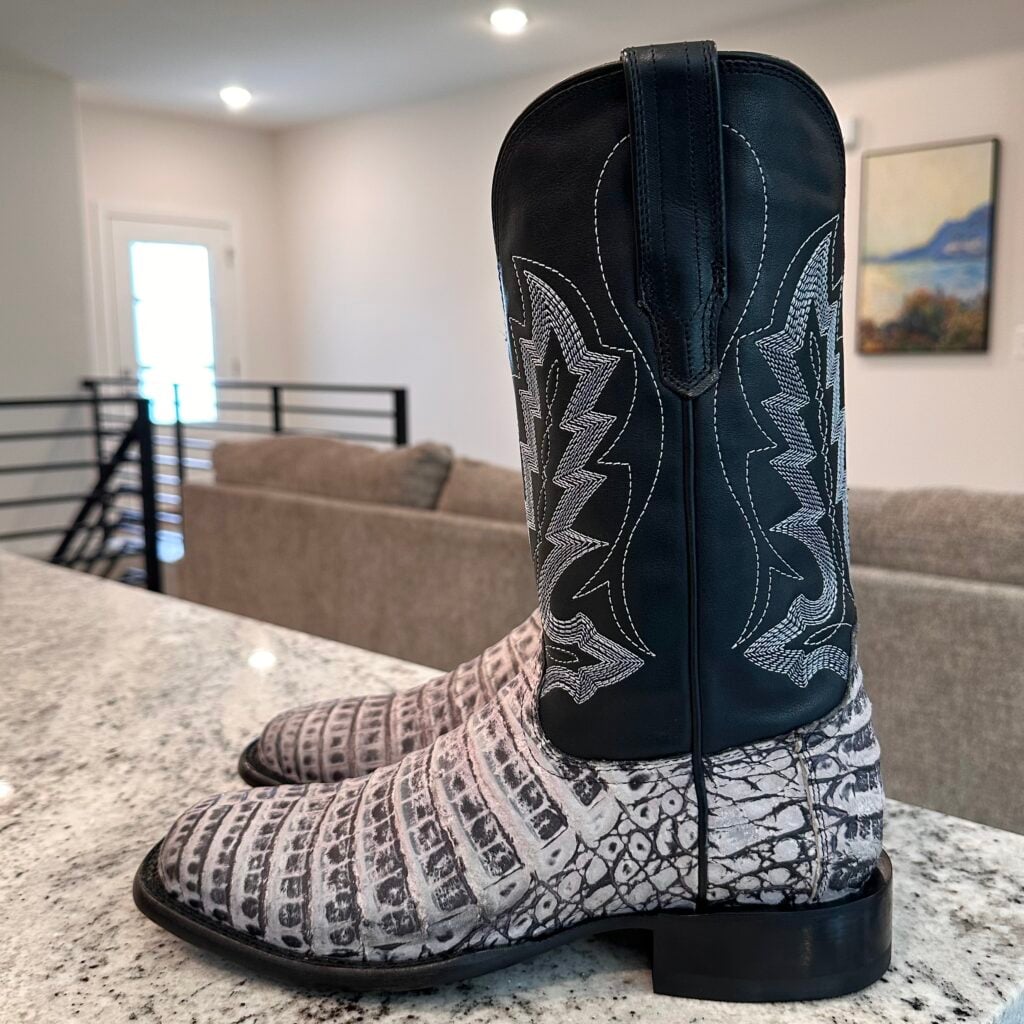
Gunsmoke Sueded Caiman Boots – click here to see brand name and see more photos of this boot
Heritage Brushed Brown Boots – click here to see brand name and see more photos of this boot