
What Are Siped Outsoles?
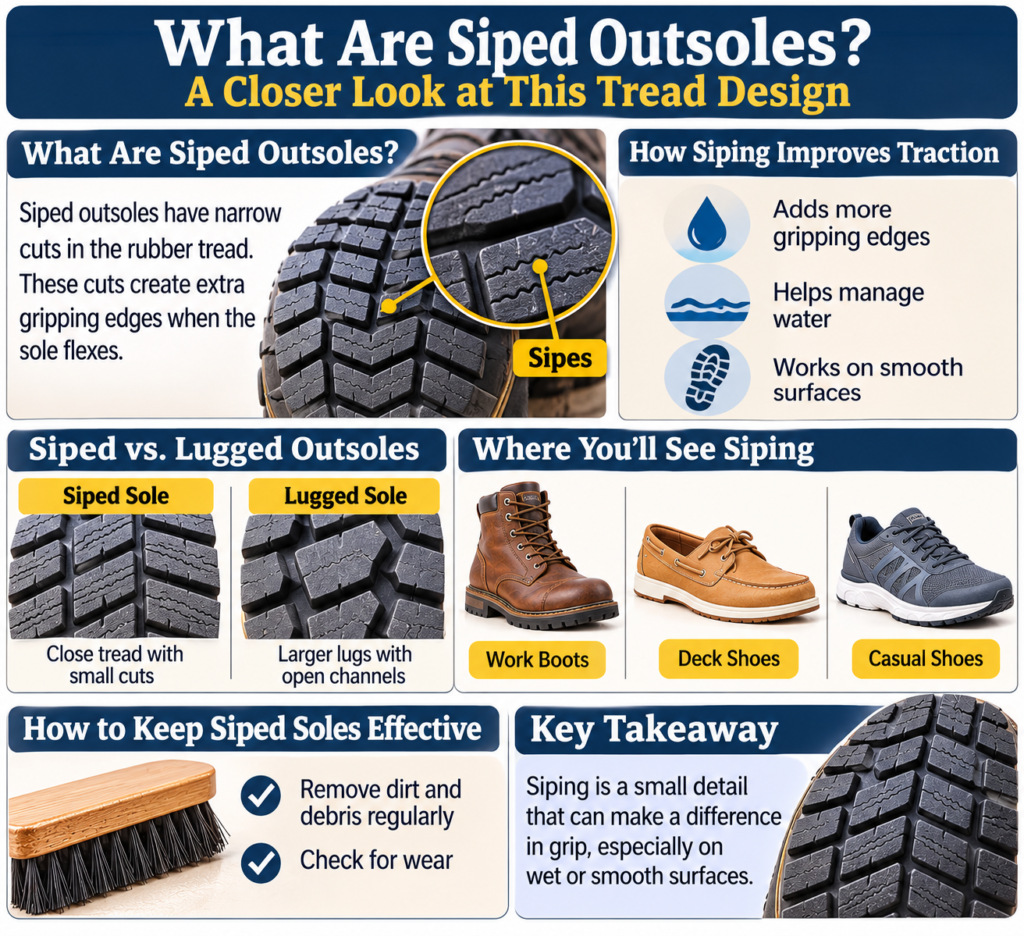
Siped outsoles are used in footwear to create extra traction on wet surfaces. Siped outsoles have small, narrow cuts called sipes that open slightly as the outsole flexes during walking and help improve traction on wet or slippery surfaces. Manufacturers use siping on work boots and other footwear that would commonly be used in a wet environment.
The design is commonly found on work boots, but it’s also used on certain types of footwear where deep, aggressive tread lugs would be impractical, such as running shoes and deck shoes. Siping is most useful on flat, smooth surfaces (like wet concrete or a wet boat dock) where traditional aggressive tread patterns may not provide enough contact with the walking surface.
The Purpose of Siping in Boots
Creates Additional Gripping Edges
Sipes create additional edges across the rubber outsole. As you walk and the sole flexes, the narrow cuts can open slightly and expose more of these edges to the walking surface.
These additional contact edges can help the outsole maintain grip during movement. The effect depends on the rubber compound, the depth and direction of the cuts, and the surface underfoot.
Helps Manage Water on Wet Surfaces
Water can reduce friction between a footwear outsole and the ground. Siping provides small channels that help manage moisture at the contact area.
Some siped outsole designs also incorporate molded channels that direct water away from the tread. This combination of narrow cuts and drainage channels can improve traction on wet floors and other hard surfaces.
Siping does not make a boot slip-proof. The actual grip depends on the complete outsole design, including the rubber compound, tread pattern, and condition of the sole.
Allows Traction Without Deep Tread Lugs
Traditional work boot outsoles often use raised rubber lugs to provide grip on dirt, gravel, mud, and other uneven surfaces. Siped outsoles use a different approach by incorporating these narrow cuts into relatively close-packed tread patterns.
This construction can provide better contact with smooth surfaces while maintaining a lower-profile tread. And because of that, this siping technique is common in footwear designed for wet surfaces where deep, aggressive tread lugs would be unnecessary or impractical, such as running shoes and casual deck shoes.
Siping in Work Boots
Work boots with siped outsoles are generally designed for workers who spend time on hard surfaces where moisture can create slipping hazards.
Some work boots combine siped tread sections with deep lug patterns. These hybrid designs attempt to provide traction on both hard surfaces and rugged outdoor terrain.
The center of the outsole may use closely spaced tread and siping for contact with concrete, while larger perimeter lugs provide additional grip on dirt and loose ground.
This construction can be useful for workers who regularly move between indoor floors and outdoor jobsites.
Siped Outsoles vs Lugged Outsoles
Siped and lugged outsoles use different tread designs to address different walking conditions.
Lugged outsoles have raised sections of rubber separated by open channels. The spacing allows dirt, mud, and other debris to move out of the tread as the wearer walks. The raised lugs also provide contact edges on uneven surfaces.
As we have discussed, these siped outsoles use narrow cuts within the rubber tread to create additional gripping edges. Their relatively close-packed patterns are often better suited to smooth, hard surfaces.
Neither design is universally better. Workers who regularly walk through mud, gravel, and loose soil may benefit more from deeper lug patterns. Workers who spend most of their time on wet concrete or smooth flooring may prefer a closer-packed siped design.
Types of Footwear That Use Siping
- Work Boots: Some work boots use siped rubber outsoles to improve traction on wet, smooth surfaces such as concrete floors and industrial work areas.
- Deck Shoes and Boat Shoes: Traditional boat shoes use siped, non-marking rubber soles to grip wet boat decks without leaving scuff marks. Paul Sperry’s original Top-Sider helped popularize the design in the 1930s.
- Fishing Shoes: Siped outsoles can improve grip on wet boat decks, docks, and other slippery surfaces. Some designs combine siping with specialized rubber compounds and drainage features.
- Athletic Shoes: Some athletic shoes use small cuts in the outsole to add gripping edges while maintaining flexibility and surface contact.
- Casual and Outdoor Shoes: Siping can provide traction on relatively flat outsoles where deep, aggressive tread lugs would be unnecessary or impractical.
How to Maintain Siped Outsoles
Siped outsoles require regular cleaning to maintain their intended traction characteristics. Dirt, grease, mud, and other debris can collect inside the narrow cuts and reduce the effectiveness of the tread.
Use a stiff nylon brush and mild soap with water to remove accumulated material. Pay particular attention to the small grooves where debris can become trapped.
Inspect the outsole periodically for worn tread, damaged rubber, and flattened sipes. The narrow cuts can lose their effectiveness as the rubber wears down.