
*This page has affiliate links to Amazon. As an Amazon Associate I earn from qualifying purchases. (info)
Lizard skin boots have a unique beauty that stands out from other leathers. The small, uniform scales and glossy finish make them look refined, but they’re also delicate. Because the scales can dry out, lift, or crack, maintaining and cleaning lizard skin boots is crucial.
These are the products I like to use to clean lizard skin boots:
- Cleaner – Bickmore Exotic Leather Cleaner (click here to view)
- Condition/Polish – Tecovas Exotic Polish (click here to view)
- Brush – Cobbler’s Choice Horse Hair Brush (click here to view)
- Water Repellent – Bickmore Gard-More Spray (click here to view)
- Dust Bags – Tuff Guy Boot Bag Covers (click here to view)
Lizard boots are one of the most eye-catching types of exotic leather, but they require thoughtful care. Cleaning them is less about deep scrubbing and more about preserving their natural oils and shine.
Lizard leather is thin, flexible, and naturally smooth, but it relies on moisture and oils to stay that way. The scales are tightly packed together, giving the skin its patterned look. Each scale edge is a potential weak spot, so any harsh cleaner or aggressive brushing can cause damage.
By using the right products, keeping them dry, and knowing when to call a cobbler, you can keep your boots in excellent condition for years. I like using Bickmore Exotic for cleaning and Tecovas Exotic Polish for finishing, but whichever products you choose, the key is moderation.
My Lizard Boots After Cleaning
Below are my photos for the Tecovas Nolan Men’s Lizard Skin Boots. I have the Tecovas Nolan in Chocolate, which is a sort of dark brown color. I am really pleased with how these boots have held up over time.
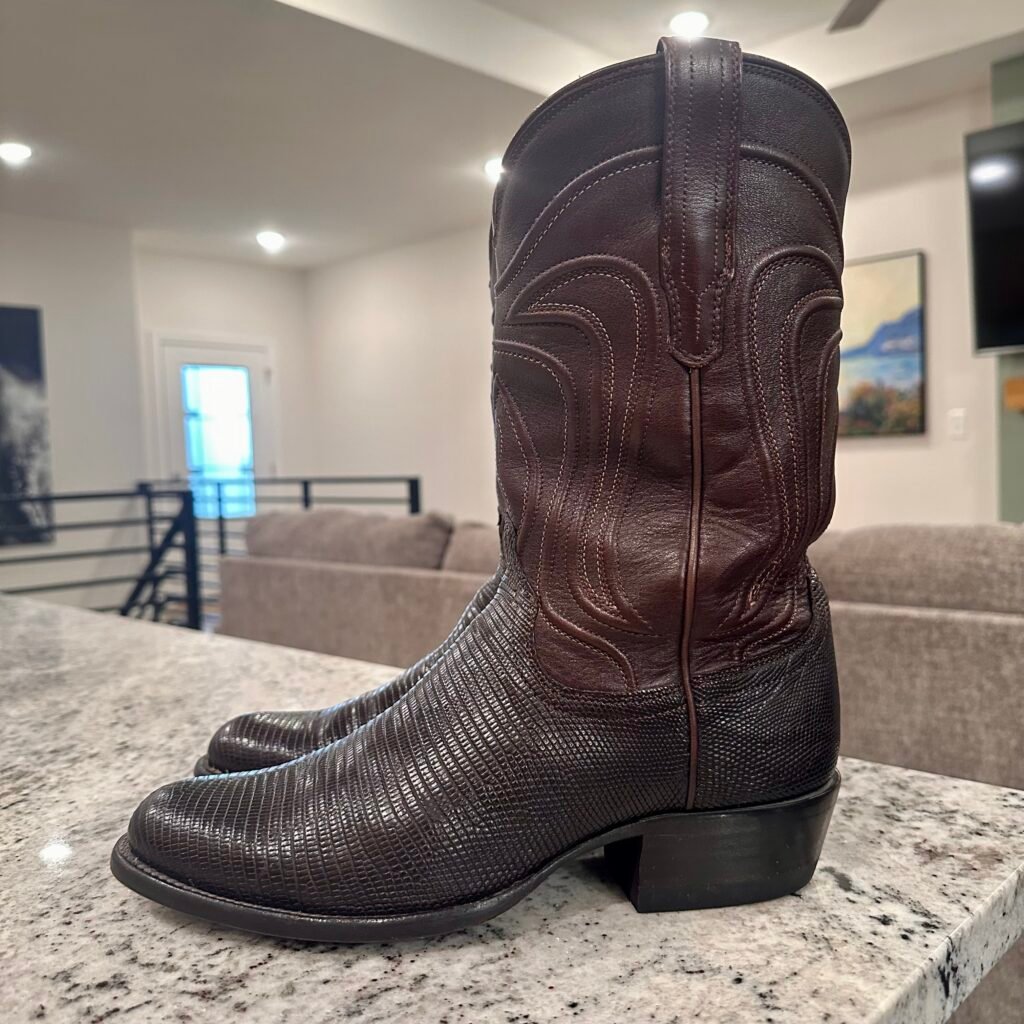
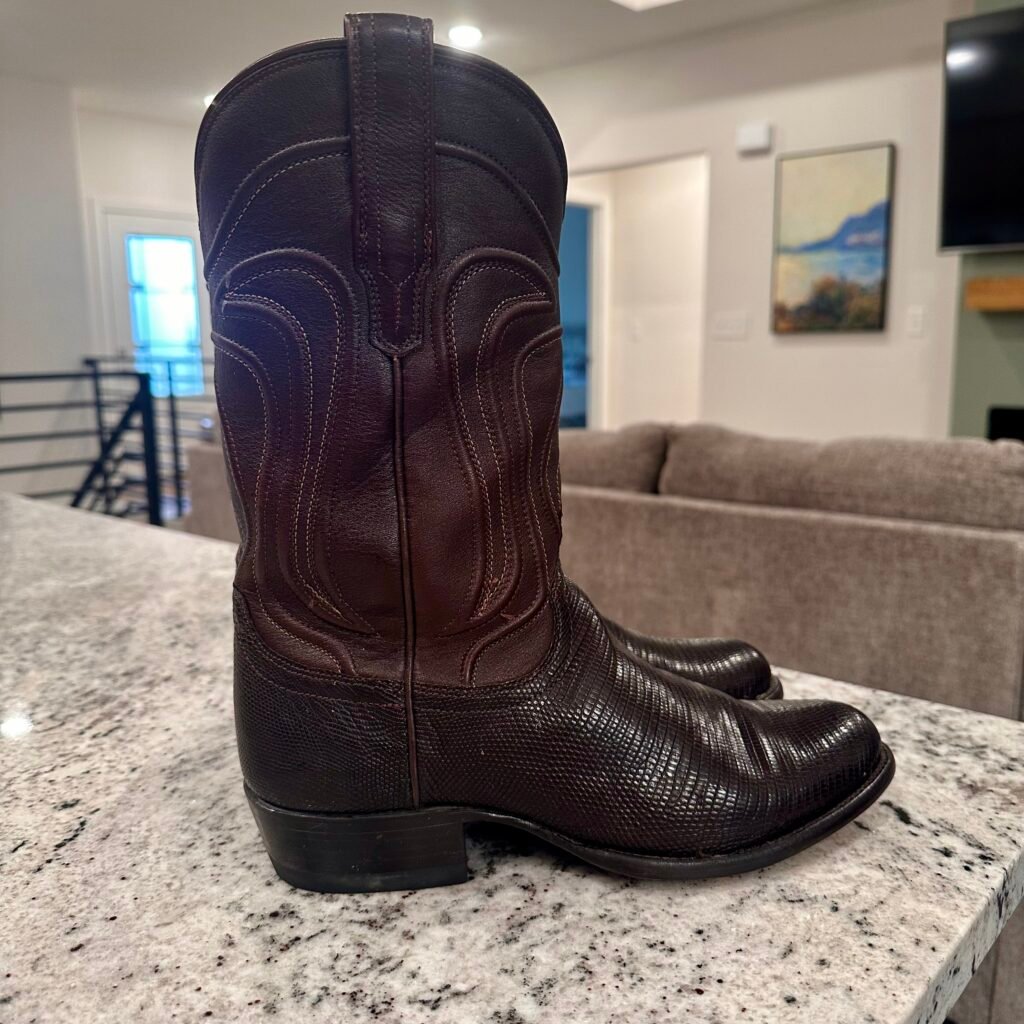
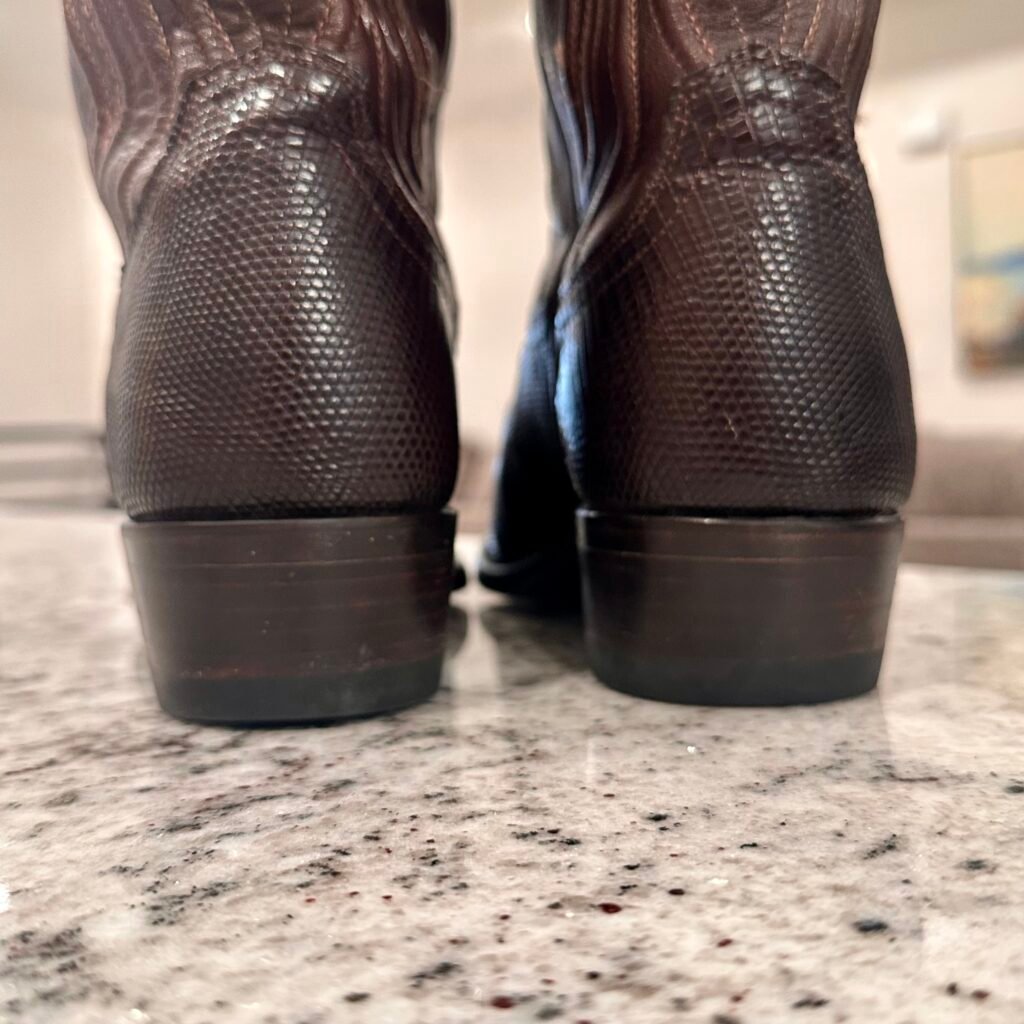
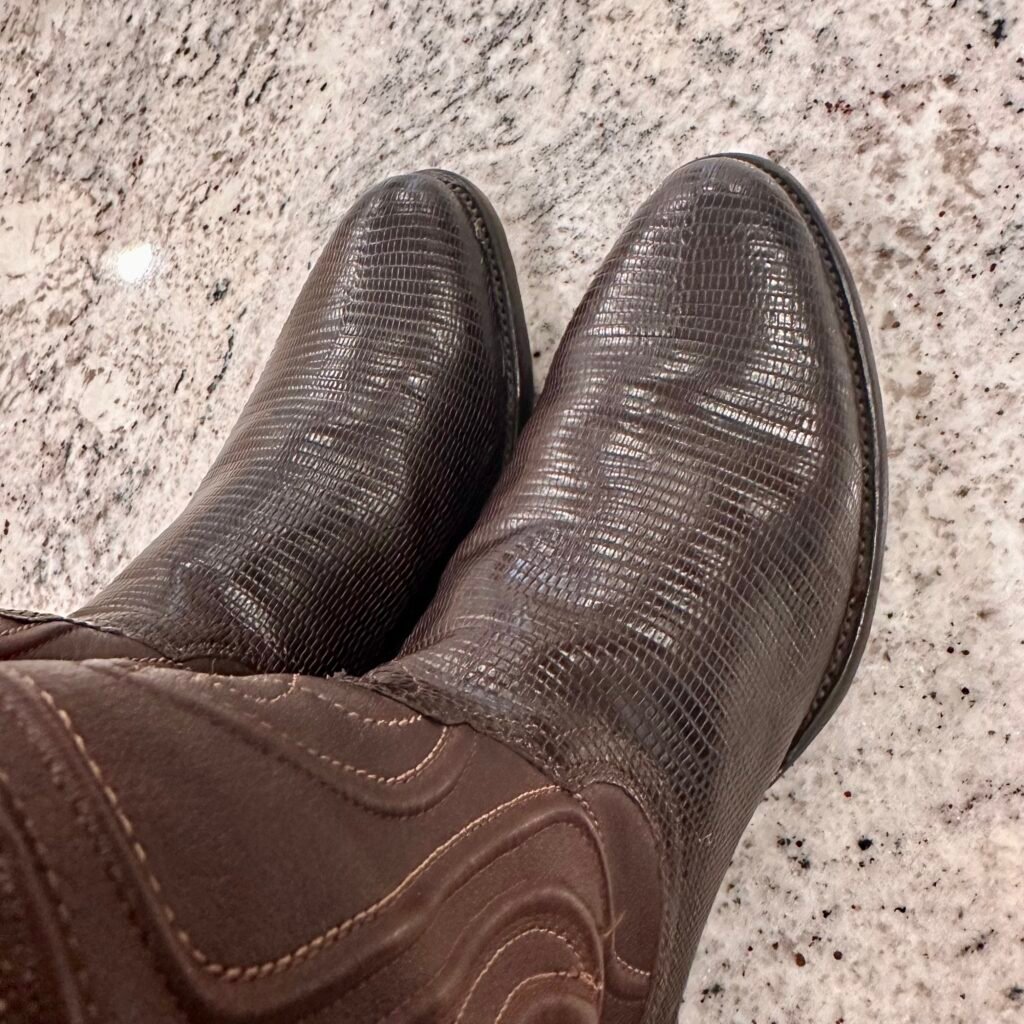
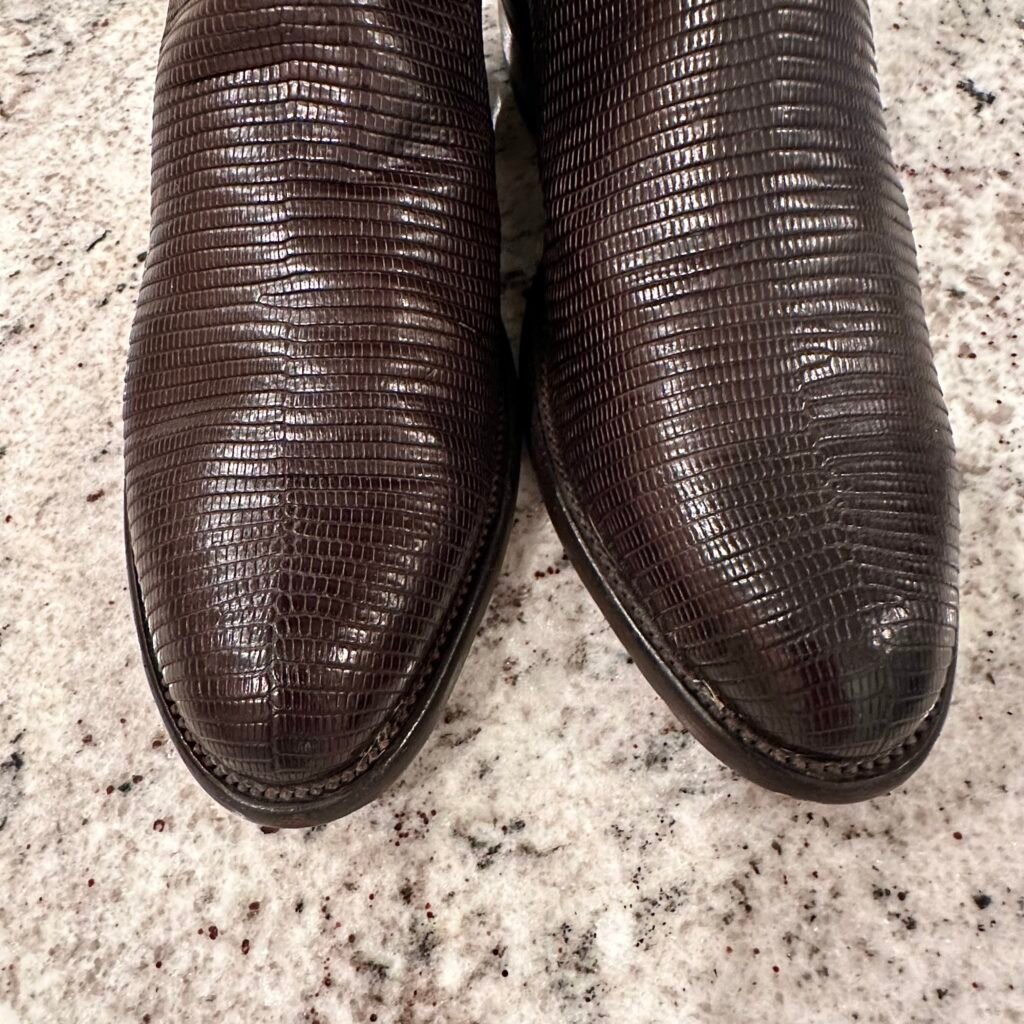
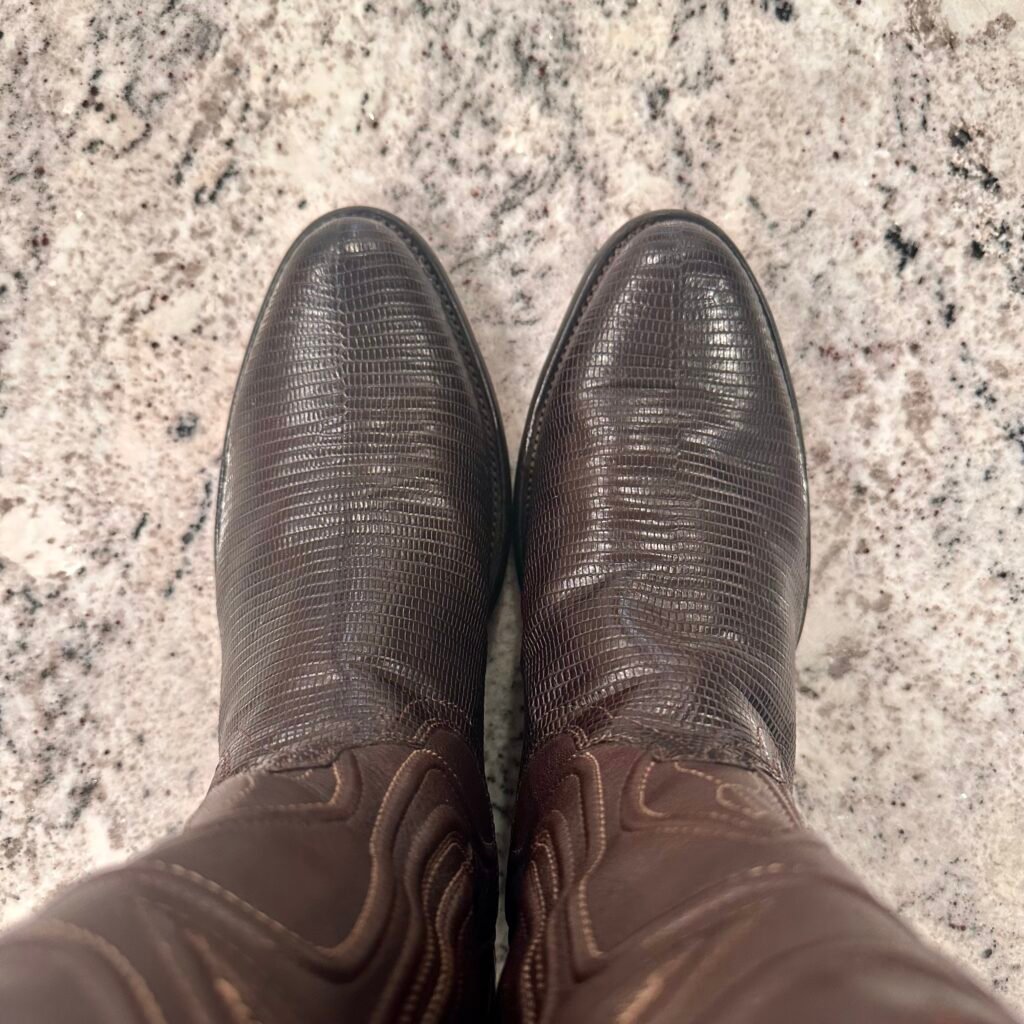
How to Clean Lizard Skin Boots
Step 1: Remove Loose Dust and Dirt
Start by gently wiping your boots with a soft, dry cloth. I personally like to use a horsehair brush, but avoid hard scrubbing or back-and-forth motion against the grain of the scales.
Always brush or wipe with the direction of the scales and not against them. This prevents edges from catching or lifting.
Step 2: Apply a Gentle Cleaner
Next, it’s time to remove any buildup or residue. I like to use Bickmore Exotic, a cleaner made specifically for exotic leathers like lizard. I like to apply a small amount to a soft cloth (not directly on the boot) and gently wipe the surface in light, even strokes.
You don’t need much product. The goal isn’t to soak the leather but to lift away dirt and old polish. Once you’ve gone over both boots, take a clean part of your cloth and lightly buff away any leftover cleaner.
If you don’t have Bickmore Exotic, you can use another mild exotic-leather cleaner, but always avoid anything that contains alcohol or silicone. Those ingredients can dry and stiffen the skin.
Step 3: Condition and Polish the Leather
The Bickmore Exotic cleaner I use is also a conditioner, but I don’t really think it polishes the leather (again, I use it to clean away residue). So I like to use Tecovas Exotic Polish to add some shine to the leather.
Put a small dab on a cloth and work it into the surface gently, following the direction of the scales. Allow it to sit for a few minutes, then buff softly with a clean cloth or horse-hair brush.
In my opinion, it adds a subtle luster without clogging the texture. There are other polishes you can use, but make sure they’re marked safe for exotic skins. Regular shoe polish can be too heavy and may fill the small grooves between the scales, dulling the look.
Things to Avoid When Cleaning Lizard Skin Boots
Don’t Use Harsh Chemicals
Avoid household cleaners, saddle soap, or anything with ammonia or alcohol. These can strip oils and fade color. Also steer clear of strong waxes that leave buildup, they’ll settle between scales and make the finish uneven.
Don’t Get Them Soaking Wet
Lizard skin can handle light moisture but not soaking.
If they do get wet, blot gently with a dry cloth and let them air dry at room temperature. Never use a hair dryer or place them near heat. Direct heat can cause the scales to curl or crack.
Don’t Overcondition
Too much conditioner can cause the scales to lose their crisp definition. Once every few months is enough unless you wear them in dry or hot conditions.
Don’t Store Them Without Protection
When not in use, store lizard boots in a cool, dry place with boot trees inserted. Wrap them in a soft cloth or keep them in their original dust bags. Avoid plastic containers that trap moisture.
How Lizard Skin Boots Handles Water
Lizard skin isn’t waterproof, but it has a tighter grain than some other exotic leathers. It can tolerate a few drops of water or a light rain if wiped off promptly.
What it can’t handle is prolonged exposure. Water can seep into the seams, lift scales, and cause the finish to dull. This will destroy your boots over time.
Some people do prefer to apply a water-repellent spray to their boots after cleaning (Bickmore makes a spray if you’d like one). This can help protect the boots if you might get caught in rain, etc.
I personally just don’t spray my boots and will just wear them in only dry conditions.
When to See a Cobbler for Lizard Skin Boots
Even with careful cleaning, exotic boots can develop wear over time. It’s best to see a professional cobbler if:
- You notice scales lifting or flaking
- The finish becomes dull or uneven despite cleaning
- The soles start separating or feel soft
- There are deep cracks or splits in the leather
A cobbler who has experience with exotic skins can recondition the surface, replace soles, and even recolor faded areas. Don’t try to glue or paint damaged scales yourself, this can make things worse.