
What Are Pleated Jeans?
Pleated jeans are denim pants with folds of fabric sewn into the waistband, usually near the front pockets. These folds create extra room and easier movement through the waist and upper hips. However, although pleats add room for movement, they are often included in modern jeans primarily for appearance. They offer a different look from traditional flat-front jeans and are available in both relaxed and more tailored fits.
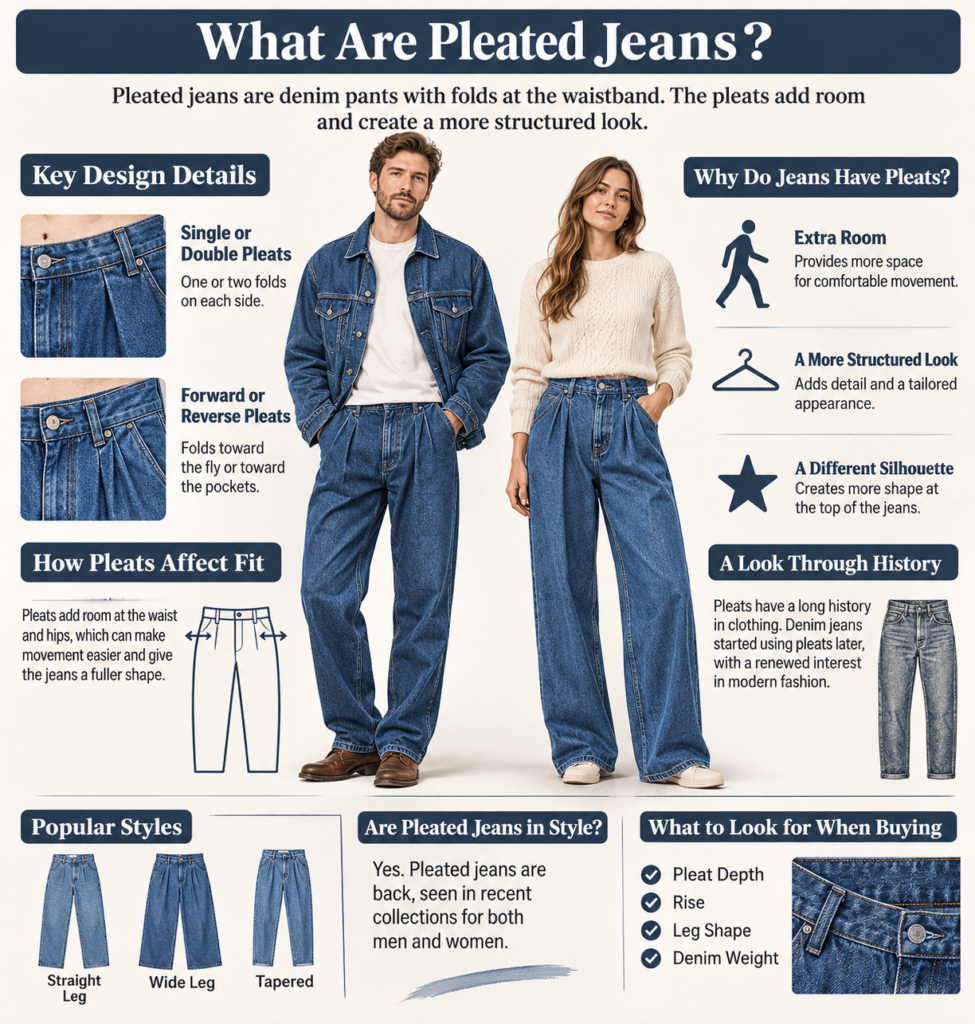
How Pleated Jeans Are Designed
Single and Double Pleats
Pleated jeans can have one or two folds on each side of the front closure. As the names suggest, a single-pleat design uses one fold on either side, while a double-pleat design uses two. The number of pleats affects the amount of fullness and the overall appearance of the front.
Single pleats generally create a more subtle effect. Double pleats create more fullness and a more noticeable appearance, especially when paired with a wide leg.
The pleats usually begin at the waistband and extend a short distance down the front of the jeans. Some designs keep the folds stitched in place near the top, while others allow them to open as the wearer moves.
Forward and Reverse Pleats
The direction of the folds also changes the appearance of pleated jeans. Forward pleats face toward the fly, while reverse pleats open toward the pockets. Both designs add fullness and freedom of movement, but they create slightly different lines across the front.
Forward pleats tend to produce a more traditional tailored appearance. Reverse pleats create a more open look around the pockets. Most casual denim designs place greater emphasis on the overall silhouette than on the technical direction of the folds.
How Pleats Affect Fit
Pleats add fabric to the front of the jeans, creating more room around the waist and upper thighs. This can make sitting, walking, and bending more comfortable, particularly when the jeans have a higher rise or a relatively close fit through the hips.
The extra fabric also changes how denim hangs from the waist. Rather than falling straight down from a flat waistband, pleated jeans have additional volume near the top that gradually blends into the legs. This can make a straight or wide-leg cut look fuller without requiring an oversized fit throughout the entire garment.
Pleats do not automatically make jeans loose or oversized. The amount of room depends on the pattern, fabric, rise, and leg cut. A pair can have shallow pleats and a relatively slim fit, while another can combine deep pleats with a wide, relaxed leg.
Why Do Jeans Have Pleats?
Extra Room and Easier Movement
As I discussed earlier, pleats allow a garment to include more fabric in a specific area without making the entire garment wider. This additional material can provide room around the hips and thighs while keeping the waistband relatively close to the body.
That principle also applies to denim. Jeans made with pleats can offer more room through the upper portion without relying entirely on a loose fit. This can be useful for people who want a comfortable waist and thigh area but prefer a more defined fit elsewhere.
However, modern jeans do not necessarily need pleats to provide adequate movement. Stretch denim, relaxed cuts, and different pattern shapes can all accomplish similar goals. Pleats are therefore as much a design decision (for style purposes) as a functional one.
A More Structured Appearance
Pleats also change the visual character of denim. Traditional five-pocket jeans have a relatively simple front, with a flat waistband, fly, and curved pocket openings. Pleats introduce additional lines and folds that make the front more detailed.
Some designs use pleats to create a vintage-inspired appearance. Others use exaggerated folds and generous proportions to make the jeans look more contemporary. In either case, the pleats become part of the overall style rather than serving only as extra fabric.
A Design Detail That Changes the Silhouette
Pleats can make a significant difference in how jeans look when worn. The added fullness around the hips creates a visual transition between the waistband and legs. This works particularly well with wide-leg and relaxed-fit jeans, where the folds help create volume near the waist.
Pleated jeans can also be paired with a tapered leg. The added room at the top contrasts with the narrower lower portion, creating a different shape from conventional straight-leg jeans.
The effect depends on the depth and placement of the pleats. Shallow folds can be difficult to notice from a distance, while deep pleats create a more pronounced shape. Some designs use pleats as a subtle detail, while others make them the defining part of the jeans.
The History of Pleats in Pants
Pleats have a much longer history in clothing than denim jeans. Tailors used folded fabric in pants to provide fullness around the waist and hips while maintaining a more controlled fit through the waistband.
Pleated trousers became a familiar part of men’s clothing during the late nineteenth and early twentieth centuries, particularly in more formal and tailored styles.
Jeans developed along a different path. Denim work pants became popular because of their durability and affordability. Pleats were not a standard part of traditional work jeans, although pleated denim styles appeared later as manufacturers experimented with new cuts and fashion details.
By the 1980s, denim had become firmly established as everyday fashion, and manufacturers were experimenting with washes, cuts, and decorative details. Pleated acid-wash jeans are one example of the decade’s more distinctive denim styles. The design has since returned in different forms as fashion has revisited vintage silhouettes.
Are Pleated Jeans in Style?
Yes, pleated jeans are in style.
The current style of pleated jeans for both men and women is not limited to one particular cut. Some designs use subtle pleats with straight legs, while others combine deep folds with wide legs.