
Ostrich leather is one of the most sought-after exotic leathers used in cowboy boots, but not all ostrich boots look or feel the same. Which one is best? Often that just comes down to your personal preferences on appearance and cost.
The three types of ostrich leather commonly used in cowboy boots are smooth ostrich, ostrich leg and full quill ostrich leather. All three are popular, but they occupy different places in the market, with smooth ostrich generally being the most affordable, ostrich leg offering a more distinctive grain and full quill carrying the highest premium value. Let’s take a closer look including some of the boots I own.
Smooth Ostrich Cowboy Boots
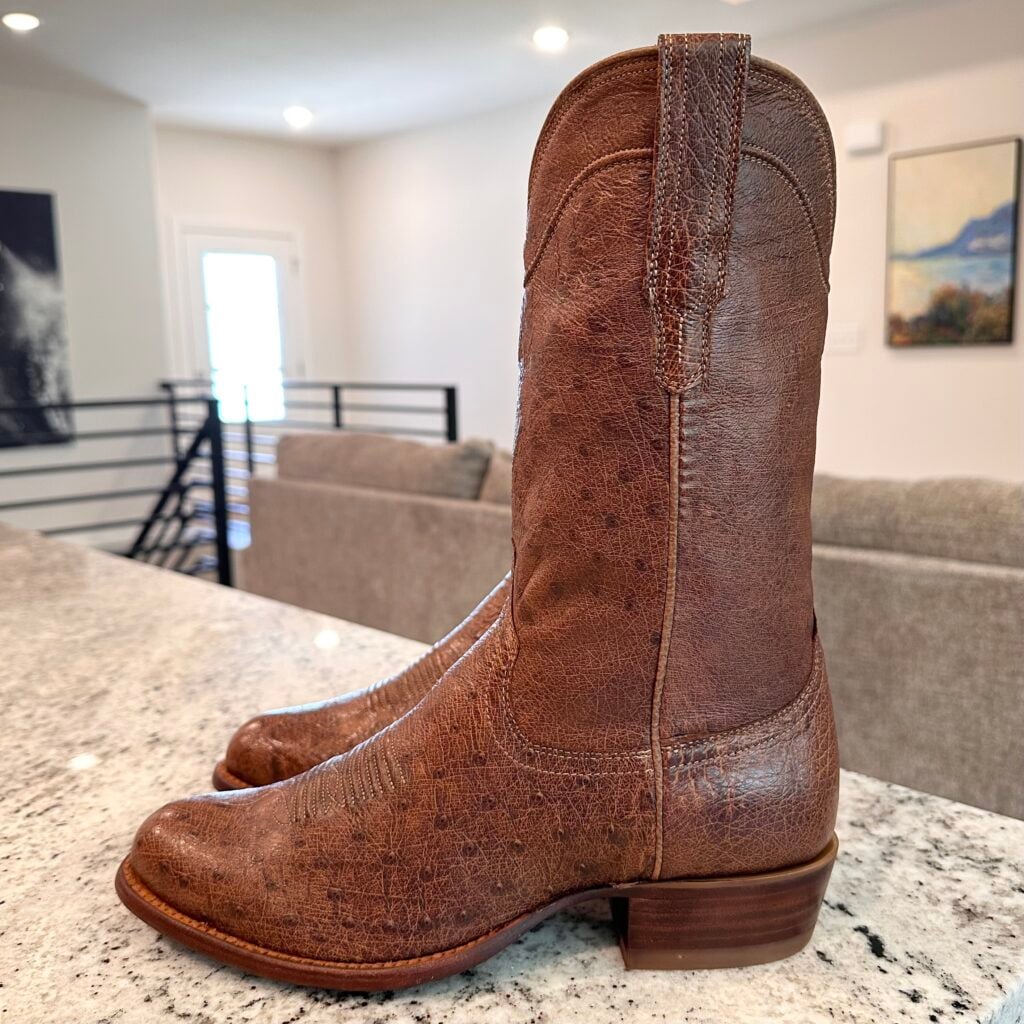
Smooth ostrich leather is made from the body hide of the ostrich and is recognized by its relatively clean, even surface. Unlike full quill ostrich, it does not have the raised quill follicles. However, as you can see in my smooth ostrich boots above, in many smooth ostrich boots you can still see a smoothed dotted quill pattern. The leather still has some natural variation and grain, but the overall appearance is much more understated in comparison to full quill ostrich leather.
Smooth ostrich can be a good choice for someone who wants an exotic boot that is easier to wear with different types of clothing. The relatively clean surface can give a pair of cowboy boots a more traditional appearance while still setting them apart from boots made from ordinary cowhide.
Smooth ostrich is generally considered the least premium of these three types, although it is still a desirable exotic leather. The ranking is largely based on how the hide is valued and the visual characteristics that buyers tend to associate with ostrich. That does not necessarily mean every buyer will prefer full quill. Some people simply like the cleaner look of smooth ostrich more than the prominent quill pattern.
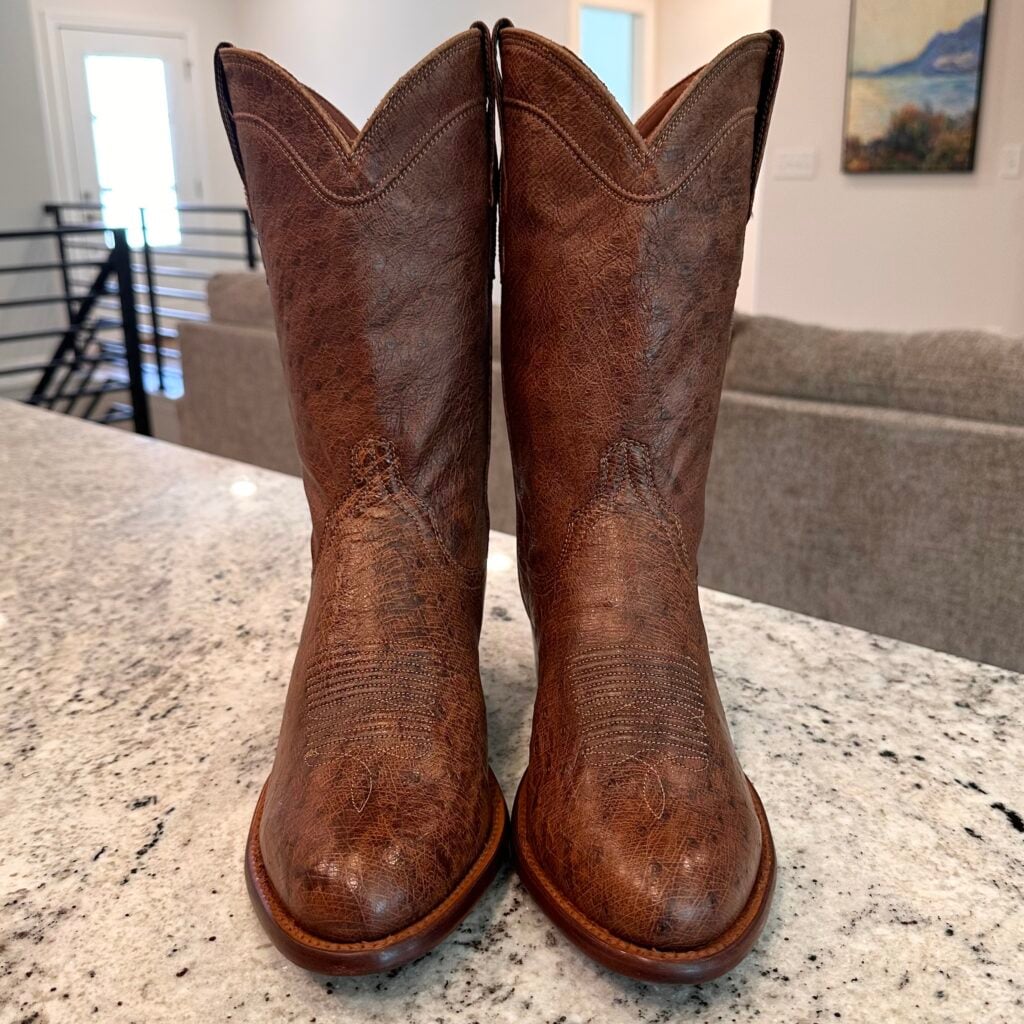
Ostrich is also known for being a versatile and durable leather. That makes smooth ostrich suitable for more than just formal or dress cowboy boots. It can be found in boots intended for everyday wear, as well as work, ranch, horseman and other Western styles.
Most smooth ostrich boots use the smooth ostrich across only the foot area. However, some boots (like mine photo’d above) use full length smooth ostrich from top to toe.
Full Quill Ostrich Cowboy Boots
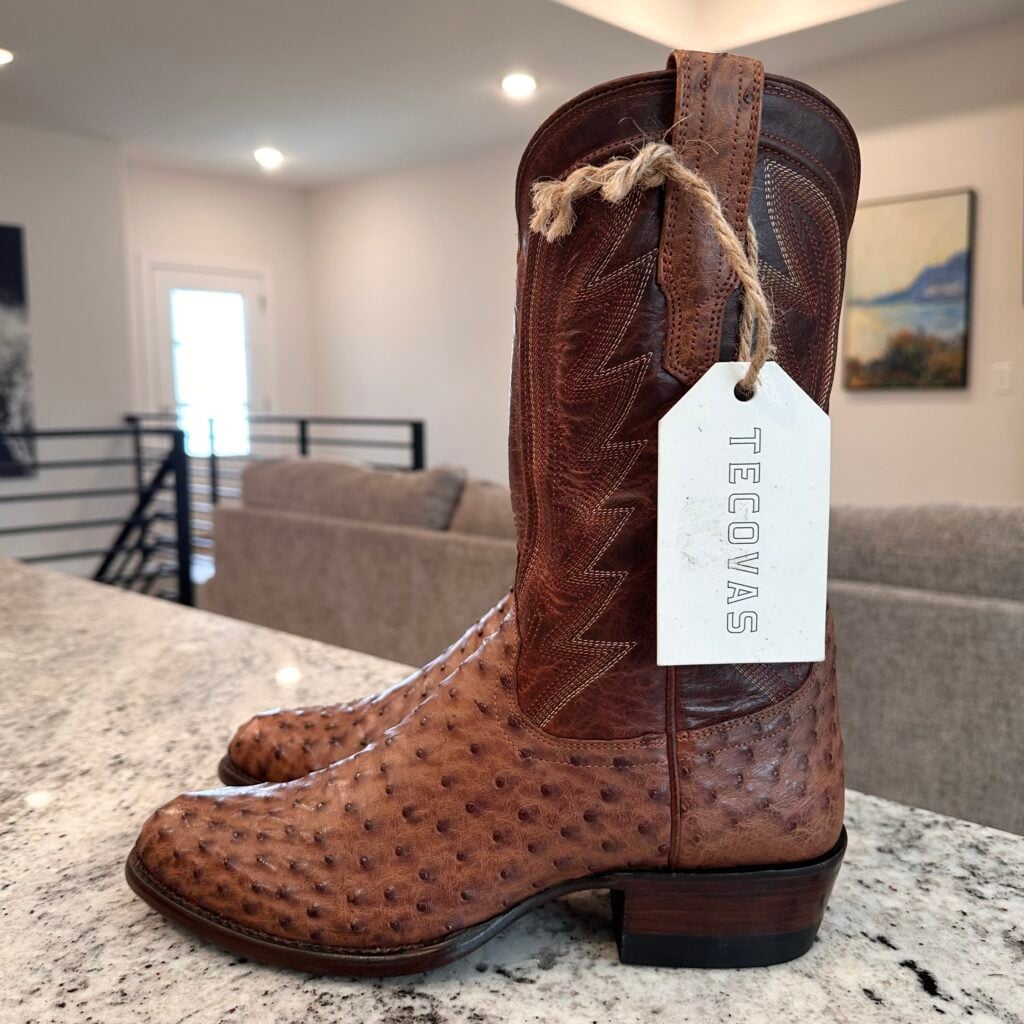
Full quill ostrich is the most recognizable and generally the most highly valued of the three types. It comes from the main body portion of the ostrich hide and retains the natural follicles where the bird’s feathers were attached. These follicles create the raised bumps, or quills, that give the leather its distinctive appearance.
The quill pattern is the main reason full quill ostrich is so popular. Each hide has its own arrangement of follicles, so no two pairs will look exactly alike. The pattern can range from relatively subtle to highly pronounced, depending on the particular hide and where the leather was cut.
Of these three ostrich options, full quill is generally considered the most premium. However, premium does not automatically mean better for every buyer. Someone who prefers a cleaner, less patterned boot may still choose smooth ostrich, while another buyer may like the unusual grain of ostrich leg.
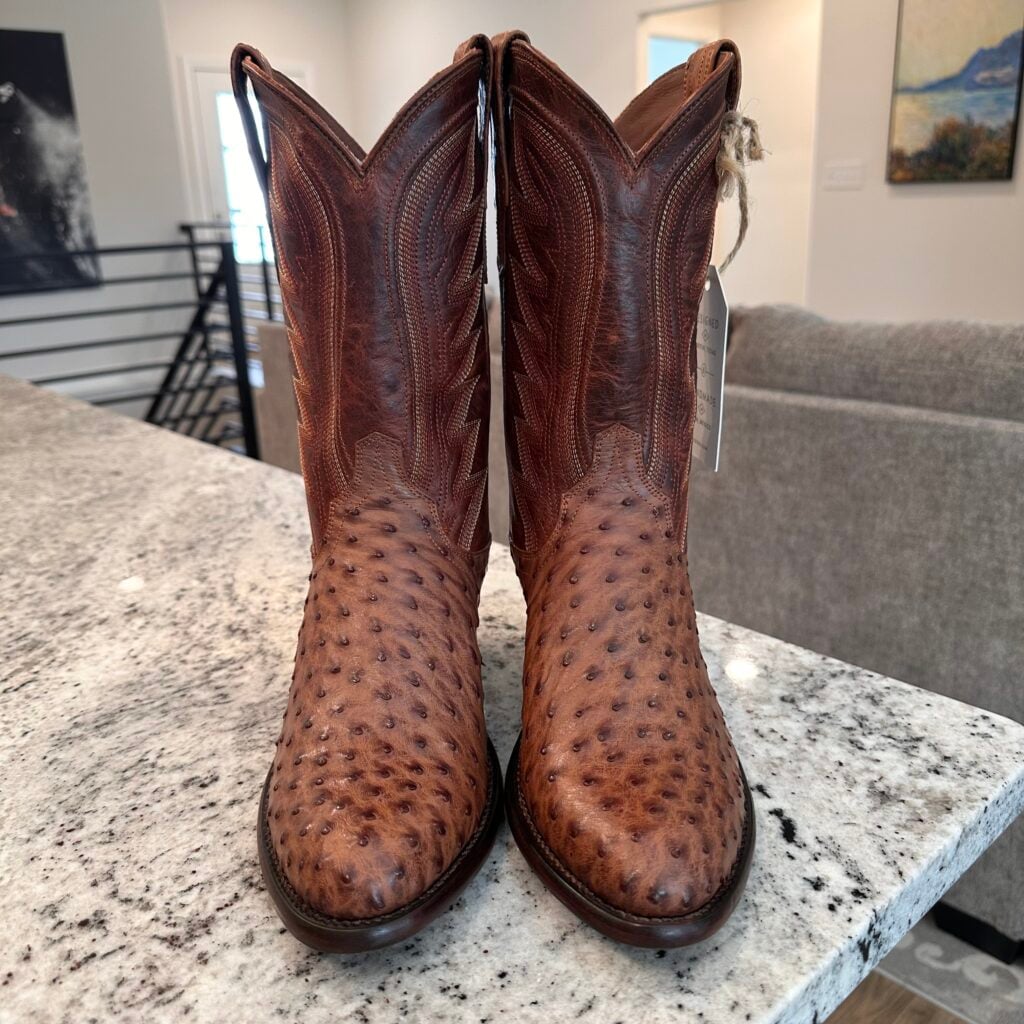
Full quill ostrich is especially common on dressier cowboy boots, but it is not limited to formal footwear. Its durability and flexibility allow it to be used in work and/or ranch boots.
A full quill ostrich foot is often paired with a shaft made from another leather. Cowhide and goat leather are particularly common choices. This combination allows the maker to put the more expensive exotic leather where it is most visible while using a different leather for the taller portion of the boot.
Ostrich Leg Cowboy Boots
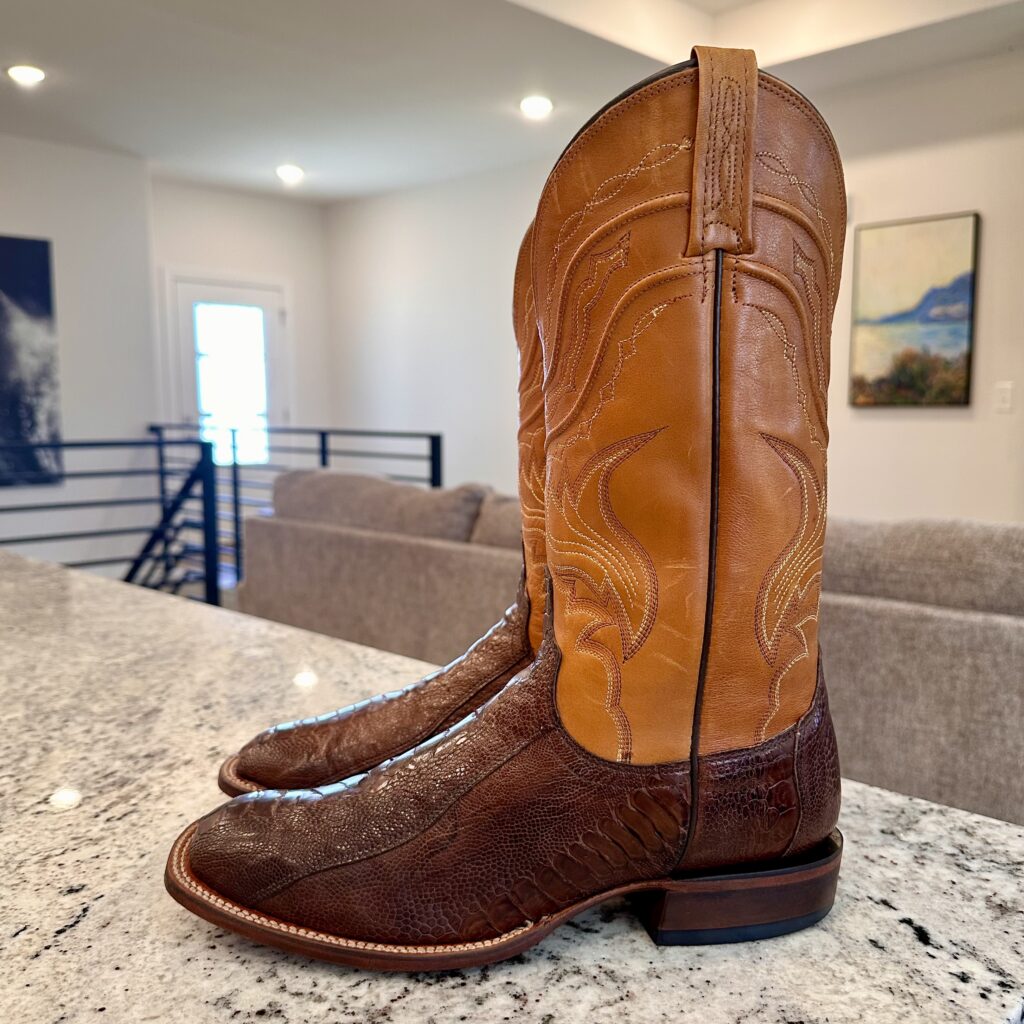
Ostrich leg comes from the leg portion of the ostrich rather than the main body hide. Because it comes from a different part of the animal, it has a noticeably different grain structure. Instead of the rounded quill follicles associated with full quill ostrich, ostrich leg typically has a more scaly or pebbled pattern with a distinctive arrangement of natural markings.
That unusual pattern is one of the main reasons people seek out ostrich leg boots. The leather still has the exotic appeal associated with ostrich, but its appearance is considerably different from full quill. The grain tends to create a more textured and sometimes more rugged-looking boot, which can work particularly well with Western and ranch styles.
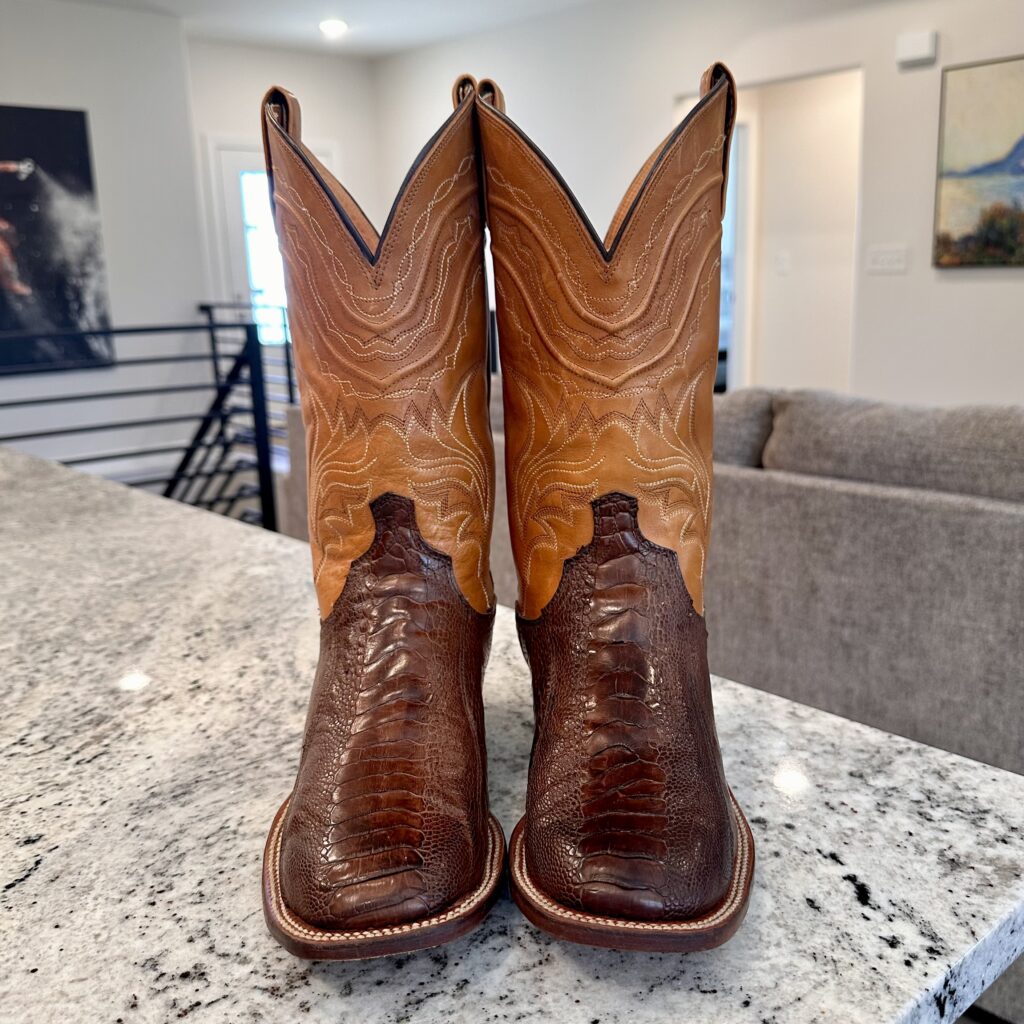
Ostrich leg is generally positioned between smooth ostrich and full quill in terms of desirability and price. It remains a genuine exotic leather and is well regarded by boot collectors and Western wear buyers, but it typically does not carry the same premium value as full quill. Again, this is a general market preference rather than a rule about what an individual buyer should like.
One particularly interesting variation is the reverse-cut ostrich leg boot. Instead of presenting the leather in its more familiar orientation, the hide is cut and used in a way that exposes a different part of the grain. This can produce a more unusual pattern and surface texture, giving the leather a different appearance from conventional ostrich leg.