
What Is the Difference Between a Roper Heel and a Cowboy Heel?
A roper heel is a short, straight-back heel that sits close to the ground which makes it easier to wear as an everyday boot. A cowboy heel is a taller, angled heel which makes it more suitable to use as a riding boot. The taller heel height on a cowboy heel makes it less practical to wear as an everyday boot in comparison to a roper heel, however many cowboy boots are still popular choices for casual wear.
Roper Heel vs Cowboy Heel Purpose Explained
Roper Heel
The roper heel developed alongside the roper boot, a Western boot style associated with rodeo events that involve roping cattle. Roping requires a combination of riding, walking, and moving quickly on the ground. A lower heel provided a practical design for these activities, allowing the boot to serve both in and out of the saddle.
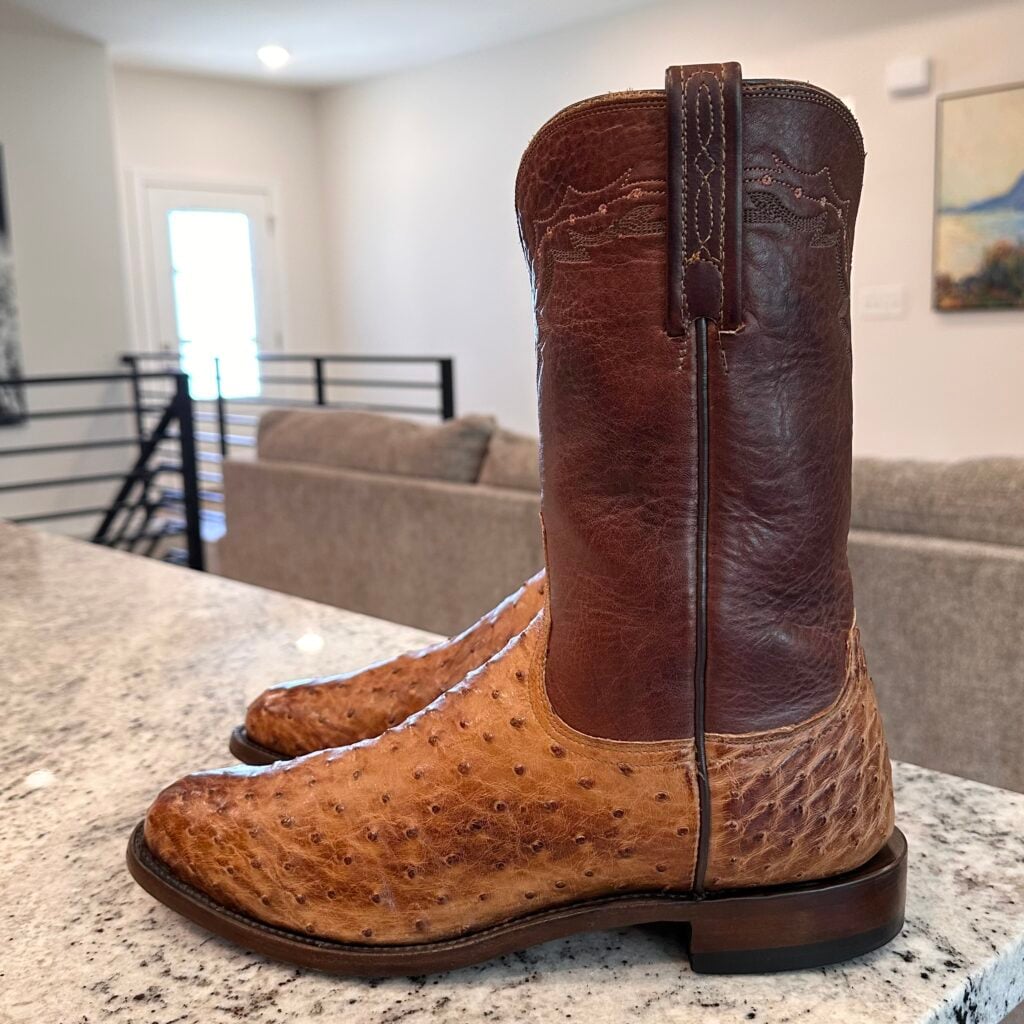
Over time, the roper boot eventually became a popular choice for everyday wear because of the lower heel height made it more comfortable and practical to wear as a daily boot. In fact, many people refer to roper heel boots as “daily drivers”.
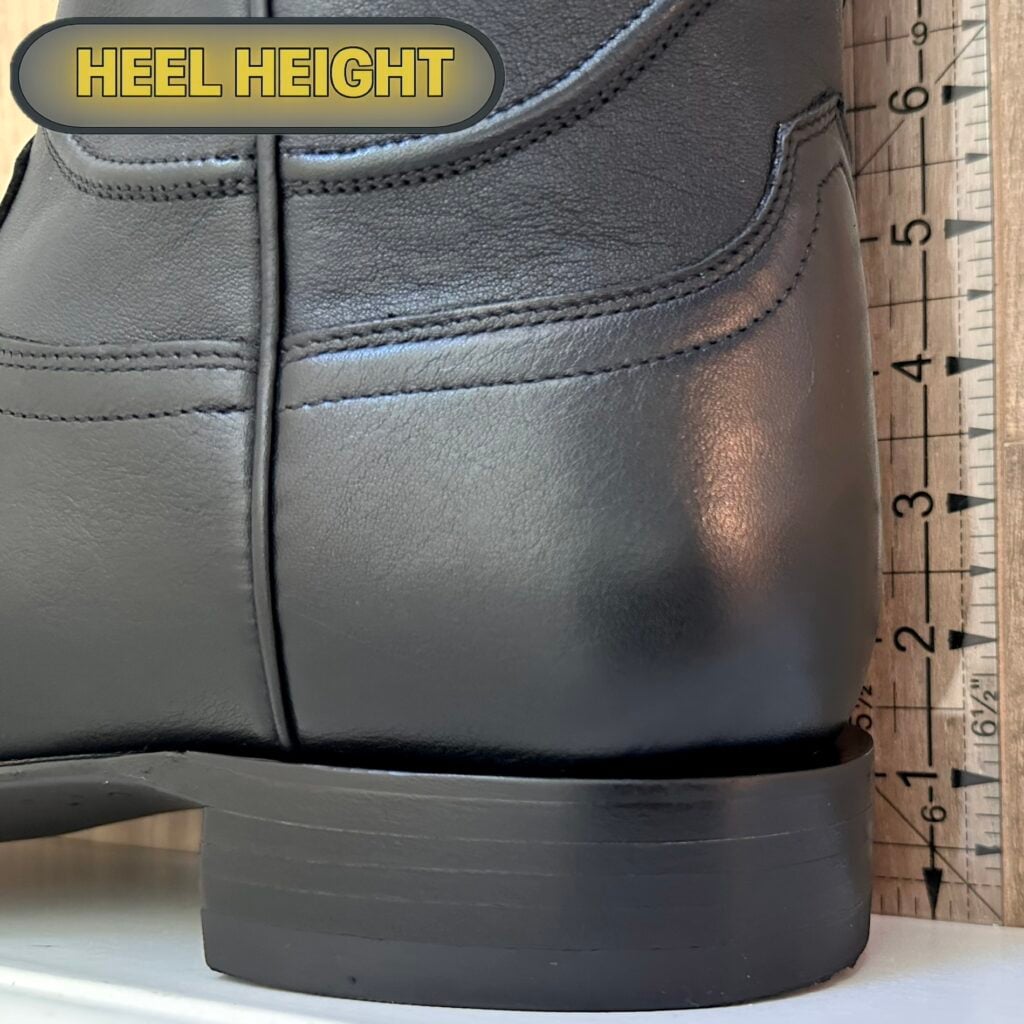
A typical roper heel measures around 1 inch to 1¼ inches high, although measurements vary by manufacturer and model. For example, here is the heel height and shape of a roper boot I own:
A roper heel has a straight-back design, giving it a block-like appearance. The lower height keeps the foot closer to the ground and generally provides a stable platform for walking.
Roper heel boots also tend to have shorter shafts than traditional cowboy boots, often measuring around 8 to 10 inches. The shorter shaft can make the boot easier to pull on and more flexible for everyday activities. Ropers are often more affordable than traditional cowboy boots (there can be exceptions). Roper boots are available in all types of leathers, including exotics.
Cowboy Heel
The traditional cowboy heel was developed around the demands of horseback riding and ranch work. The raised heel helps keep the foot from sliding too far forward through a stirrup, while the angled shape provides a familiar profile associated with Western riding boots.
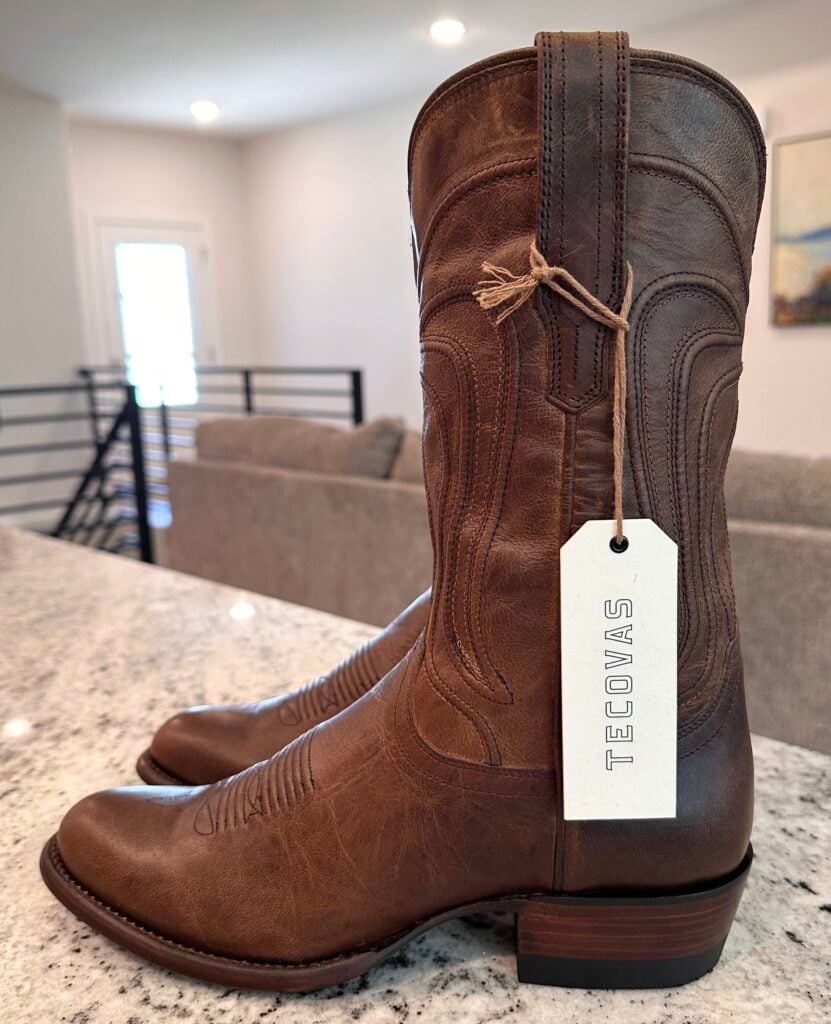
Heel designs have varied over time, but the taller, slanted cowboy heel became a defining part of the traditional Western boot. Today, manufacturers continue to use this design for both riding boots and boots intended primarily for everyday wear.
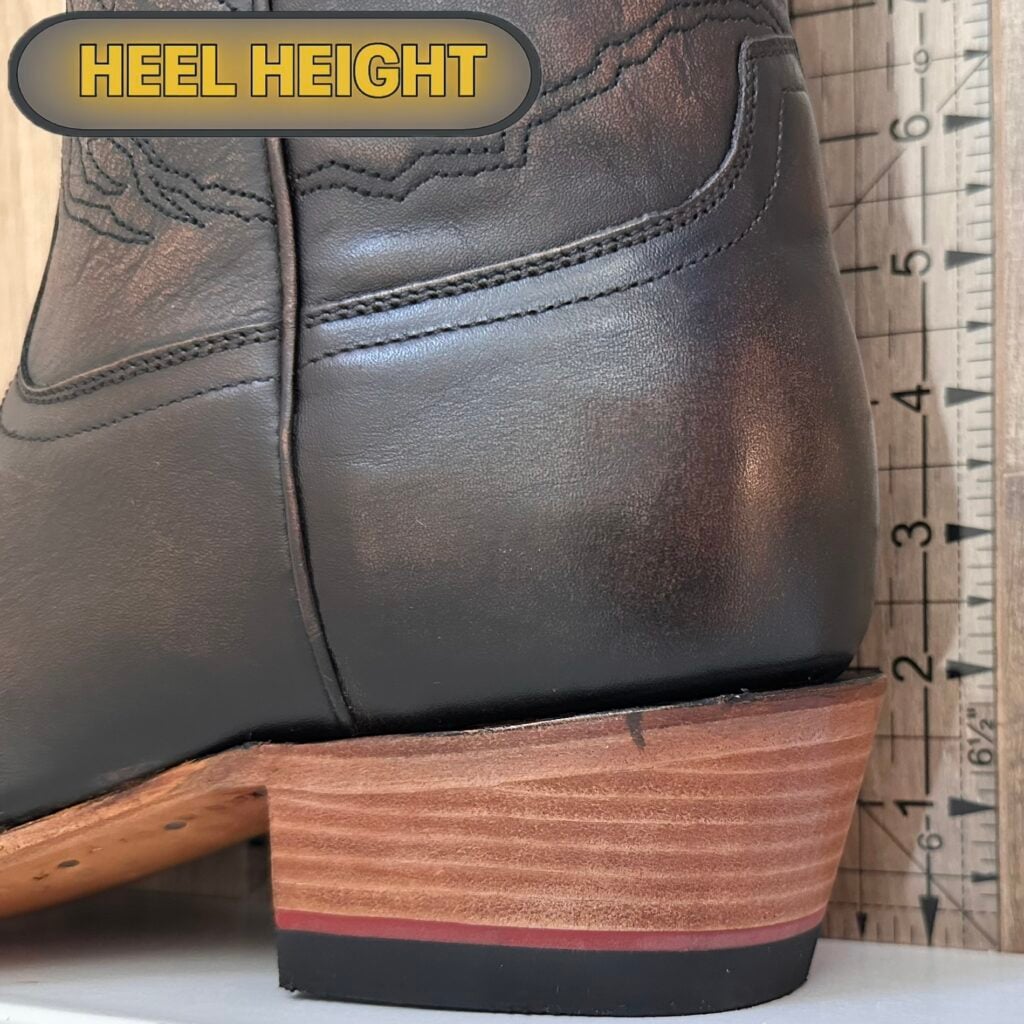
A cowboy heel commonly measures around 1½ to 2 inches high, though some styles fall outside that range. The heel usually angles in the back, creating a sloped profile rather than the straight back of a roper heel.
For example, here is the height and shape of a cowboy heel I own:
The raised heel changes the position of the foot and can help maintain a suitable position in the stirrup. However, the heel alone does not make a boot suitable for riding. Sole construction, fit, heel shape, and the type of stirrup also matter.
Traditional cowboy boots often have taller shafts, commonly measuring around 11 to 13 inches, although shorter and taller designs are available. The added shaft height provides more coverage around the lower leg and contributes to the classic Western boot shape. Cowboy-heeled boots also tend to cost more than basic ropers and are available in all types of leathers, including exotics.
Roper Heel Compared to Cowboy Heel Chart
| Category | Roper Heel | Cowboy Heel |
|---|---|---|
| Heel Height | 1–1¼ inches | 1½–2 inches |
| Heel Shape | Short, straight | Taller, angled |
| Primary Purpose | Walking and everyday wear | Traditionally designed for riding |
| Walking Comfort | Generally easier for daily wear | Can take more getting used to |
| Typical Shaft Height | 8–10 inches | 11–13 inches |
| Price | Usually more affordable | Usually more expensive |
| Leather Options | All types | All types |
| Best Suited For | Everyday wear, work, and casual use | Riding, Western wear, work, and casual use |
Popular Western Boots
Natural Python Cowboy Boots – click here to see full style name and more photos of this boot

Goat Leather Cowboy Boots – click here to see full style name and more photos of this boot

Brushed Brown Cowhide Boots – click here to see full style name and more photos of this boot

Pecan Ostrich Cowboy Boots – click here to see full style name and more photos of this boot

Barnwood Ostrich Cowboy Boots – click here to see full style name and more photos of this boot

Saddle Python Square Toe Boots – click here to see full style name and more photos of this boot

Caiman Square Toe Cowboy Boots – click here to see full style name and more photos of this boot
