
*This page has affiliate links to Amazon. As an Amazon Associate I earn from qualifying purchases. (info)
Men’s python cowboy boots stand out because of their bold, scaly pattern. They look different from the smooth surface of cowhide or the quill marks of ostrich, and that makes them a favorite for people who want their boots to make an impression.
These are 7 popular python western boots for men:
- My favorite Dan Post Sand Sturgis Boots (click here to view)
- Tecovas Cartwright Python Boots (click here to view)
- Cody James Python Round Toe (click here to view)
- Dan Post Manning Boots (click here to view)
- Cuadra Python Cowboy Boots (click here to view)
- Lucchese Dale Python Boots (click here to view)
- Cody James Python Square Toe (click here to view)
Python cowboy boots offer that unique style while also presenting a traditional western boot shape. They are great as casual or dress boots, but proper care is needed if you want them to last over time. In the article below, let’s discuss the pros and cons of python boots, and how you should properly care for them.
Why Men’s Python Cowboy Boots are So Popular
Python leather is one of the more unique materials you’ll see in cowboy boots, and it comes with a few clear benefits. First, the scales give the boots a distinct texture and pattern that you won’t find in smooth leathers like cowhide.
That look makes python boots stand out as something unique, especially when worn in a dressier setting. They can be a conversation piece while still holding onto the classic cowboy boot shape.
Another advantage is flexibility. Python leather is thinner than a lot of other exotic leathers, which makes it lighter and easier to break in and wear. That can mean less stiffness in the early days of wearing the boots. If you’ve ever had to break in a thick, heavy pair of boots, you’ll know how big of a plus this can be.
Durability is also a plus. Even though the leather is lighter, the scale structure can actually hold up well with the right care. They, of course, aren’t as rugged as rough cowhide work boots, but for regular wear and dress boots, python leather can last a long time if you condition it properly and keep it away from too much water.
Python boots carry a sense of status and uniqueness. Many cowboy boot buyers like them because they feel a step above standard leather in terms of style. Wearing python boots signals that you’ve chosen something more rare and bold, while still staying tied to the tradition of western footwear.
Pros and Cons of Python Western Boots for Men
| Pros | Cons | |
|---|---|---|
| Style | Bold, exotic scale pattern that stands out; pairs well with dress wear and special occasions. | Not as versatile as cowhide; can look too flashy for casual or rugged settings. |
| Comfort | Lightweight and flexible leather makes boots more comfortable to wear. | Not built for heavy labor; scales can damage easily in work conditions. |
| Care | Easy to clean dust off with a soft brush; responds well to exotic conditioners. | Sensitive to water; too much oil or conditioner can damage scales. |
| Status | Exotic look signals rarity; shows individual taste and style. | Can be too bold for some styles; not everyone prefers exotic styles. |
| Price | Often more affordable than some exotics like alligator or crocodile. | Still more expensive than cowhide; high-end pairs can be pricey. |
How to Care for Python Cowboy Boots
Python cowboy boots don’t handle water as well as sturdier leathers like cowhide. The scales can lift or curl if they get too wet, which changes the look of the boot and weakens the leather.
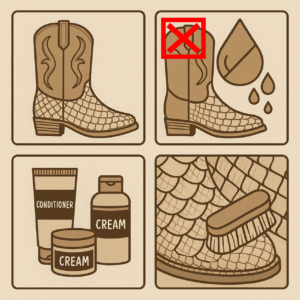
Even a quick soak can leave long-lasting water or warping marks, so it’s best to keep them out of heavy rain. They’re much better suited for dry wear or indoor use if you want to keep them looking sharp.
That doesn’t mean you can’t protect them. Many owners use a light exotic leather conditioner or cream that’s safe for reptile skins. These products help keep the scales from drying out and reduce the chance of cracking.
Because python leather is thinner, it responds quickly to whatever you put on it. Too much oil or heavy conditioner can darken the leather and soften the scales too much, so less is more. Regular dusting with a soft brush and careful spot cleaning with an exotic leather cleaner is usually all you need.