
*This page has affiliate links to Amazon. As an Amazon Associate I earn from qualifying purchases. (info)
Does your job require a composite toe work boot? If so, there is a wide variety of composite toe boots for men on the market today so you can find an option that fits your specific needs.
These are the best men’s composite toe boots:
- My Favorite Thorogood American Heritage Composite Toe Boots (click here to view)
- Best Waterproof Keen Cincinnati Waterproof Composite Toe (click here to view)
- Best Athletic Shoe Reebok Sublite Composite Toe Shoes (click here to view)
- Best Pull On Cody James Pull On Composite Toe Boots (click here to view)
- Best Chelsea Timberland PRO Nashoba Chelsea Comp (click here to view)
- Best Insulated Carhartt Rugged Flex 400g Insulated Comp Toe (click here to view)
- Best Made in USA Thorogood American Heritage Composite Toe (click here to view)
- Best Slip On Skechers Holdredge Ryker Men’s Comp Toe (click here to view)
- Best Breathable Reebok Fusion Flexweave Comp Toe Shoes (click here to view)
- Best Heavy Duty Timberland PRO Boondock Composite Toe (click here to view)
Men’s composite toe work boots come in many forms, from waterproof and insulated styles to heavy duty, athletic, and even pull-on western designs. They offer protection in different ways, whether that’s keeping feet dry, adding warmth, reducing weight, or providing electrical safety.
In the next sections, I’ll take a closer look at the different types of men’s composite toe boots so you can find the right style for your work safety needs.
Understanding Types of Men’s Composite Toe Boots
Composite toe boots come in a wide range of styles, each designed to solve a particular problem on the job. Waterproof composite toe boots are built for workers who spend long hours in wet or unpredictable environments.
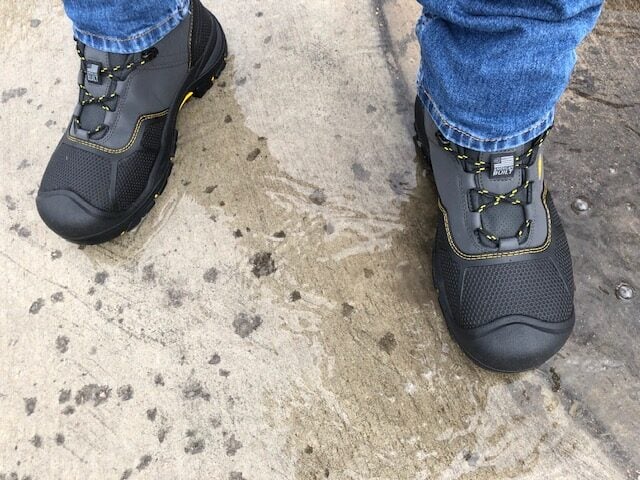
Instead of just relying on treated leather, these boots often use a membrane liner that keeps water out while still allowing moisture from sweat to escape. That combination is important for roofers, landscapers, or construction crews who can’t afford soggy feet but also need to stay comfortable over a full shift.
Insulated composite toe men’s boots fill another niche, providing warmth without excess bulk. They use insulation layers, often measured in grams (like 400g), that trap body heat while still letting the boot flex and move. These are especially useful for outdoor workers in cold regions where concrete, steel, or frozen ground pulls heat out of the body quickly.
Heavy duty composite toe boots are built for rugged work environments. These usually feature thick midsoles, overlay toe areas, tough outsoles with deep lugs, and reinforced uppers. They are made for trades like logging, roadwork, or demolition where durability matters more than sleek style.
On the other side of the spectrum are athletic-style composite toe shoes. These are styled much like athletic running shoes, with lightweight materials, cushioned midsoles, and flexible outsoles. They suit warehouse pickers, delivery drivers, or technicians who are constantly moving but still need toe protection.
For those who prioritize domestic craftsmanship, made in USA composite toe boots highlight traditional boot-making combined with modern safety features. These often use premium leathers, stitched construction, and customizable options.
When you buy made in USA, you are not only investing in safety but also in longevity, with boots that can often be rebuilt or resoled. They appeal to tradespeople who want both the reassurance of a composite toe and the heritage quality of boots designed to last for years.

Men’s composite toe boots that have a wedge outsole offer a flat, stable surface that distributes weight evenly, a feature valued by electricians or carpenters working on hard floors. Chelsea and slip-on boots cut down on lacing time, which makes them popular. Pull-on western styles give ranchers or trades like oilfield workers protection in a shape that fits their lifestyle.
Men’s Composite Toe Work Boots Comparison Table
| Type | Overview |
|---|---|
| Waterproof | Built with a liner that blocks water but allows sweat to escape. Best for roofers, landscapers, or construction crews working in wet or unpredictable conditions. Keeps feet dry without trapping heat. |
| Insulated | Uses layered insulation to trap warmth while staying flexible. Ideal for cold climates where steel toes would transfer chill. Great for outdoor winter job sites. |
| Heavy Duty | Reinforced with thick midsoles, tough outsoles, and rugged uppers. Suited for logging, demolition, or roadwork where durability and protection are top priorities. Lighter than steel but just as safe. |
| Athletic Style | Inspired by sneakers with cushioning and flexible outsoles. Perfect for warehouse pickers, drivers, or technicians who move constantly. Reduces strain and adds speed while keeping toes safe. |
| Made in USA | Combines premium leathers, stitched construction, and rebuildable designs with composite safety features. Appeals to buyers who want long-lasting boots with traditional craftsmanship. |
| Wedge, Chelsea, Pull-on | Wedge soles give flat, stable footing for trades like carpentry or electrical work. Chelsea and slip-on designs save time for supervisors or workers moving between tasks. Western pull-ons fit ranchers in a familiar style. |
Purpose and Benefits of Men’s Composite Toe Boots
Many workplaces in construction, warehousing, and manufacturing require protective footwear, and composite toes give workers a way to meet those standards without adding unnecessary bulk and weight of steel toe. Built from materials like fiberglass or carbon fiber, they provide solid impact resistance and help reduce the fatigue that often comes with heavier boots.
They also are popular in jobs where electricity is part of the environment. Because composite materials don’t conduct current, they pair well with EH-rated soles to lower the risk of electric shock. This makes them especially useful for electricians, linemen, and others who spend their days around live wires or energized equipment.
The composite safety toe is lighter in weight than a steel safety toe. Workers who are constantly climbing ladders, covering miles in a warehouse, or driving for deliveries notice the difference in how their feet feel at the end of the day when wearing comp toe vs steel toe.
Still, it is important to emphasize that some jobs will still require steel toe. Although composite toe does provide toe protection, a steel toe provides more protection, and some jobs will require steel toe.
But for a wide range of jobs, composite toe boots strike a smart balance: they protect against impact, they don’t add excess weight, and they sometimes offer the added benefit of electrical safety. That mix is why they’ve become a popular option for many workers across different fields.