
*This page has affiliate links to Amazon. As an Amazon Associate I earn from qualifying purchases. (info)
Men’s cowhide western boots have long been a staple for cowboys in both work and dress-up styles. Cowhide boots are soft, durable, and distinct in texture, and they offer comfort from the start while lasting for years.
These are 7 popular cowhide western boots for men:
- My Favorite Tecovas The Earl Boots (click here to view)
- Dan Post Wade Cowboy Boots (click here to view)
- Tecovas The Cartwright Boots (click here to view)
- Frye Grady Thunderbird Boots (click here to view)
- Tony Lama Marco Boots (click here to view)
- Tecovas The Doc Boots (click here to view)
- Tony Lama Avett Boots (click here to view)
Cowhide cowboy boots deliver a classic mix of durability and versatility. The smooth or textured surface can be finished in many ways, giving them a look that fits both rugged work and polished wear. Cowhide boots still need the right care to stay strong and comfortable over the years. In the sections below, I’ll go over these points and also share photos of my favorite men’s cowhide western boots.
My Favorite Men’s Cowhide Western Boots
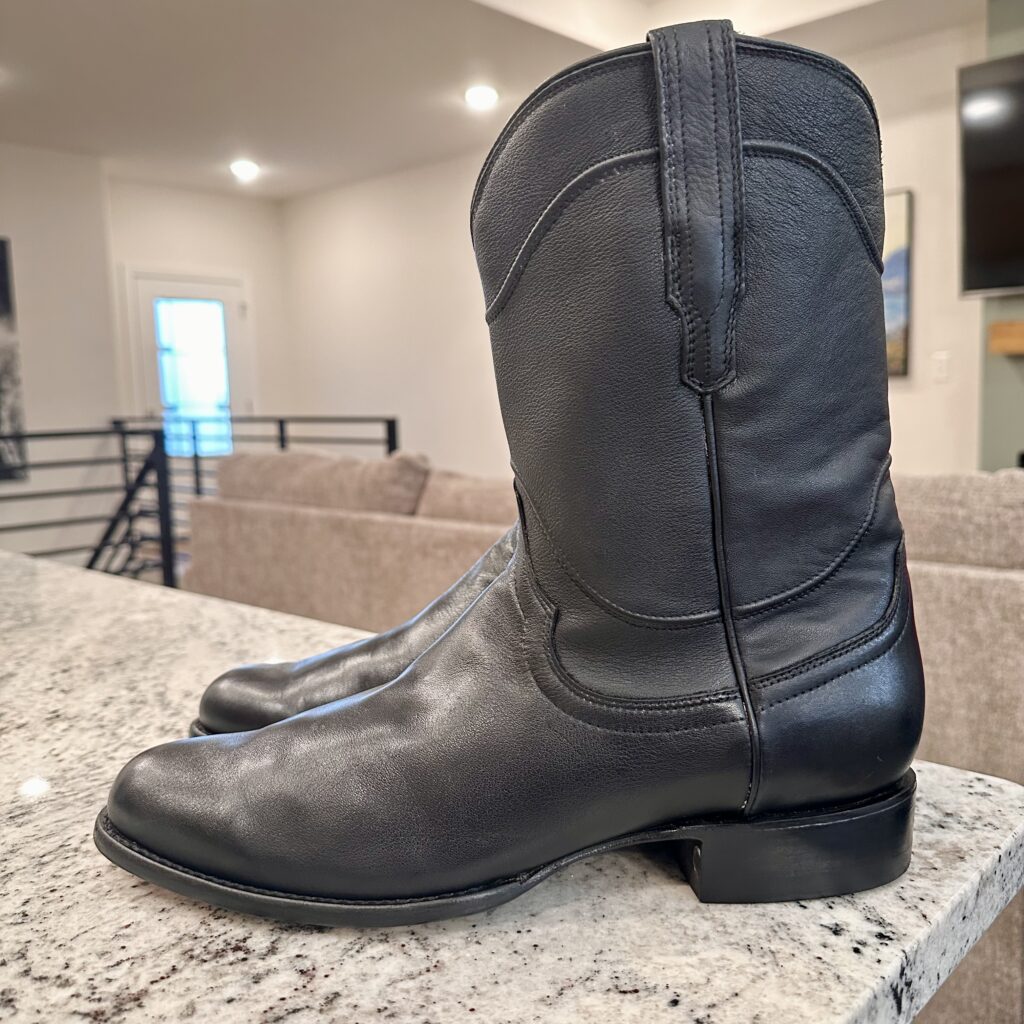
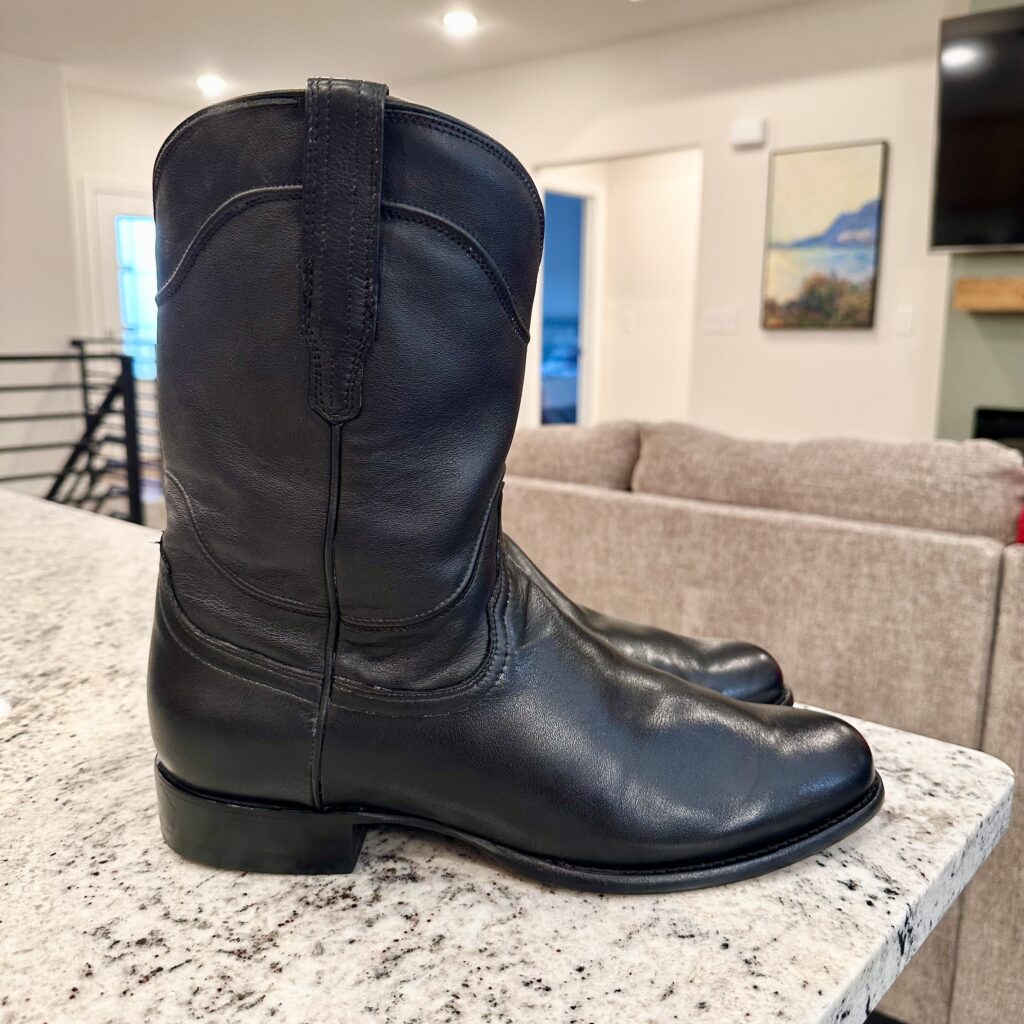
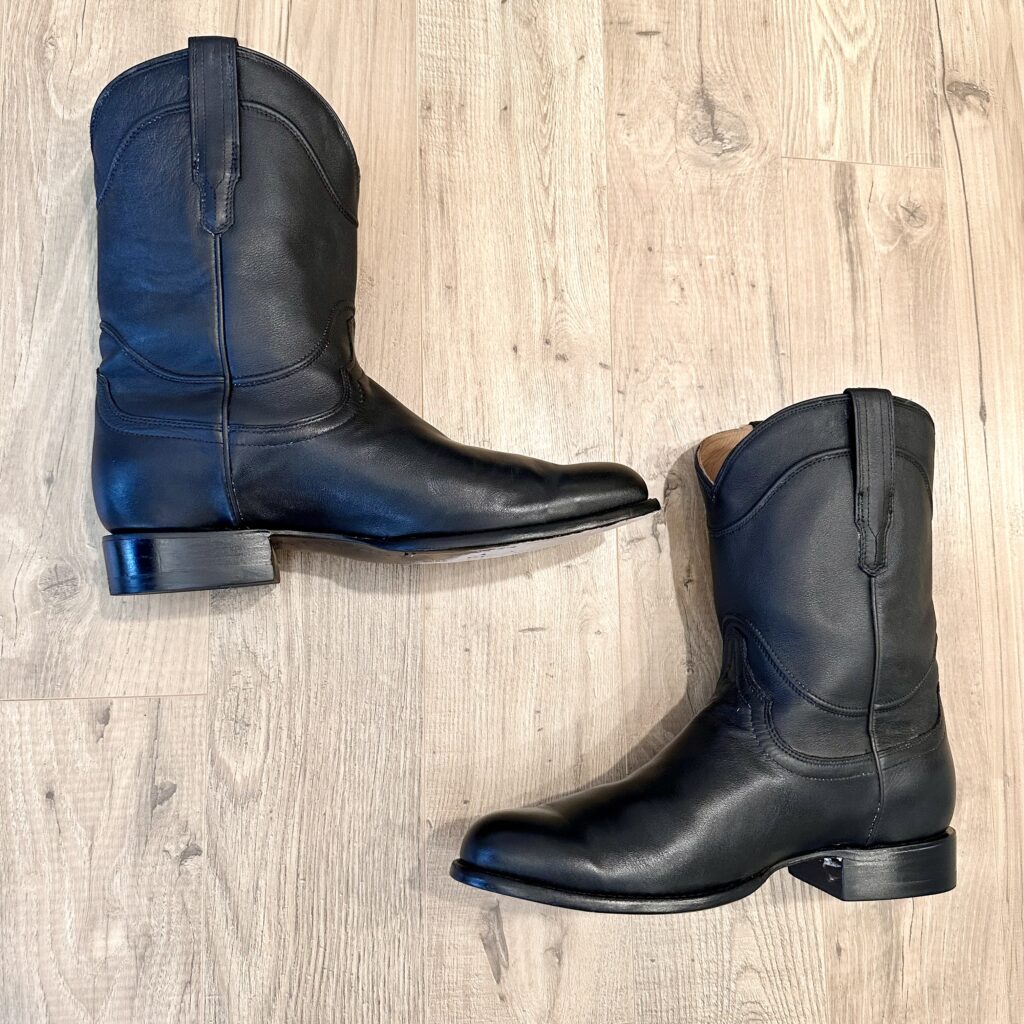
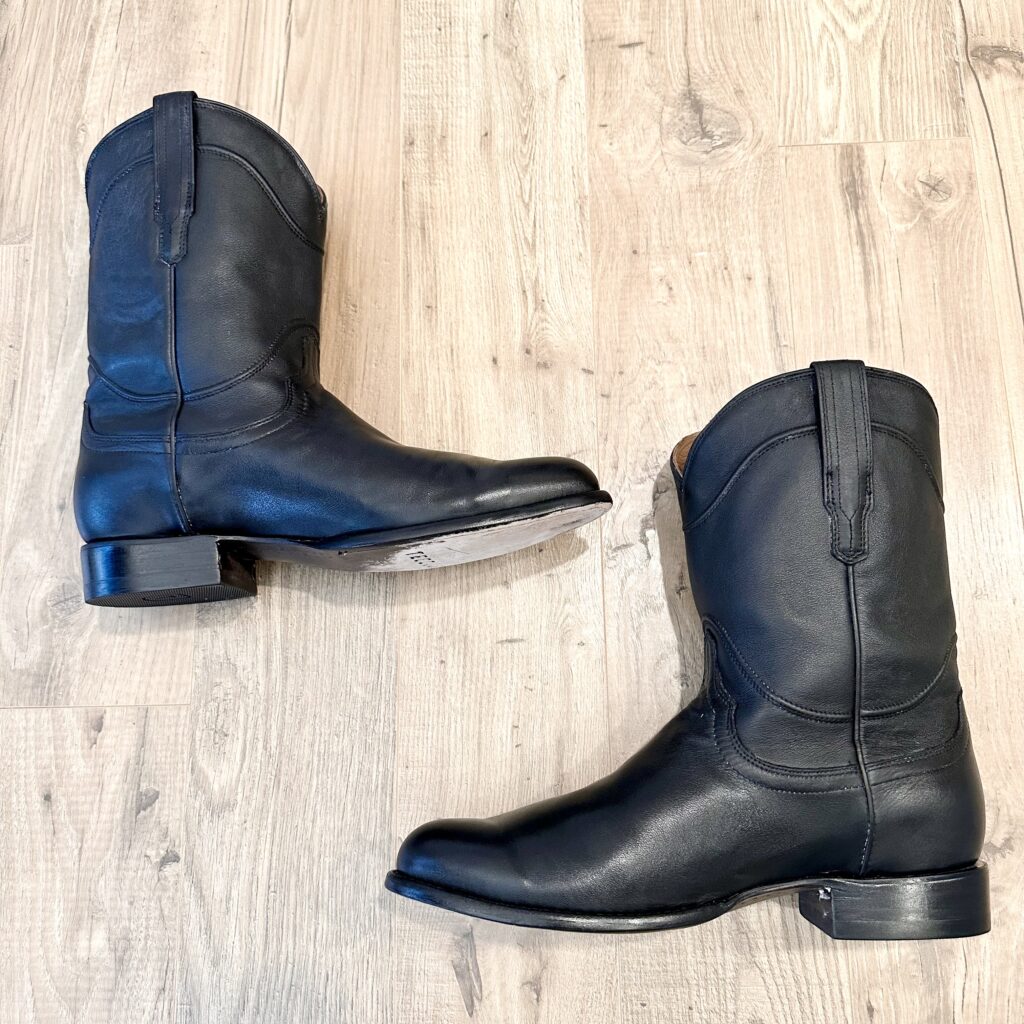
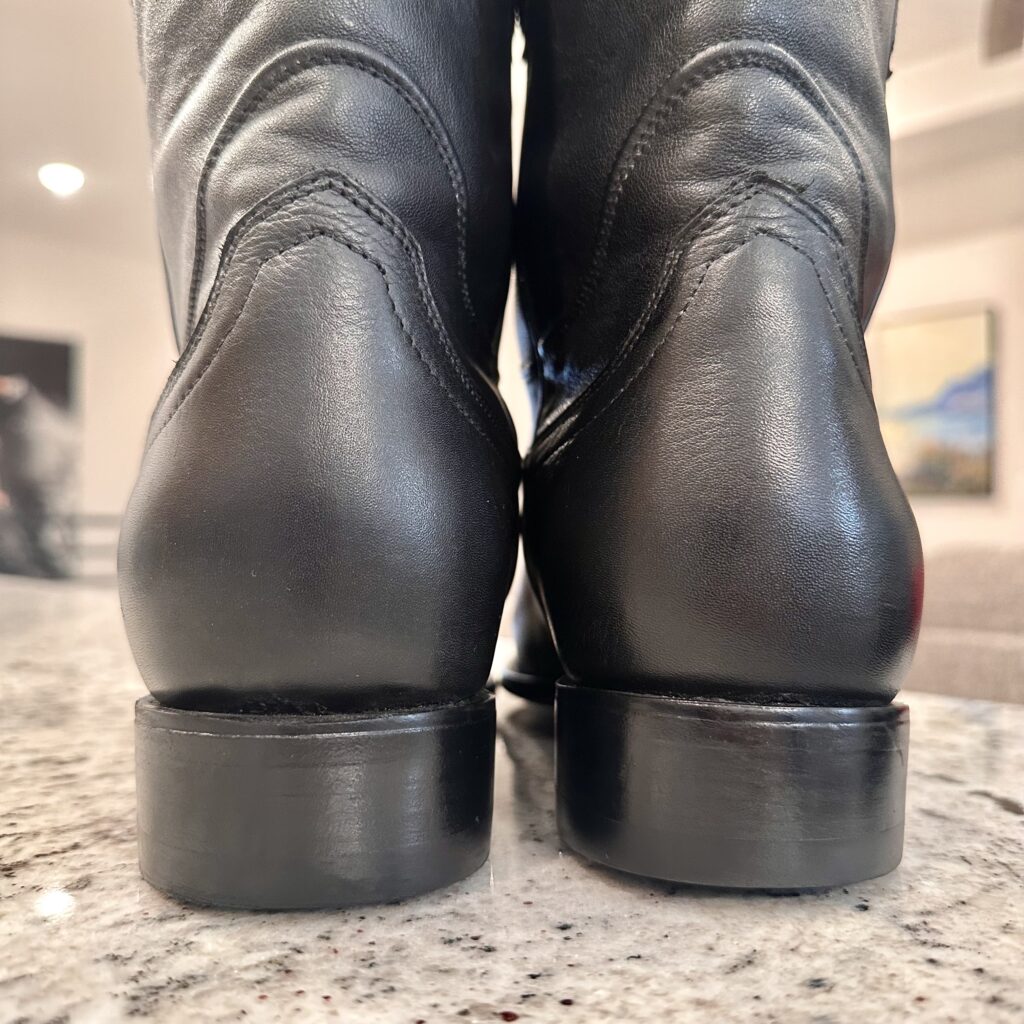
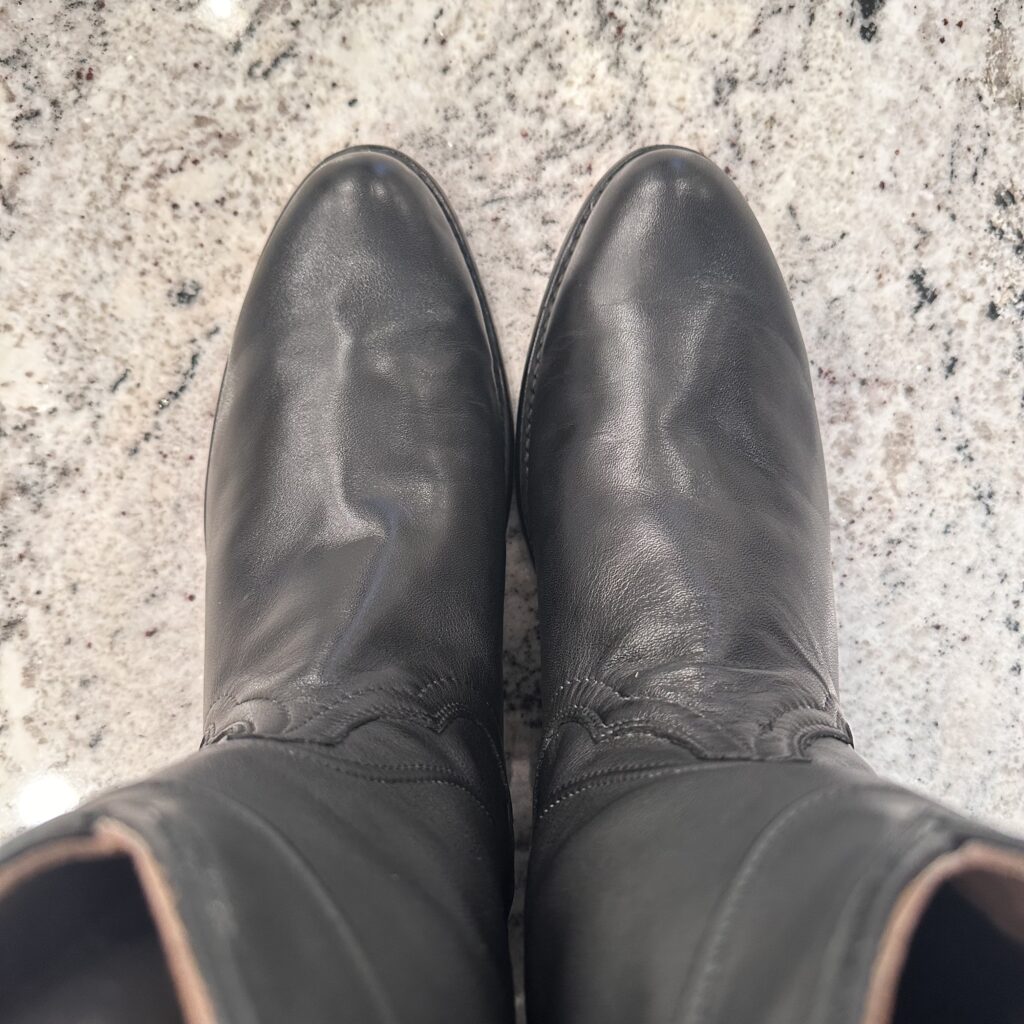
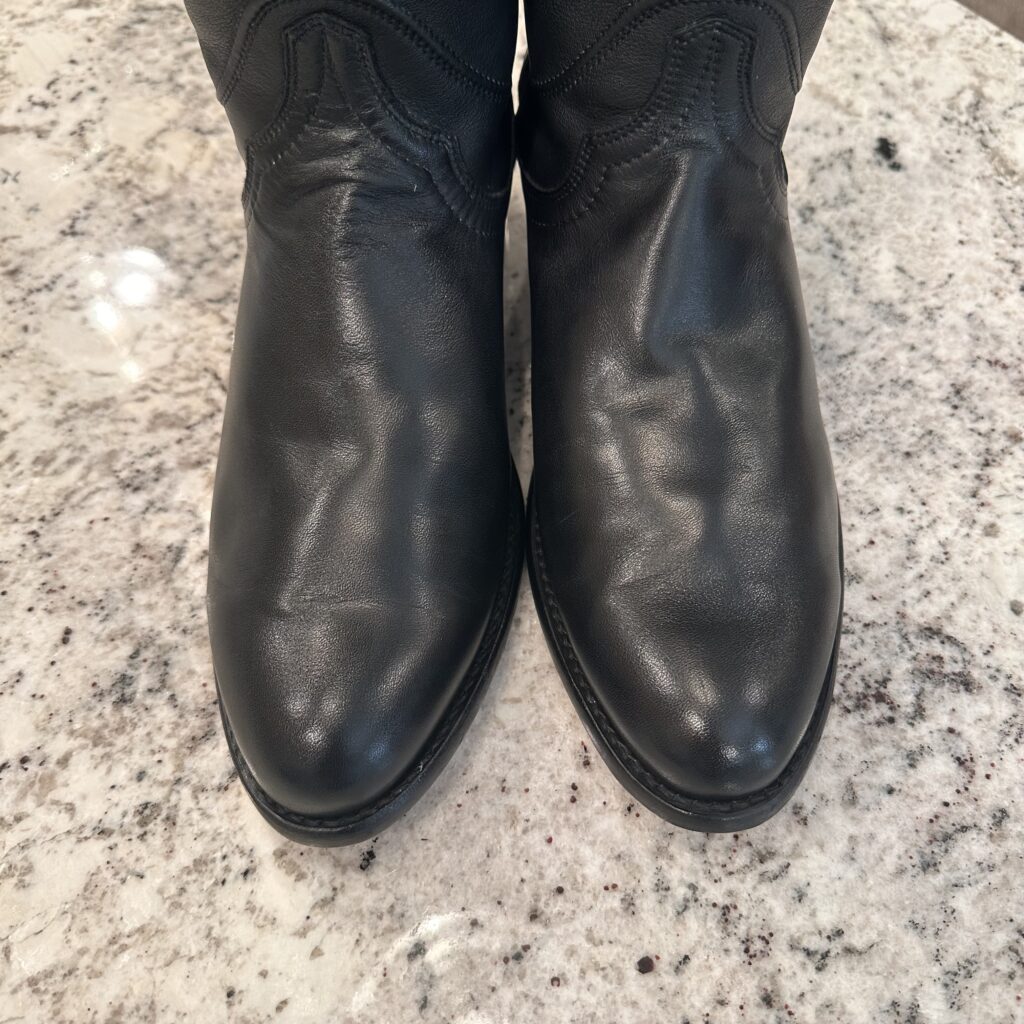
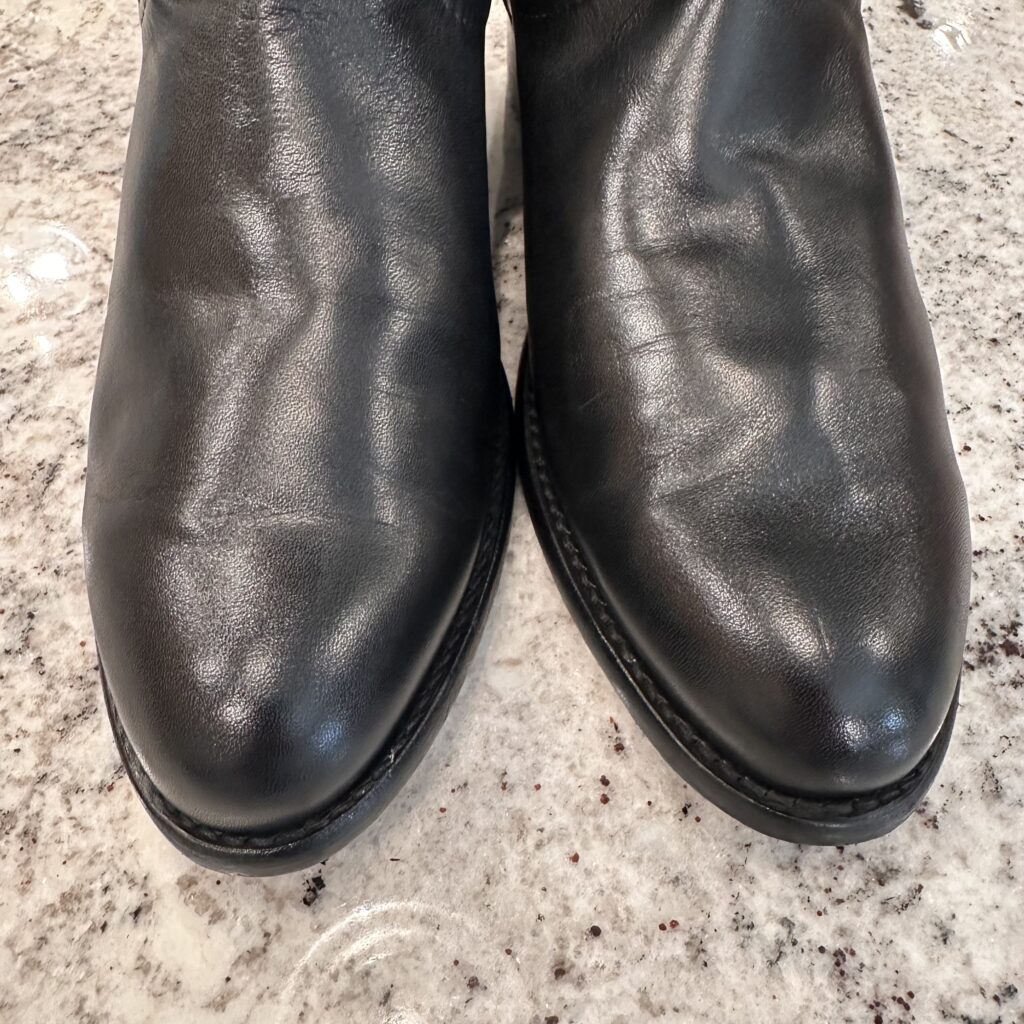
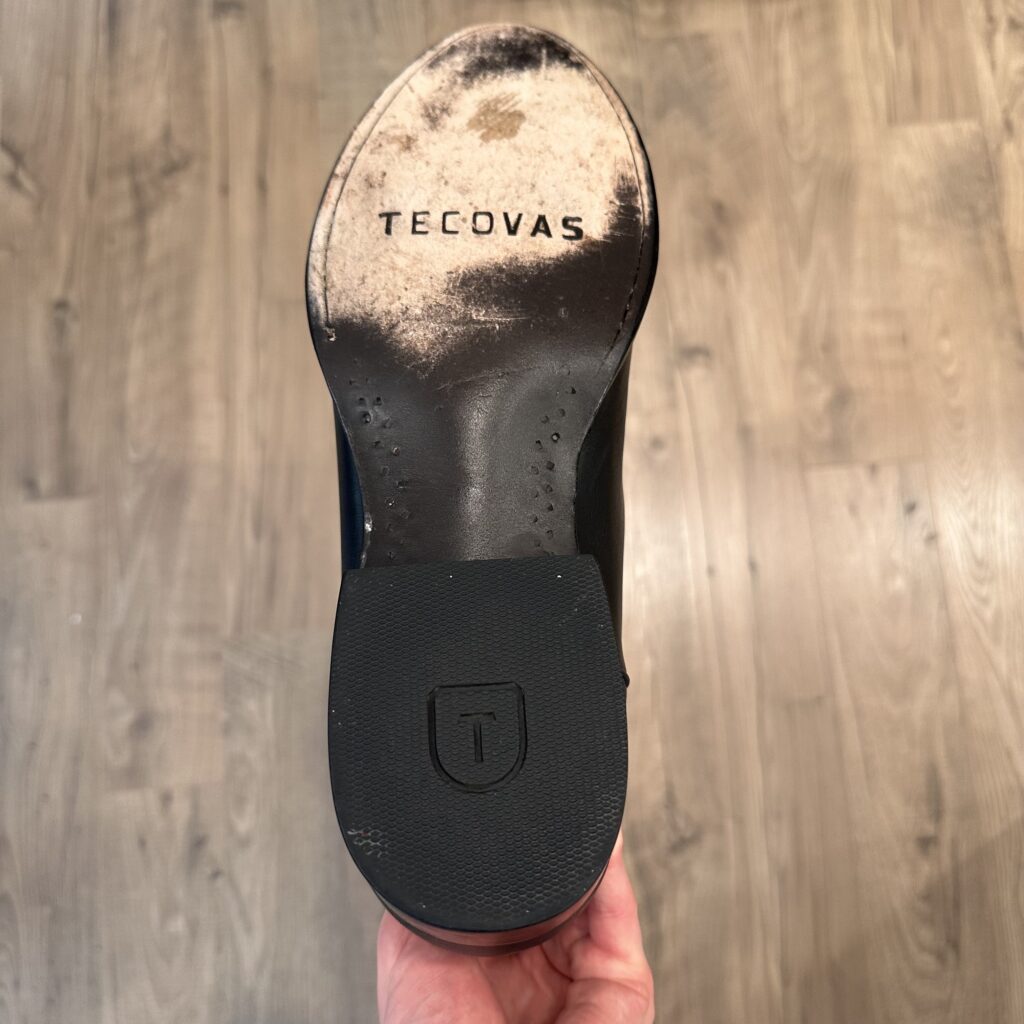
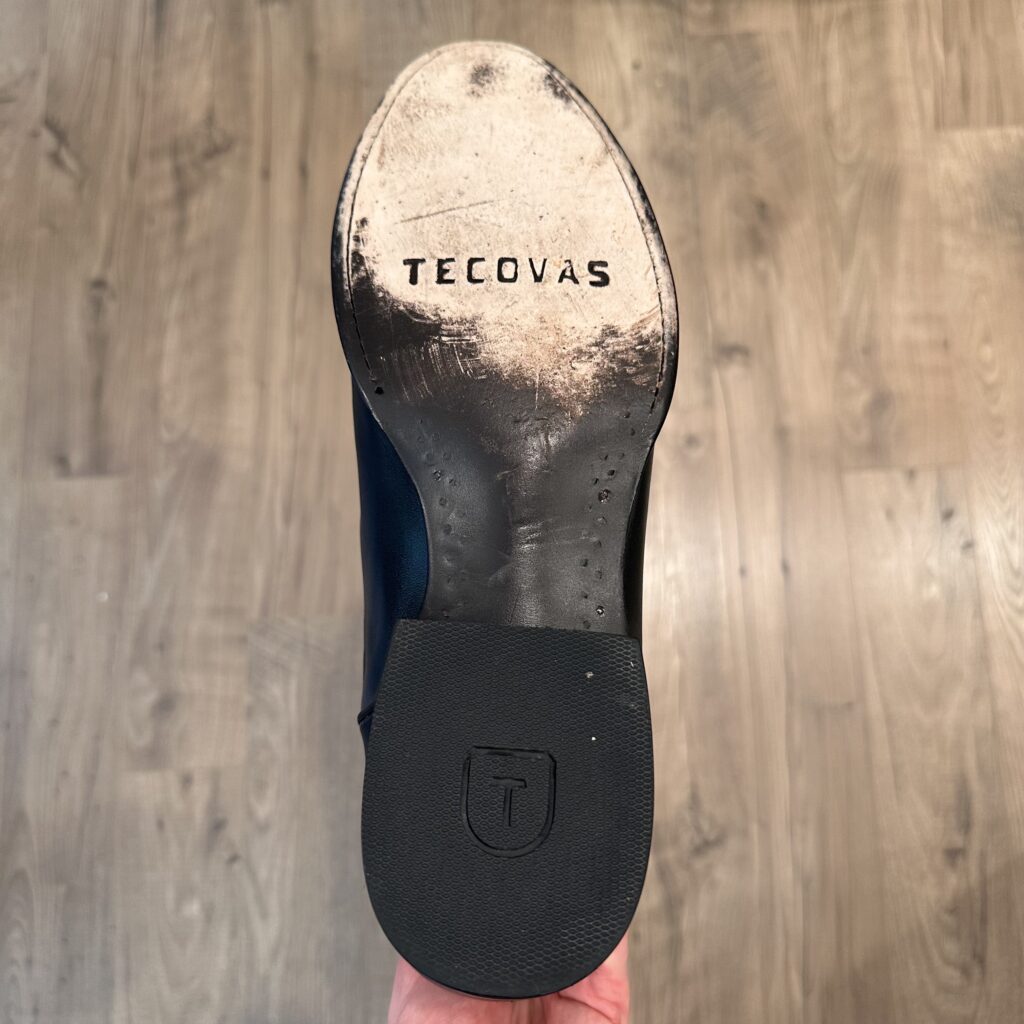
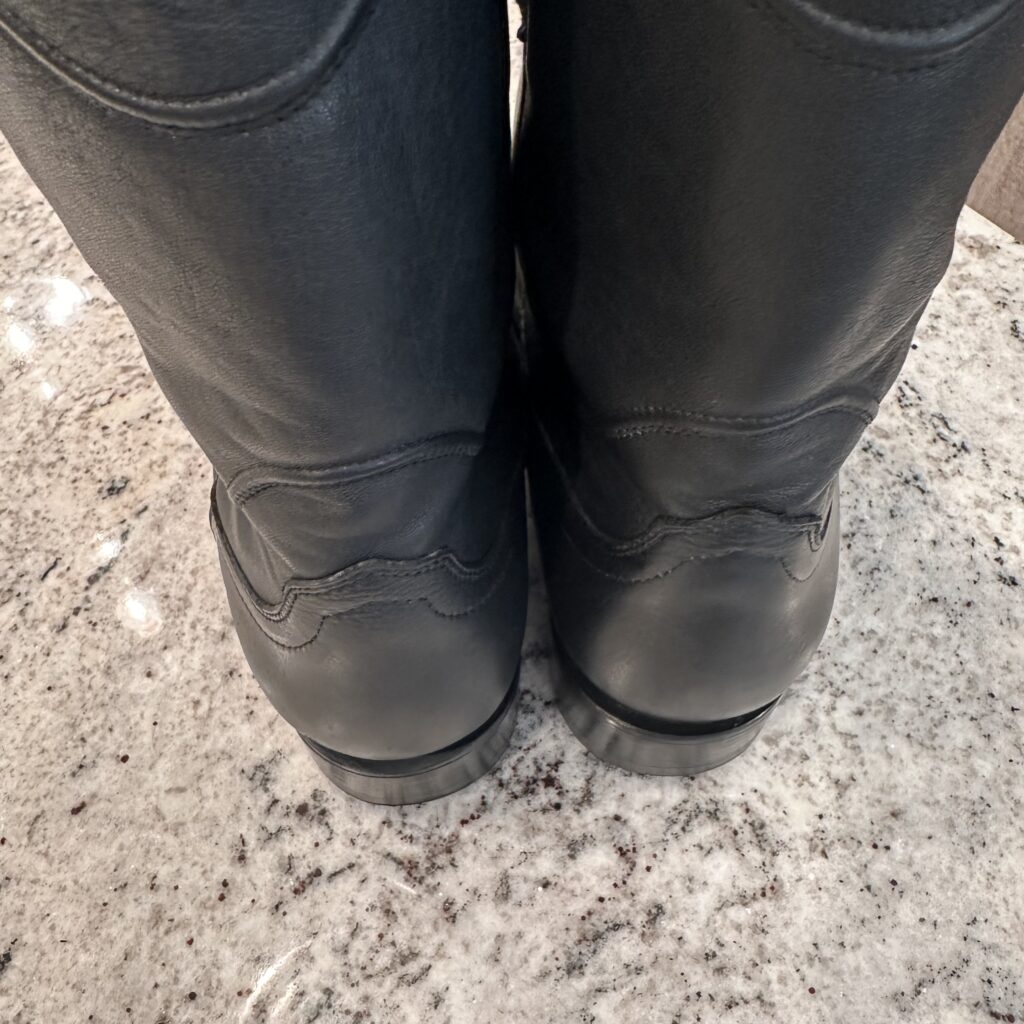
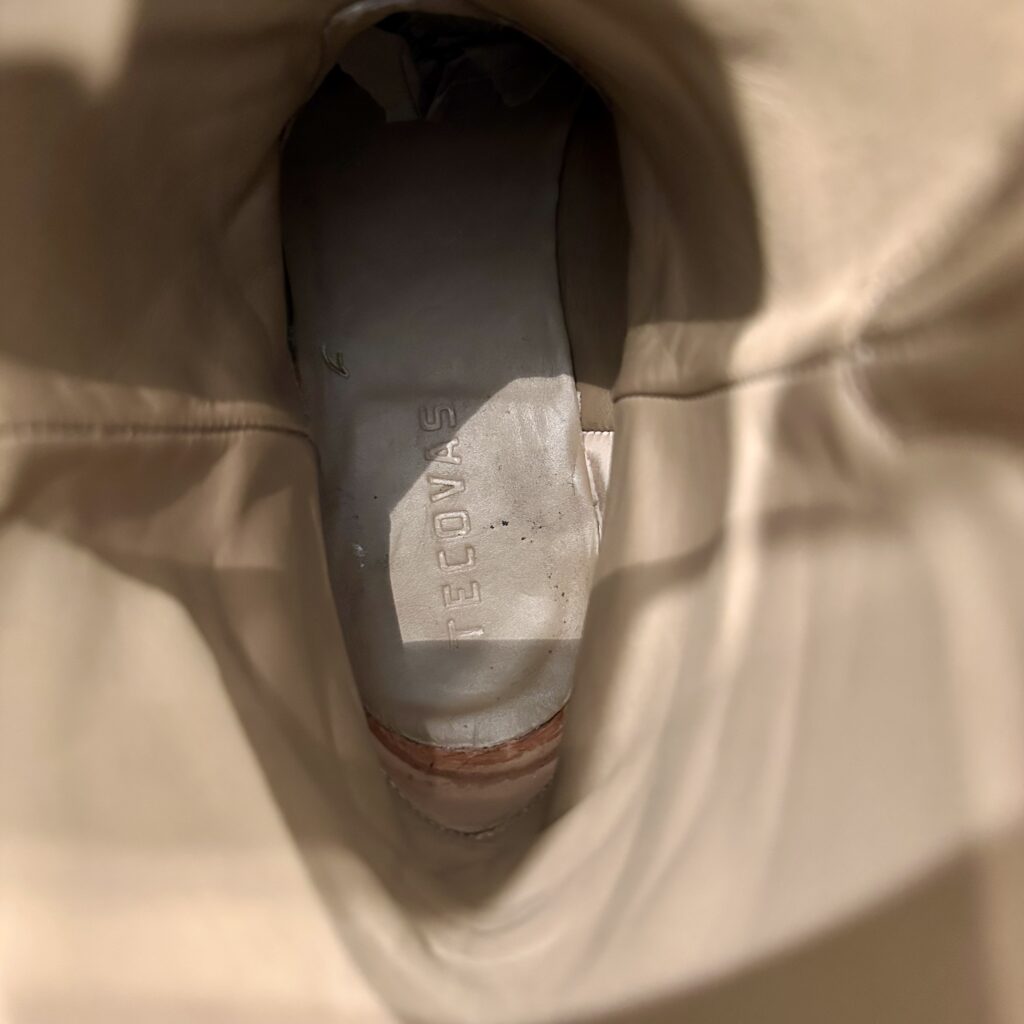
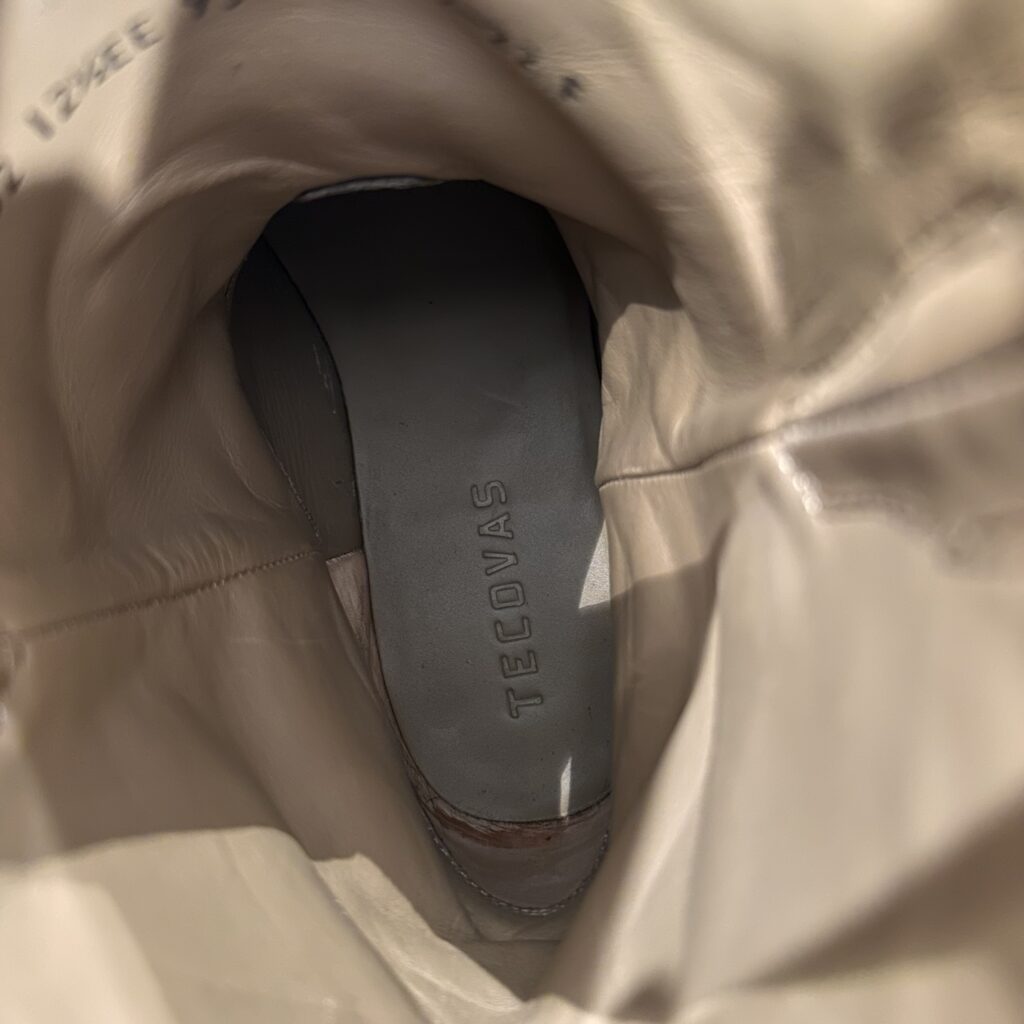
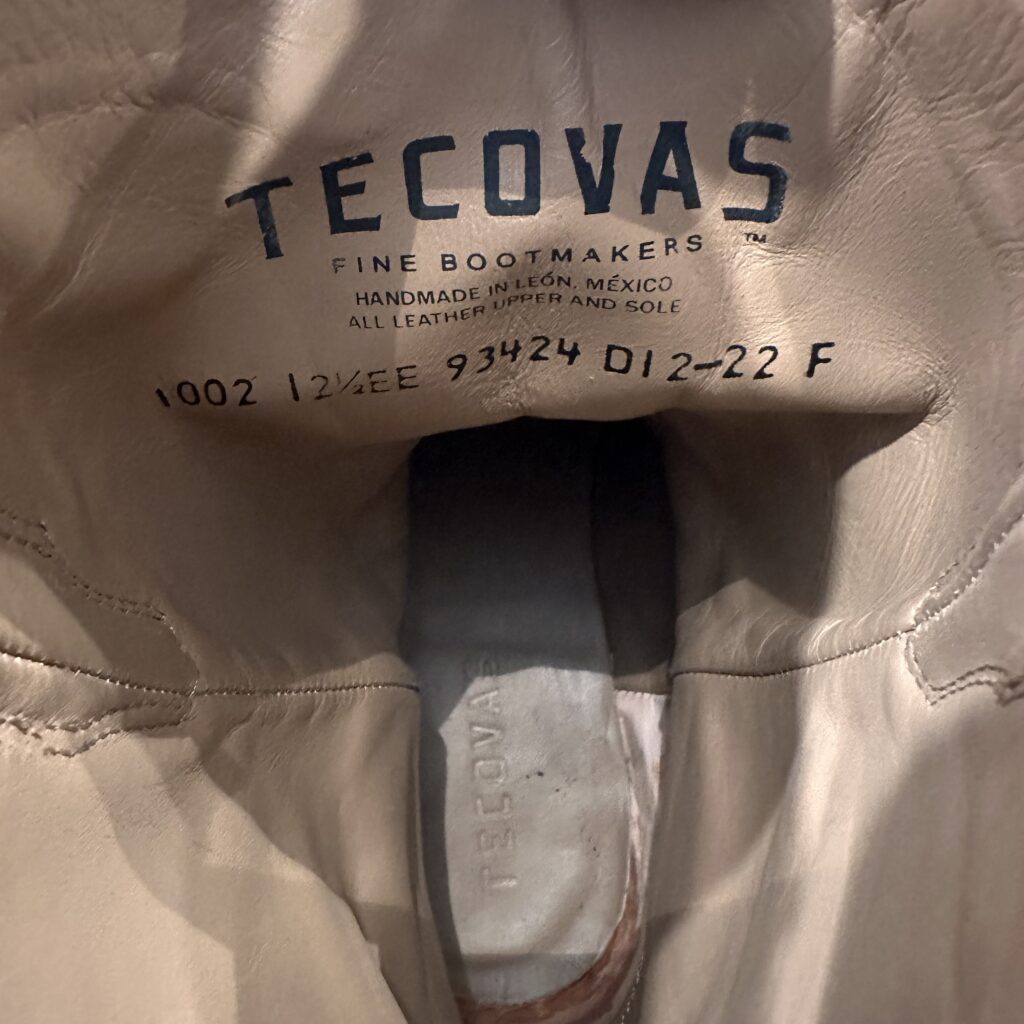
I like the Tecovas Earl Cowhide Boots. I own the Tecovas Earl Boots in several colors, but my favorite is the black color I photo’d below:
Why Men’s Cowhide Cowboy Boots are So Popular
Cowhide has long been the most common type of leather used to build cowboy boots, and for good reason. Cowhide leather stands up to rough terrain, and can take on constant wear without breaking down quickly. That strength makes it the practical foundation for boots meant to handle real work.
Also, the supply of cowhide makes it the leather most bootmakers rely on. Cattle ranching produces hides in large numbers, which keeps costs lower and quality consistent. Because of this availability, cowhide boots became the common choice both for large-scale production.
Cowhide also provides flexibility in how a boot looks and feels. Makers can tan it smooth for a polished dress boot, leave it rough for a work-ready style, and easily treat it with many color finishes. This adaptability allows cowhide to fit both work and dress boots.
Cowhide is much better for work boots than exotic leathers. Hides like ostrich, caiman, or lizard can be stylish but they scuff and scratch more easily, and their high cost makes them impractical for hard use. Also, exotic hides don’t handle moisture as well has cowhide.
How to Care for Cowhide Cowboy Boots
Cowhide cowboy boots need regular cleaning to hold up their look and performance. Dirt and dust work into the pores of the leather, so brushing them away is the first step.
A horsehair brush is ideal because it clears off loose grime without scratching the leather, and the bristles can reach around the welt where buildup often accumulates. For deeper cleaning, a leather cleaner like Bickmore BICK 1 (click here to view at Amazon) can be worked in with a soft cloth, then wiped away to leave the leather ready for conditioning.
Cowhide boots also need to be conditioned to keep from drying out and cracking. A light-weight conditioner such as Bickmore BICK 4 (click here to view at Amazon) restores oils to the leather without leaving a heavy residue or darkening the leather, helping the boots stay supple while retaining their natural finish.
Conditioners should be applied sparingly and allowed to soak in, with any excess wiped away. This step keeps everyday boots from becoming stiff and extends their lifespan.
However, cowhide exposed to tough weather or heavy ranch work may need stronger protection. A heavier shoe oil can be rubbed into the leather to add resilience against moisture and scuffs, though it will often darken the color.
I like to use Huberd’s Shoe Oil, see mine below. Click here to buy Huberd’s Shoe Oil available at Amazon (paid affiliate link takes you to Amazon.com).

Shoe oil grease is another option, forming a more durable barrier that improves weather resistance. These heavier treatments are best used on working boots rather than dress boots, where maintaining the natural color is more important.
Cowhide shafts can lose shape or crease if not supported, so storage matters. Shaft keepers slide into the tops of boots and prevent the leather from folding over or collapsing while not in use. This simple tool reduces long-term stress on the shaft, preventing cracks and wrinkles that form when boots sag.
How Do Cowhide Western Boots Handle Water?
Cowhide handles water better than many exotic leathers, but it is not fully waterproof. Light rain or a quick step through damp grass usually will not cause damage if the boots are dried properly afterward.
Extended exposure, like heavy rain or standing water, can make the leather stiff, spotty, or even warped as it soaks in. Allowing the boots to air dry away from direct heat helps prevent cracking, and brushing off any dried mud keeps the surface clean.
Cowhide can be made more resistant to water with proper treatment. A heavier shoe oil worked into the leather adds a layer of protection, while grease-based products form a barrier against moisture.
Be aware, these treatments often darken the color but make the boots far more durable in wet conditions. For men’s cowhide western boots that see regular outdoor use, a mix of cleaner, conditioner, and protective oils keeps the leather both supple and weather-ready.