
*This page has affiliate links to Amazon. As an Amazon Associate I earn from qualifying purchases. (info)
Packer boots are popular work and riding boots and have also become more popular as everyday casual boots. You can find quality men’s packer boots in a variety of styles and price ranges. Below, I have listed some of the most popular brands for men’s packer boots so you can find an option that fits your needs.
These are 7+ brands that make popular packer boots for men:
- Ad-Tec Men’s 9″ Packer Full Grain – An entry-level men’s packer boot made with full grain leather (click here to view)
- Abilene Men’s 12″ Western Packer Boot – A mid-level western-style packer boot with shaft detailing (click here to view)
- Double-H Men’s 9″ Made in USA Packer Boots – A mid-level men’s packer boot assembled in the USA (click here to view)
- White’s Mule Packer Boots – A more-affordable premium option made in the USA by White’s (click here to view)
- White’s Packer Boots – White’s more premium packer boots with customizable options (click here to view)
- Nick’s Packer Boots – Premium handmade USA Packer Boots customizable (click here to view)
- Wesco Packer Boots – Wesco’s customizable men’s packer boots made in the USA (click here to view)
- Drew’s Packer Boots – Drew’s full line of packer boots made in the USA (click here to view)
- Frank’s Frontier Packer Boots – Frank’s Boot Company Frontier Packer Boots (click here to view)
In the article below, I want to discuss some of the common features you will see in modern packer boots so you can figure out what option is best for you. Also, I want to discuss my favorite type of packer boots with pictures of the boots that I own.
My Favorite Men’s Packer Boots
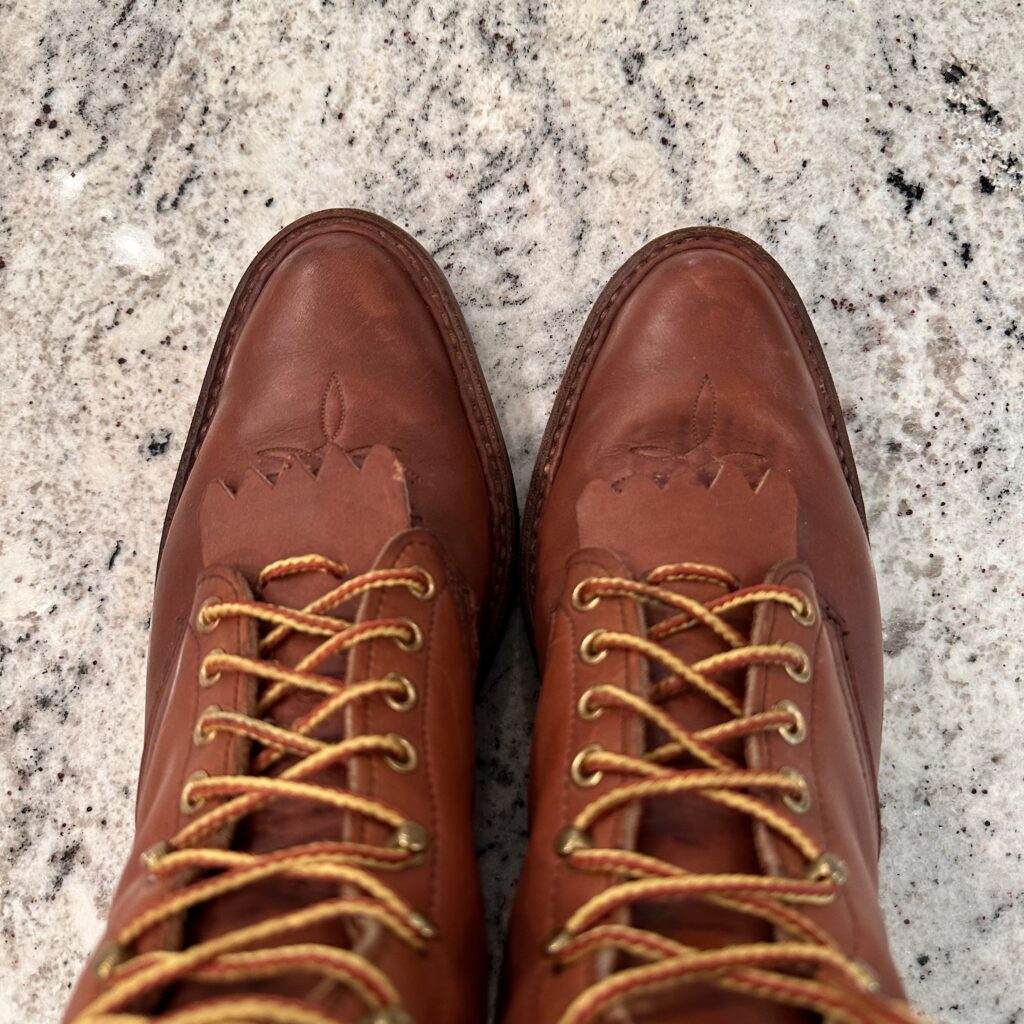
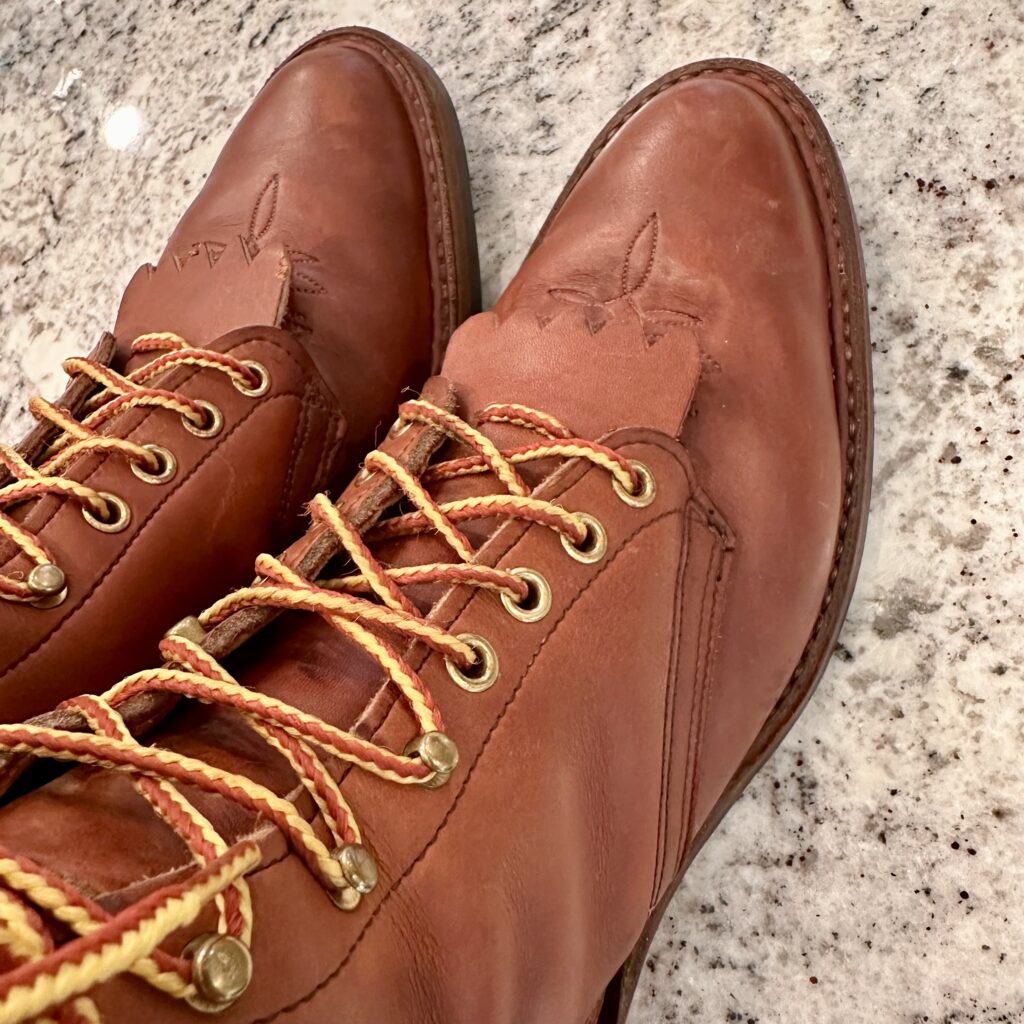
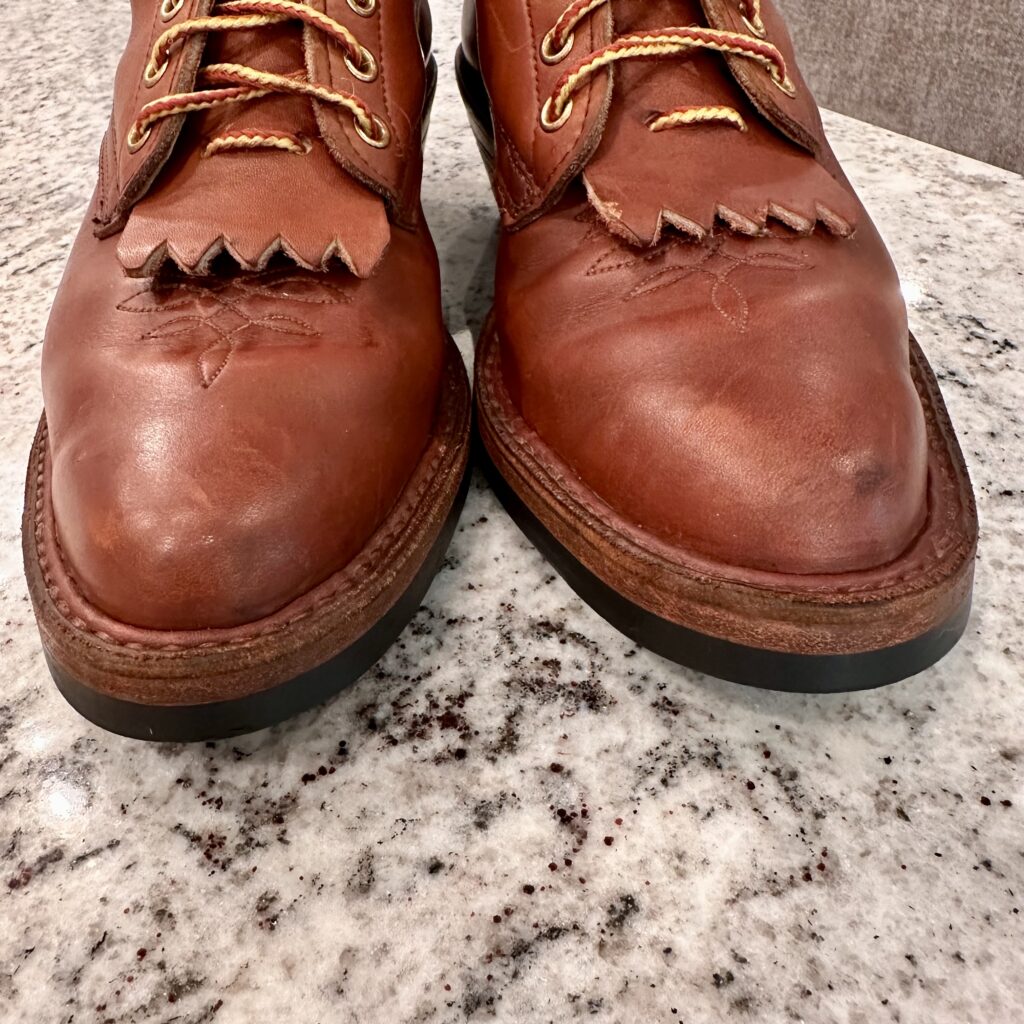
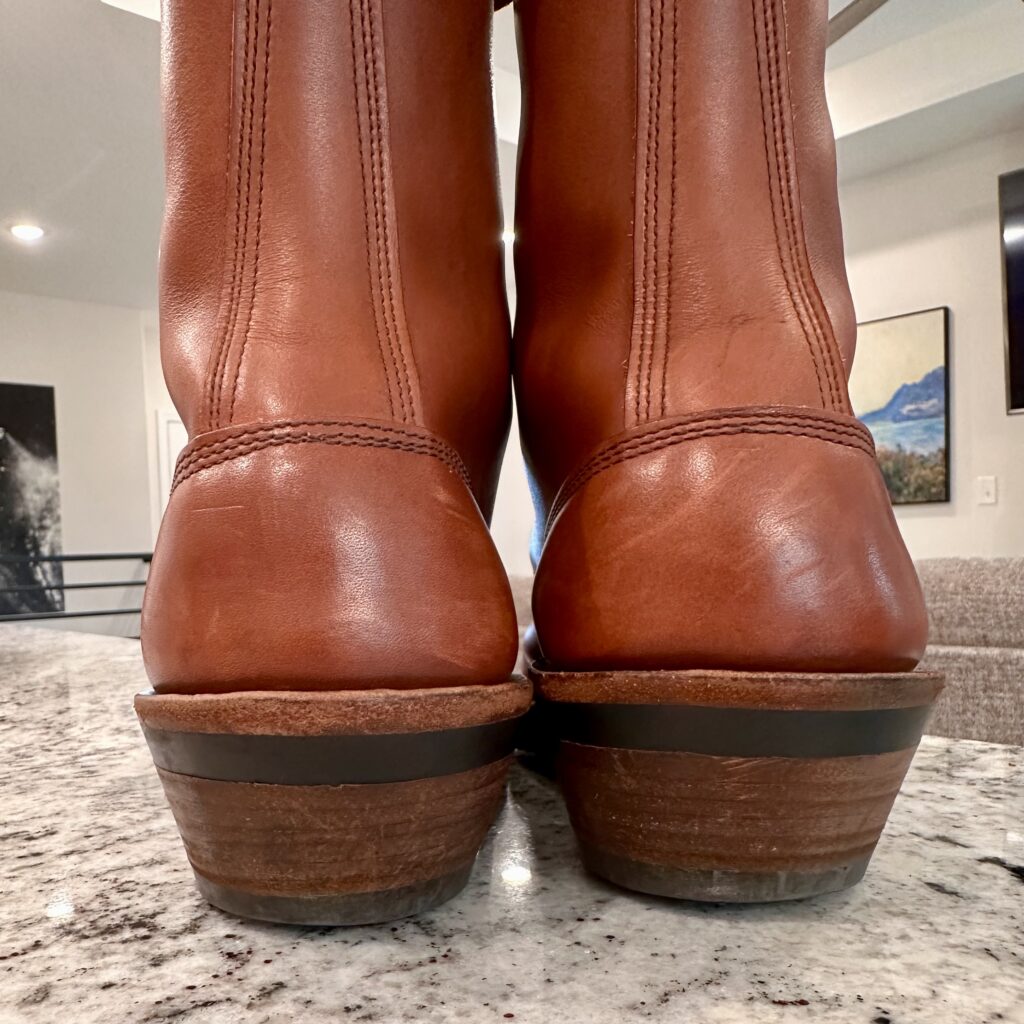
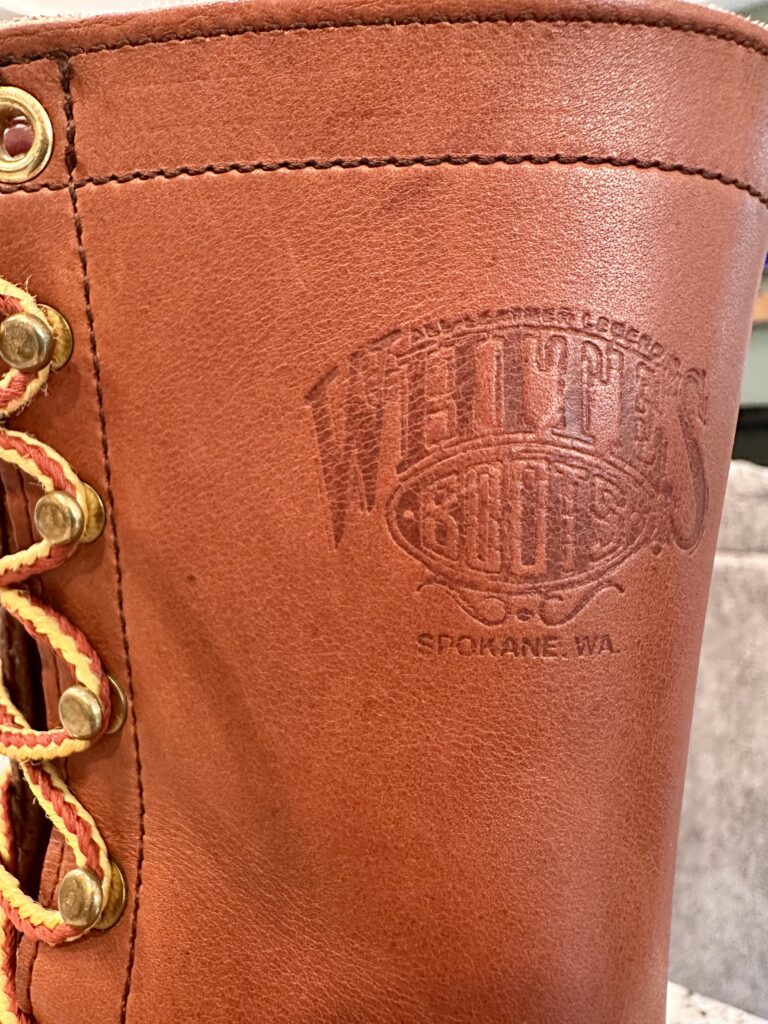
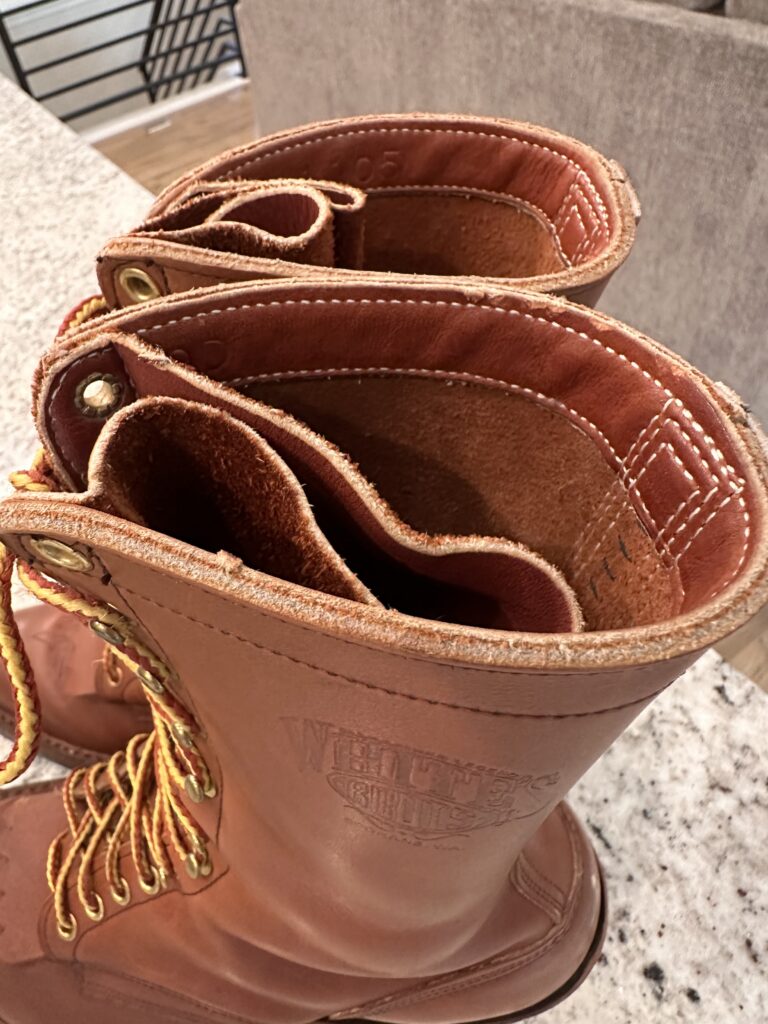
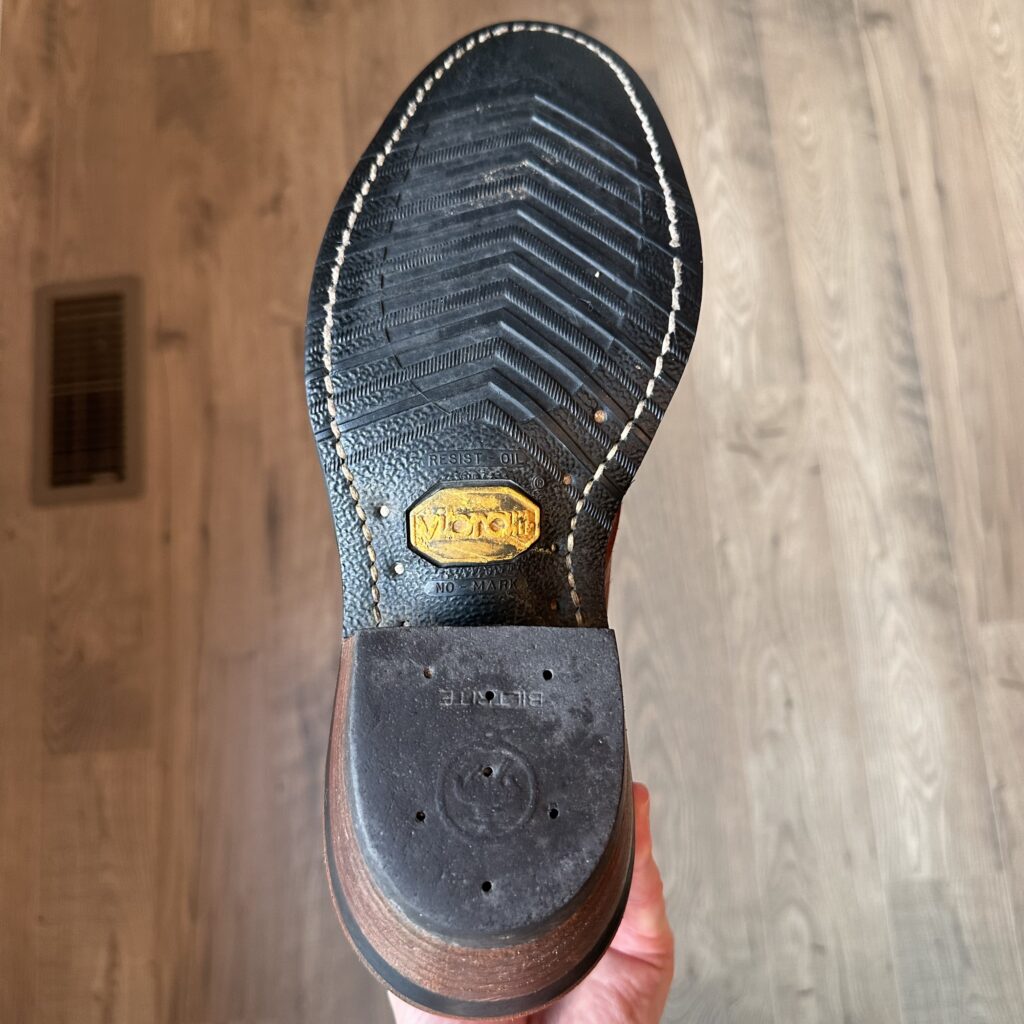
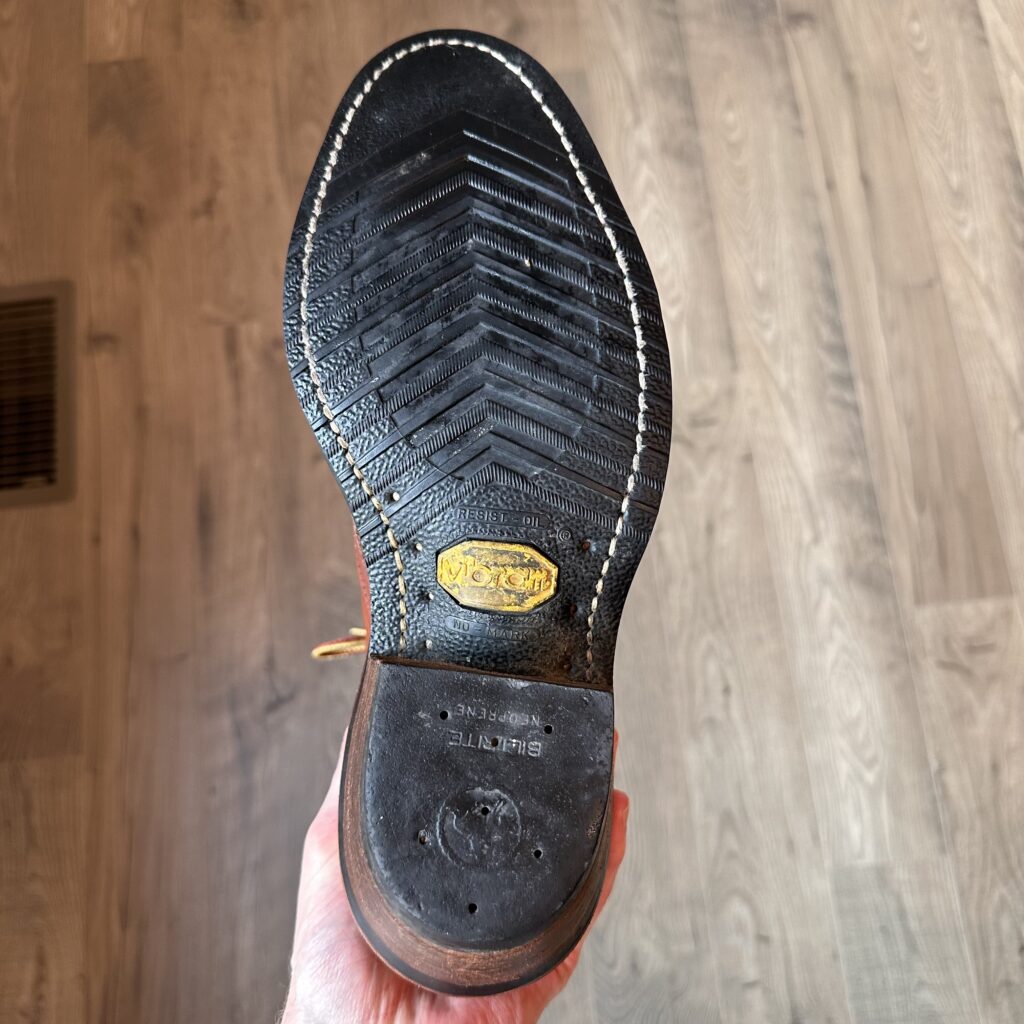
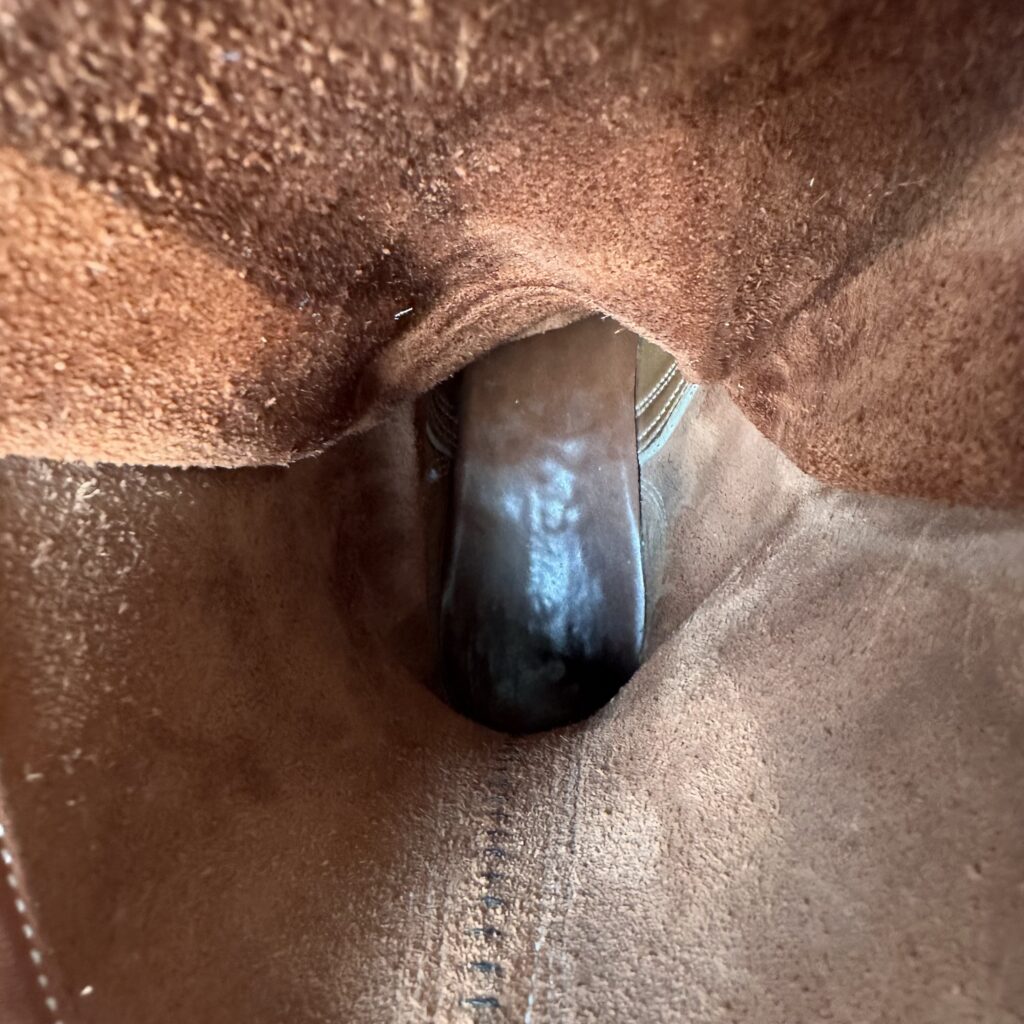
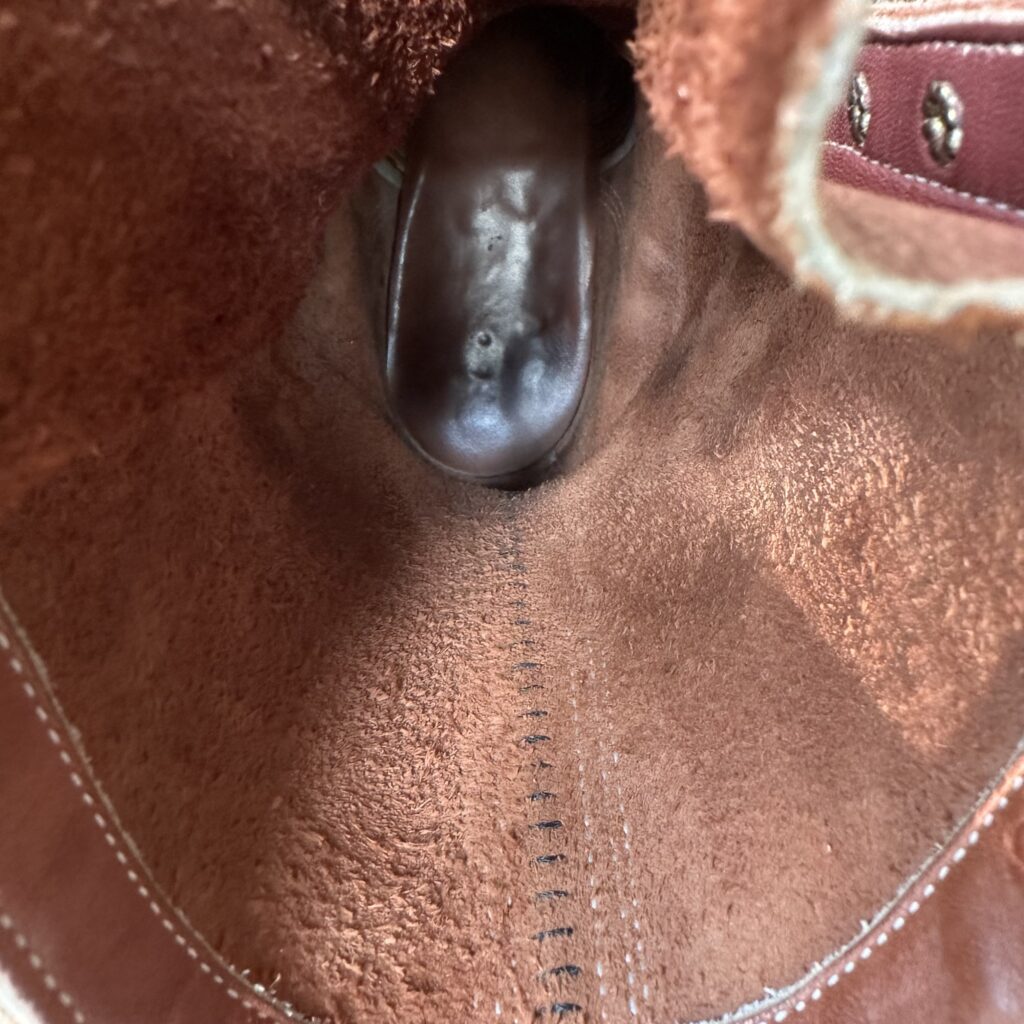
Below are the photos of the packer boots I own, which are the White’s Pointed Toe Packer Boots in Red Dog Style 795C . These White’s Packer Boots have the toe bug detail stitching, kilties, and a pointed toe design. They are color Red Dog. I am really pleased with how these boots have held up over time.
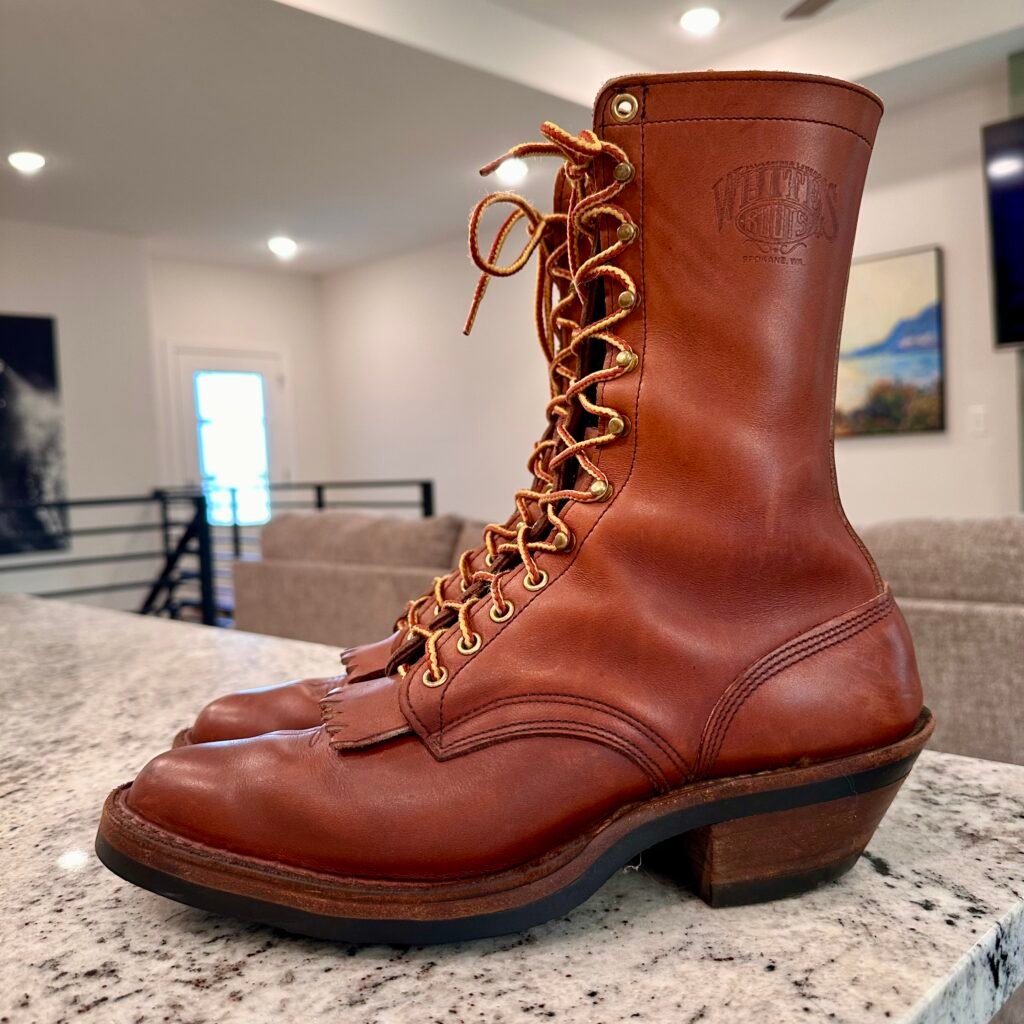
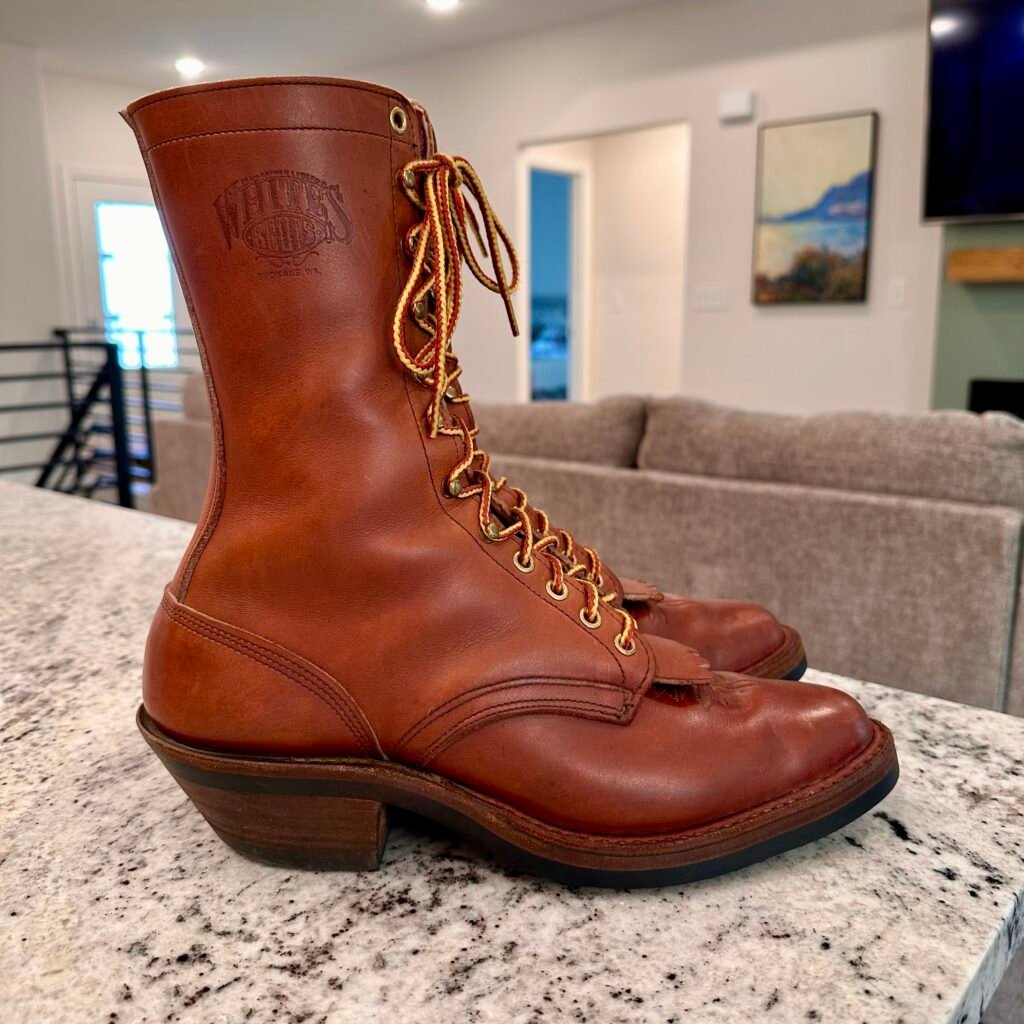

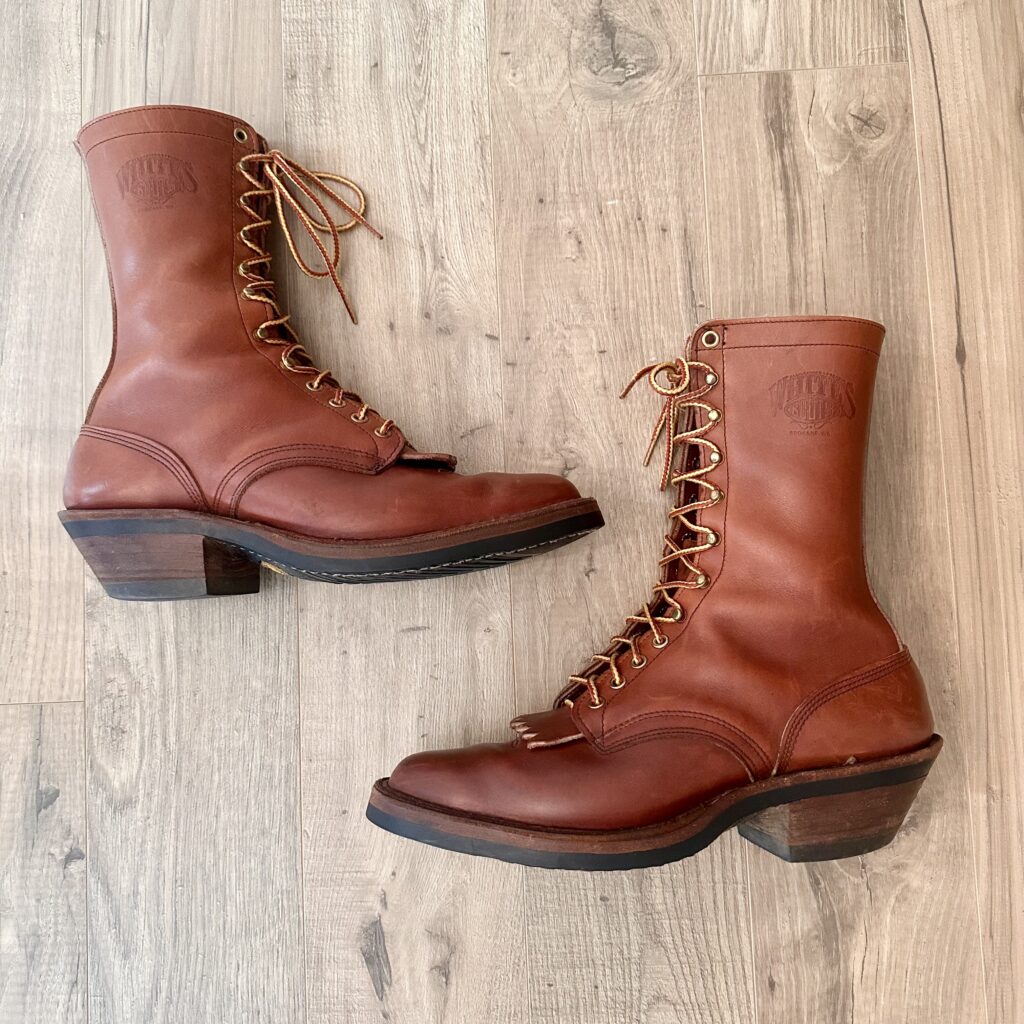
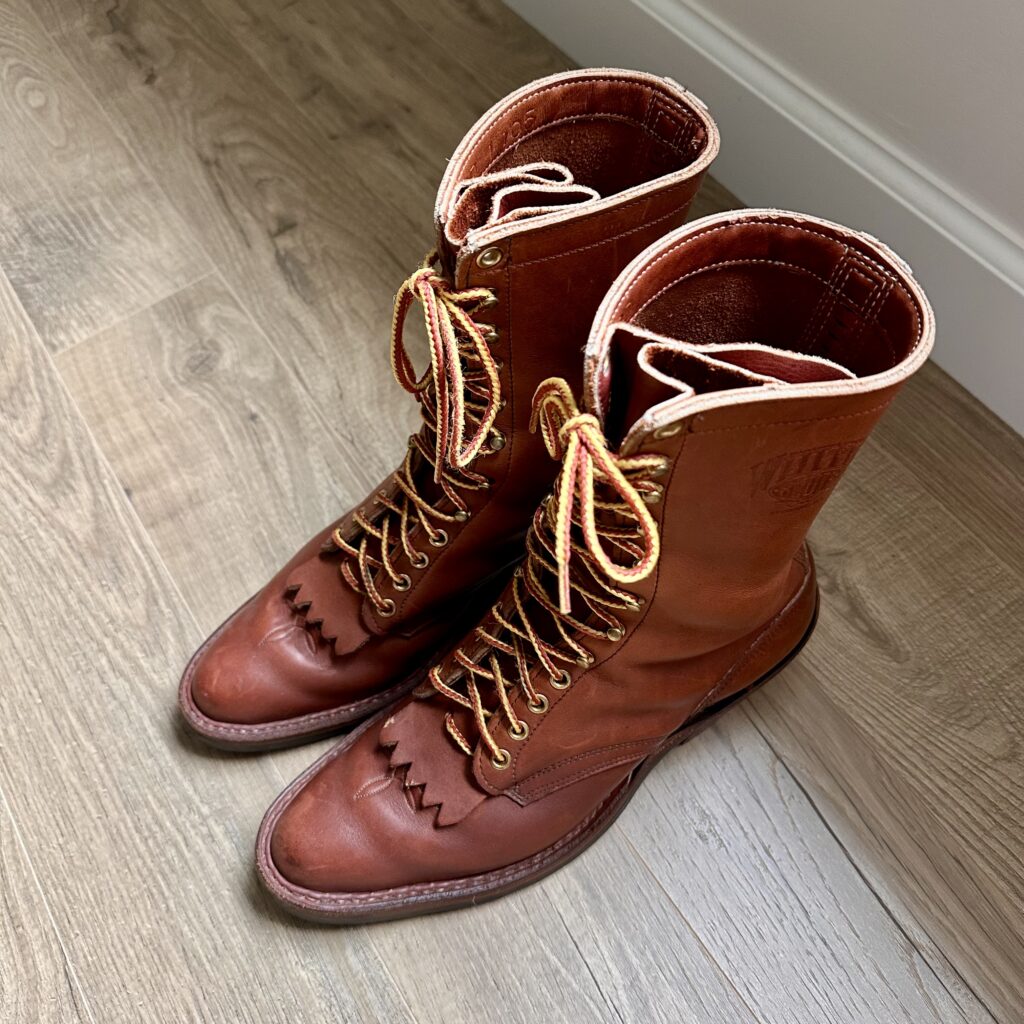
Features for Packer Boots
| Feature | Explanation |
|---|---|
| Pointed toe | Creates a sharper western look and makes sliding into stirrups easier. |
| Round toe | Offers a roomier fit and a more casual appearance for everyday wear. |
| Toe bug stitching | Decorative stitching across the toe that adds western style and character. |
| Insulation | Provides warmth for cold weather use, often found in hunting or outdoor work packers. |
| Kilties | Removable fringed leather pieces under the laces that protect the tongue from dirt and add a rugged look. |
| Deep lug outsoles | Heavy tread patterns that give better traction on rocky or muddy ground, common for outdoor work or hiking. |
| Shallow lug outsoles | Smoother soles that are safer for riding since they slide in and out of stirrups more easily. |
| Safety toe (rare) | Reinforced toe cap for protection, sometimes requested in industrial or logging settings. |
| Waterproofing | Treatments or liners that keep feet dry in wet conditions, useful for ranch work or packing trips. |
| Leather heel stacks | Layers of leather built into the heel for durability and traditional boot style. |
| Leather midsoles (premium) | High-quality construction that adds comfort, flexibility, and long-lasting wear. |
| Pull loops or pull straps | Help slide the boots on more easily. |
| Padded collars | Extra cushioning at the top of the shaft for comfort during long wear. |
| Double or triple stitching | Extra stitching along stress points for longer life and added strength. |
| Custom shaft height | Options ranging from shorter 8-inch shafts to tall 12-inch shafts depending on preference and use. |
| Alternate leathers (like roughout) | Variations such as roughout, oil-tan, or exotic hides change durability, appearance, and patina over time. |
History of Packer Boots
Packer boots began in the American West during the late 1800s. Ranchers and horsemen needed footwear that combined the stability of laces with the rugged strength of cowboy boots.
Early cowboy boots worked well for riding, but they often lacked the snug fit and ankle support needed for long days of working on foot. Packer boots solved this problem by blending lace-up construction with tough leather and durable soles.
As the West developed, packer boots spread to loggers, ranch hands, and even hunters. People valued them because they could handle riding, walking, and working without needing to switch footwear. Their blend of function and style kept them in demand, and over time they became known as a dependable American boot that could do almost everything.
Men’s Packer Boots Today
Today packer boots are used by people who want both durability and comfort in one boot. Ranchers still wear them for working cattle and long days on horseback. Outdoorsmen also choose them because the tall shaft protects the ankle and the sturdy build holds up in rough country.
Many people like them for trail riding, packing trips, and other situations where they move between walking and riding.
Packer boots are also worn for style. Some choose them as a dressier western boot. Others wear them casually with jeans because they have a rugged but refined look.
Alternatives to Men’s Packer Boots
Other boots share many traits with packers, but each type developed for a slightly different purpose. Packers blend lace-up fit with a riding heel, while others lean harder toward walking, climbing, or riding. Understanding the distinctions helps explain why packers fill such a unique middle ground.
- Logger boots – Both loggers and packers have tall shafts and laces, but logger boots usually have a much higher heel and thicker, aggressive lug soles. They are made for climbing, traction, and long days on steep or uneven ground. Packers, by contrast, balance riding and walking, so their heels are lower and soles often smoother.
- Cowboy boots – Cowboy boots obviously lack laces and rely on a slip-on fit. They are excellent for riding but offer less ankle support than packers. Packers were born to solve that problem by adding laces for control and stability.
- Work lace-up boots – Standard lace-up work boots often have low heels and flat soles for comfort on foot all day. They trade away stirrup security, making them better for ground work but less useful on horseback compared to packers.
- Roper boots – Ropers have shorter shafts and a straight, low heel that makes them comfortable for walking and roping events. Unlike packers, they are not designed for packing trips or rough terrain where ankle support matters.
- Engineer boots – Engineers are tough, pull-on boots with buckle straps and round toes. They offer protection for heavy labor or riding motorcycles but do not carry the western heel or lace-up fit that give packers their versatility.